Acorns on Agios Efstratios
The collection and exploitation of acorns on Agios Efstratios is inextricably linked with the history and economic survival of the island for centuries, constituting an unorganized agricultural product that comes from the unique, extensive oak forest of the Northern Aegean. The fruit of the valonia oak (Quercus ithaburensis subsp. macrolepis) was not merely a source of food, but primarily a marketable product of vital importance for the local economy up until the early 1960s, due to its high tannin content.
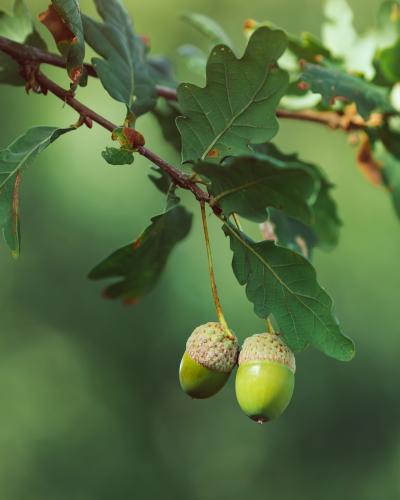
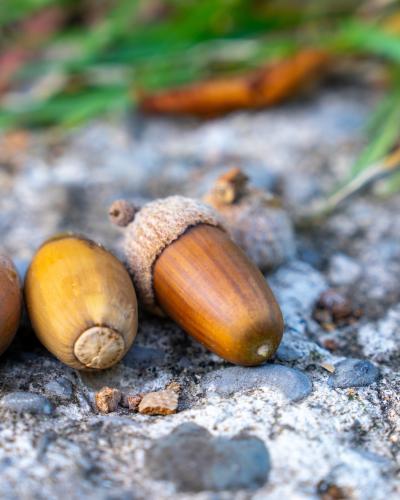
The product is the fruit, the acorn (velanidi or valanidi), which comes from the species Valonia Oak (Quercus ithaburensis subsp. macrolepis), which dominates the island’s oak forest. Of particular commercial value were the large cups of the acorns, known as “velanidia” (in the sense of industrial raw material), because of the exceptionally high tannin concentration (≈45%) they contained, which made them highly sought after for tanning throughout the Aegean. The use of the fruit for tanning, and not primarily for food, defines the distinctive historical and economic identity of the product on Agios Efstratios.
Agios Efstratios (or Ai Stratis) is a small volcanic island in the northeastern Aegean, included in the Natura 2000 environmental network as a “Site of Community Importance” (SCI). The island’s vegetation, though generally limited, includes one of the largest expanses of oak forest in the Aegean, which is concentrated in its northeastern part. The Oak Forest covers an area of about one thousand stremmas at the location Avlakia and reaches as far as Alonitsi beach, creating a rare habitat where the oaks meet the sand dunes. The valonia oak forests develop on a limestone substrate, on gentle to moderate slopes, with main aspects to the east.
Method of exploitation and collection
The production of acorns on Agios Efstratios does not involve organized cultivation, but systematic exploitation of the native oak forest. The method is the collection of the fruits, mainly the cups (valonia cups), when they fall from the trees, usually in autumn.
- Harvesting: Collection is carried out by the locals in a traditional way, gathering the fallen fruits from the forest floor. This practice, together with the high economic importance of the product, contributes to the preservation of the oak forest, as the inhabitants protect it as a source of income.
- Soil and Climate Requirements: Quercus ithaburensis subsp. macrolepis thrives in a warm and dry environment, in lowland areas or at the foothills of mountains (0–500 m), with resistance to dry and hot conditions, a fact that explains its survival in the island environment. The tree is deciduous and long-lived, with many trees in the Ai Stratis forest being centuries old.
- Processing: The main processing concerned the sale of the cups to the tanneries of the Aegean. The acorn cups were used for the production of tannin, which was necessary for leather tanning. Sales were made to traders who approached the island.
Economic and Social Significance
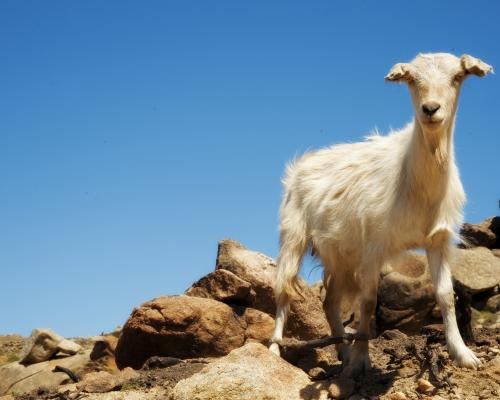
The impact of the product on Agios Efstratios was decisive for the island’s economy for many centuries, at least from the 16th century and throughout the Modern era, up until the early 1960s. The collection of acorns, together with livestock farming, formed the basis of the economy of Ai Stratis. In fact, the Ottoman geographer Piri Reis (1465–1553) records that ships from Skyros would come to the then uninhabited island to gather timber (and by extension its fruits). The sale of acorn cups to tanneries throughout the Aegean secured significant income for the inhabitants, contributing to the preservation of the local population and the unique forest.
Environmental Role
The economic importance of the product had as an indirect result the protection and preservation of the oak forest by the locals, who recognized the value of this natural resource. Today, the oak forest is one of the best-preserved ecosystems in the Aegean, constituting a Special Protection Area and forming part of the Natura 2000 network. The forest also provides food and shelter for many bird species and other forms of wildlife.
The history of acorn exploitation begins in Ottoman times, specifically from the 16th century, as recorded by Piri Reis. The collection and trade of acorns developed in parallel with livestock farming, forming the two main pillars of the island’s economy for centuries. The period of maximum economic development, before the predominance of chemical agents in tanning and the gradual decline of the industrial sector, was the time when the acorn was a golden product for Ai Stratis, strengthening the social and economic life of the community. The cultural heritage of the product is directly linked to the island’s forest wealth, which was protected precisely because of its economic value, revealing the landscape that prevailed in the Aegean islands in antiquity.
Due to the primarily industrial use of acorns for tanning and the emphasis on selling the cups, no particularly extensive customs or traditions directly linked to the dietary use of acorns by the inhabitants of Agios Efstratios have been widely recorded. The harvesting was mainly a commercial/occupational practice that took place in autumn. However, the systematic protection of the forest and the communal management of this natural resource, which provided income for the entire local community, constitute in themselves a traditional practice and a cultural element of the island.
- Environmental Recognition: The Oak Forest is included in the Natura 2000 network (Habitat type code 9350 – Valonia oak forests Quercus ithaburensis subsp. macrolepis), which is the most important recognition of the uniqueness and preservation of the natural resource from which the product originates.
The fruit of the Sweet Acorn Oak (Quercus ithaburensis subsp. macrolepis) is characterized by high nutritional value, and was historically used both as animal feed and for the production of flour for human consumption, especially in times of deprivation. An important property of this particular subspecies is that its acorns are often low in tannins compared to other oak species, making them more easily edible (with minimal or no leaching/rinsing).
- Macronutrients: Acorns in general are a good source of:
- Carbohydrates, mainly starch, making them rich in energy.
- Dietary Fiber, which contributes to the health of the digestive system.
- Fats, mainly unsaturated fatty acids.
- Proteins (though in a lower proportion than nuts).
- Bioactive Compounds: Their main characteristic is their tannin content, especially in the cups (≈45% in the cups), which are polyphenols with strong antioxidant action. However, excessive consumption of tannins can be unpleasant in taste (bitter) and reduce the absorption of nutrients, which is why acorns intended for direct human consumption must be low in tannins. Acorns can be used to produce a coffee substitute.
The fruit of the Sweet Acorn Oak (Quercus ithaburensis subsp. macrolepis) is characterized by high nutritional value, and was historically used both as animal feed and for the production of flour for human consumption, especially in times of deprivation. An important property of this particular subspecies is that its acorns are often low in tannins compared to other oak species, making them more easily edible (with minimal or no leaching/rinsing).
- Macronutrients: Acorns in general are a good source of:
- Carbohydrates, mainly starch, making them rich in energy.
- Dietary Fiber, which contributes to the health of the digestive system.
- Fats, mainly unsaturated fatty acids.
- Proteins (though in a lower proportion than nuts).
- Bioactive Compounds: Their main characteristic is their tannin content, especially in the cups (≈45% in the cups), which are polyphenols with strong antioxidant action. However, excessive consumption of tannins can be unpleasant in taste (bitter) and reduce the absorption of nutrients, which is why acorns intended for direct human consumption must be low in tannins. Acorns can be used to produce a coffee substitute.