Agiasos Chestnuts
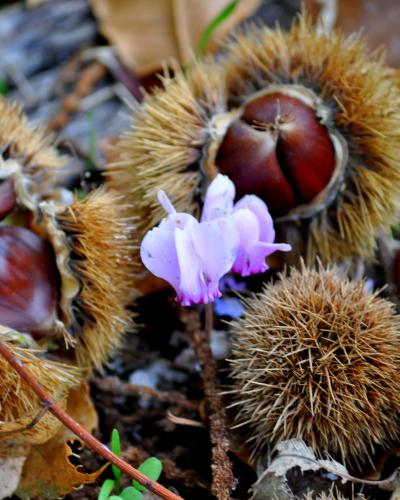
Agiasos Chestnuts are among the most recognizable and high-quality agricultural products of Lesvos, inextricably linked with the mountainous mass of Mount Olympus and the traditional small town of Agiasos. Originating from the extensive Agiasos Chestnut Forest, a non-native chestnut forest covering approximately 11,000 stremmas, these chestnuts have for centuries been an important source of income for the inhabitants of the area and have simultaneously helped shape the local culture and architecture. The Chestnut Forest, which lies within the European Network of Protected Areas NATURA 2000, is considered a unique habitat with distinctive flora and fauna. Their cultivation is largely maintained in a primordial and natural way, without systematic use of chemical fertilizers or sprays, something that imparts organic characteristics to the fruit, despite the lack of official organic-farming certification for the entirety of the production.
Agiasos Chestnuts are mentioned in university and regional studies as a local variety of Lesvos, along with the apples and cherries of Agiasos, highlighting their distinctive identity and their connection with the area. The uniqueness of the fruit lies in the tradition of natural cultivation and in the quality conferred by the particular microclimate and the chestnut soil of the region, factors that have made the Agiasos chestnut highly sought-after in Greece. The variety of chestnuts in Agiasos (most likely Castanea sativa) has adapted to local conditions, producing a fruit with distinctive organoleptic characteristics.
The Agiasos Chestnut Forest spreads across the slopes of Mount Olympus on Lesvos, a mountainous mass that dominates the southern part of the island. The area of Agiasos is situated at altitude and is characterized by particular soil and climatic conditions that favor the growth of the chestnut tree (Castanea sativa). Chestnut trees thrive in acidic, well-drained soils rich in organic matter, such as the chestnut soil produced by the decay of their leaves and burrs. The microclimate of Olympus, with sufficient rainfall, especially in autumn (although decreases are observed due to climate change), and suitable temperatures, is crucial for the quality and size of the fruit. The presence of the forest in a NATURA 2000 protected area confirms its high ecological value.
Chestnut cultivation in Agiasos has been carried out for centuries in a traditional and primeval manner, which gives it organic characteristics without there necessarily being official certification.
- Soil and Climatic Requirements: The chestnut tree thrives in acidic, deep and well‑aerated soils rich in organic matter, while it requires high humidity and a cool climate, with the Olympus mountain range providing the ideal conditions. Autumn rains are critical for the swelling and quality of the fruit.
- Techniques & Traditional Practices: Traditional cultivation is usually rain‑fed, relying on natural rainfall. Chemical sprays or fertilizers are not used systematically. Chestnut soil (from rotten burrs, leaves and wood) is naturally produced and is used by local flower growers for plants that love an acidic environment (such as camellias, gardenias). However, the lack of systematic cultivation and the failure to take measures against diseases (such as ink disease, blight, codling moth) have led to a reduction in production in recent years.
- Harvesting: The chestnut harvest in Agiasos, which is a laborious and time‑consuming process, usually takes place from October to November. The chestnuts are gathered by hand, after they have fallen naturally from the trees along with their burr (the husk).
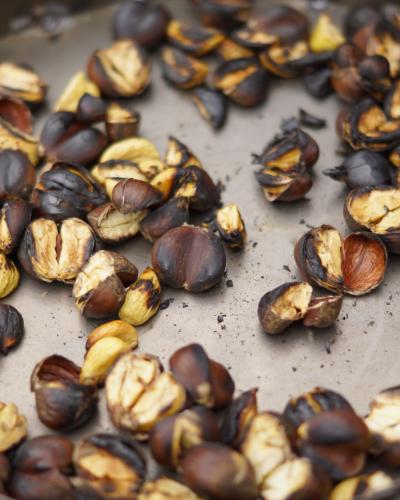
- Processing: After harvesting, the chestnuts are usually placed on the market either fresh for roasting/boiling or undergo minimal processing for the production of traditional products such as spoon sweet, jam or chestnut cream. Chestnut wood is also an important by‑product, which was traditionally used in the island’s architecture (frames, furniture, bay windows), as well as for the construction of “templa” (wooden poles) for olive beating, a practice that is still used in 90% of Lesvos olive groves.
The Agiasos Chestnut Grove is one of the most important economic and environmental resources of Lesvos.
- Economic Impact: For centuries, chestnut cultivation provided a basic income for a large part of the inhabitants of Agiasos. Beyond the nut itself, chestnut wood also had great economic value, both for the production of furniture, frames and structural elements (sachnisi, roof boarding) and for the construction of the traditional poles “temples” used for olive harvesting, an activity that is estimated to have brought Agiasos hundreds of thousands of euros in a good olive-growing season. However, the reduction in production due to climate change, diseases and low prices has diminished the economic impact in recent years, making it imperative to support chestnut growers.
- Environmental Impact: The Chestnut Grove is a unique habitat included in the NATURA 2000 network, playing a crucial role in preserving biodiversity, protecting the soil from erosion and regulating the microclimate of the Olympus area.
The history of the chestnut tree in Agiasos is lost deep in time. Paleontological data show that the tree existed in Europe since the Tertiary period. Specifically for Lesvos, there are references that the chestnut tree was introduced to Agiasos during the period of Roman occupation (88–395 AD) by a nobleman who brought it from Asia Minor. Production increased significantly during the Ottoman period, especially after a large fire around 1877, making the Chestnut Grove a key pillar of the local economy and culture. The cultural role of the chestnut is not limited only to its fruit, but also extends to its wood, which shaped the traditional architecture of Agiasos, with wooden frames and the characteristic sachnisi (wooden overhangs) of the houses.
The most important custom related to the chestnut in Agiasos is the Chestnut Festival (or Chestnut Celebration), which is movable and usually takes place in early November, depending on the seasonal timing of the harvest.
- Chestnut Festival: This is an annual folk event that attracts large numbers of visitors. During the festival, local producers distribute roasted chestnuts to visitors free of charge, while folk artists create a festive atmosphere. The festival is a point of reference for mountain tourism in Lesvos, combining gastronomy with culture and tradition.
- Olive Beating: The traditional use of chestnut wood for the “temples” (poles) used in olive beating is a cultural practice that links two of the island’s most important agricultural products, chestnuts and olive oil.