Chestnut
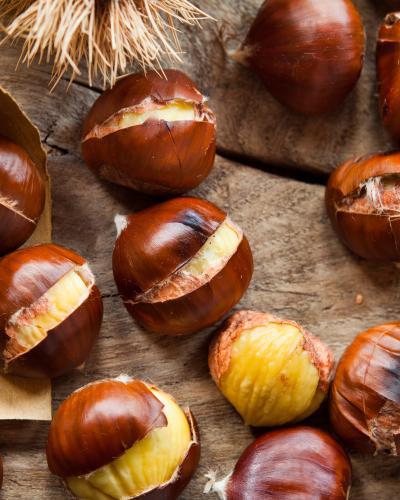
The cultivation of chestnut trees (Castanea sativa) on Ikaria constitutes an important silvicultural–agricultural activity, mainly in the mountainous and semi-mountainous zones of the island. In contrast to many Aegean islands that are characterized by xerothermic ecosystems, Ikaria, with its high mountainous relief and abundant rainfall in certain areas, supports the development of extensive chestnut forests that produce high-quality chestnuts. Ikarian chestnuts are a staple of the inhabitants’ autumn and winter diet and are part of the broader healthy dietary pattern of the island’s Blue Zone. The cultivation is maintained mainly through traditional practices and is inextricably linked to the ecological management of the mountain forests.
Their uniqueness lies in the resilience of the local varieties and in their organic cultivation in a forest environment, with minimal inputs.
Quality Specifications and Varieties
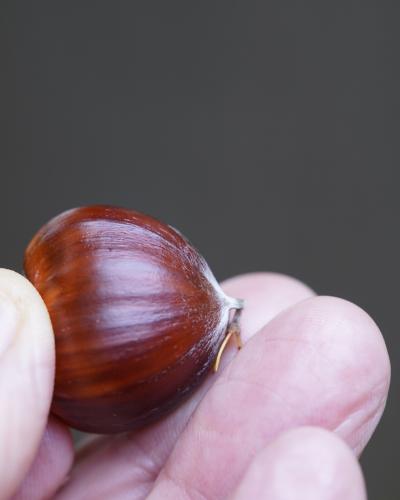
- Local Varieties: The chestnut forests on Ikaria consist mainly of indigenous Castanea sativa varieties. These varieties have adapted over centuries to the local microclimate, exhibiting distinctive characteristics in terms of size, taste (sweet), and ease of peeling.
- Taste and Texture: The chestnuts of Ikaria are renowned for their sweet flavor and their less starchy texture compared to chestnuts from other regions, characteristics attributed to the soil and climatic conditions of the Ikarian mountains.
The cultivation of chestnut trees on Ikaria is concentrated in the mountainous zones of the island, mainly on the northern and northwestern slopes of Mount Atheras (Raches area), where environmental conditions are ideal. The chestnut tree thrives in acidic soils rich in organic matter and requires high atmospheric humidity, which is ensured by the abundance of water (groundwater and surface water) in the area. The existence of these conditions makes the region one of the greenest in the Aegean. The chestnut forests of Ikaria function as mixed forests, playing an important silvicultural role, as they provide shelter and food and contribute to soil conservation and to the prevention of erosion on steep slopes.
The management of the chestnut forests on Ikaria is traditional and integrated into the island’s silvicultural system.
- Cultivation Practices: Cultivation is usually non‑intensive and rainfed, with minimal use of fertilizers or pesticides, which makes it akin to organic methods. Care consists mainly of formative pruning and cleaning the forest of dry branches to prevent fires.
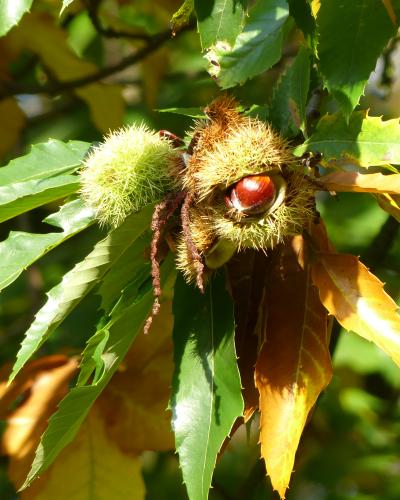
- Harvesting: Harvest takes place in autumn (September – November). The nuts are collected after they fall from the tree and the spiny husks (“agrolia”) open, usually by hand or with the help of simple tools, a time‑consuming process that requires the participation of the entire family.
- Processing (Preservation): The main preservation method is immersion in water (hydrocooling) for 8–10 days. This traditional technique (thermohydro processing) improves the durability of the nuts, kills insects, and increases the shelf life of the chestnut, which is crucial for preserving the product throughout the winter.
Chestnut production in Ikaria has a significant environmental and socioeconomic impact, especially on the mountainous communities.
- Forest Management and Protection: The chestnut forests constitute a protected forest resource that safeguards biodiversity and protects the island from floods and landslides. Their economic value encourages residents to preserve and care for the forest, acting as natural stewards.
- Income in Mountain Zones: Chestnut cultivation provides seasonal income to the inhabitants of mountainous villages (such as in Raches), reducing urbanization and depopulation in hard‑to‑reach areas.
- Nutritional Significance: The chestnut is a staple food source during autumn and winter, reinforcing the island’s nutritional self-sufficiency.
The chestnut tree is a historic tree for Ikaria, with its cultivation dating back centuries, linking the island to the broader tradition of chestnut forests in Greece.
- Old Cultivations: Many of the trees in the Ikarian forests are centuries old, which indicates the long-standing tradition and enduring importance of the fruit for the survival of the mountainous communities.
- The “Bread” of Winter: In rural Ikaria, as in other mountainous regions, the chestnut was referred to as the “bread of winter” due to its high carbohydrate content and its capacity for long-term storage, serving as a staple food and often replacing cereals.
The harvesting and consumption of chestnuts are associated with autumn customs and collective labor.
- Harvest (Chestnut Gathering): The harvest season is a social event, when families gather in the forests to collect the nuts. The gathering is an opportunity for cooperation and enjoyment before the onset of winter.
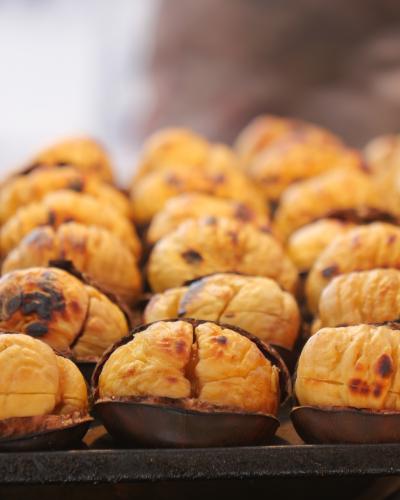
- Consumption: Eating roasted chestnuts (on charcoal or in the fireplace) or boiled chestnuts is a traditional custom of autumn and winter evenings, offering warmth and nutritional value.
Chestnuts differ nutritionally from most nuts, as they are rich in carbohydrates and water, while having a low fat content.
- Vitamin C: Chestnuts are unique among nuts for their high Vitamin C content, which is retained at appreciable levels after roasting or boiling, contributing to the daily intake of the island population.
- Low Fat Content: The very low fat content (much lower than walnuts or almonds) makes the chestnut a healthier nut option, aligning perfectly with the principles of the Ikarian diet for reduced intake of saturated fats.
Chestnuts differ nutritionally from most nuts, as they are rich in carbohydrates and water, while having a low fat content.
- Vitamin C: Chestnuts are unique among nuts for their high Vitamin C content, which is retained at appreciable levels after roasting or boiling, contributing to the daily intake of the island population.
- Low Fat Content: The very low fat content (much lower than walnuts or almonds) makes the chestnut a healthier nut option, aligning perfectly with the principles of the Ikarian diet for reduced intake of saturated fats.