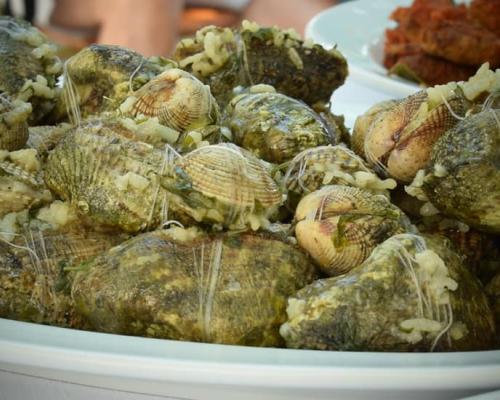
Fishing and fishery products
Fishing and fishery products (fish and seafood) constitute a fundamental productive and cultural activity in the wider area of the Northern Aegean, which is characterized by a combination of open sea and shallow fishing grounds (such as the Gulf of Kalloni in Lesvos), as well as by its geographical proximity to the Dardanelles and the Black Sea, a fact that affects marine biodiversity through the currents. Fishing here relies to a great extent on the coastal and medium-scale fleet, maintaining traditional methods, with fishery products being an integral part of the local Mediterranean diet and tradition.
The uniqueness of the fishery products of the Northern Aegean is based on their diversity and abundance, as well as on distinctive processed products:
- Chub mackerel (Scomber colias) and Sardine (Sardina pilchardus): The area is particularly renowned for the abundance and quality of fatty fish, especially sardines, which are the main catch in the Gulf of Kalloni in Lesvos.
- Anchovy (Engraulis encrasicolus): Also an important pelagic species, mainly in the northern parts.
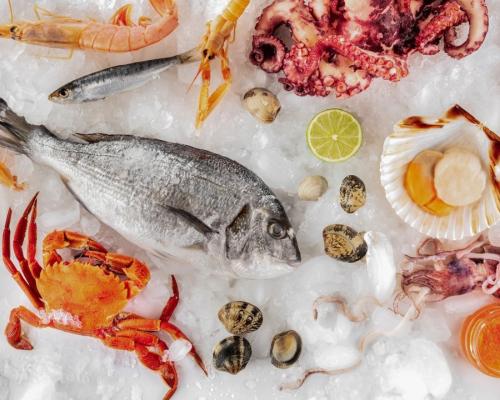
- Seafood (Mollusks/Shellfish): Mussel (Mytilus galloprovincialis) production is significant, as are lobster (Palinurus elephas) and octopus (Octopus vulgaris) fishing.
- Processed Product – PDO: The only fishery product of the Northern Aegean with recognized status is “Kalloni Lesvos Sardine,” referring to salted (cured) sardines that are caught and processed in the Gulf of Kalloni. A key specification is that fishing takes place in June, July, and August and that traditional processing is carried out with coarse salt.
The fishing zone of the Northern Aegean corresponds to Geographical Subarea (GSA) 22 of the General Fisheries Commission for the Mediterranean (GFCM). This area extends from the northern part of Evia to the Dardanelles Strait and includes the islands of Lesvos, Chios, Samos, Limnos, Thasos, Samothraki, and Ikaria.
The Northern Aegean constitutes a distinctive ecological zone due to the following factors:
- Water Inflow: Due to the inflow of cooler and less saline waters from the Black Sea through the Dardanelles, a unique hydrographic situation is created. This phenomenon affects temperatures and salinity, favoring the development of specific pelagic species (such as anchovy, sardine, and chub mackerel).
- Platform and Depth: In contrast to the South Aegean, there are extensive shallow areas (continental shelf), especially around Lemnos and Thrace, which constitute important spawning and nursery grounds and feeding zones.
- Inland Bays: Enclosed bays, such as the Gulf of Kalloni on Lesvos, are important wetlands and reproductive centers that offer excellent quality shellfish and specific fish, such as the renowned Kalloni sardine.
Fishing in the North Aegean is characterized by a diversity of methods, with a strong presence of the coastal fleet and traditional techniques, alongside the use of modern gear.
Fishing Methods
- Coastal Fishing (Small Vessels): Carried out by small boats (traditional “kaikia”) less than 12 meters in length, using static gear (gillnets, nets, longlines) to catch benthopelagic species (cod, gilthead seabream, European seabass, octopus) and shellfish. This method is more selective and catches high-quality species, often of higher commercial value.
- Midwater Fishing (Purse Seines, Trawlers): Primarily purse seines (mechanized purse seines) are used to catch pelagic shoals (sardine, anchovy, Atlantic mackerel) at greater depths, especially off the coasts of the Thermaikos and Thracian Sea, as well as in the North Aegean. Trawl fishing is subject to restrictions (seasonality) and mainly concerns benthic species.
- Seasonality: Fishing activity follows strict environmental and regulatory rules. For example, sardine fishing in the Gulf of Kalloni takes place mainly in the warm months (June–August), when the fish has its maximum fat content and flavor, while trawling is subject to seasonal bans.
Processing & Standardization (Salted Products)
The most important traditional processing method in the North Aegean is salting, particularly of sardines and anchovies, which forms part of the island’s cultural heritage.
- Kalloni Sardine (PGI): Processing is carried out using the “palmoma” technique. The fish are cleaned, dry-salted with coarse salt (salted sardines must remain in salt for at least 8 days), and placed in barrels. This process, which has historical roots on Lesvos, gives the product an intense, salty taste and a creamy texture.
Dryers: On islands such as Lemnos, traditional techniques include drying small fish (e.g., sun-grilled anchovies) in the sun, a method that enhances flavor and allows preservation without refrigeration.
Fishing and fish processing have a significant economic, social, and environmental impact on the islands of the Northern Aegean.
- Economy and Employment: Fishing is a key sector of primary production, especially for islands with less developed tourism (e.g., Lemnos, Samothrace, Lesvos). It provides employment not only for fishers but also for processing units (salted-fish producers, canneries) and related services.
- Cultural Identity and Tourism: Fishery products are a core element of local gastronomy (e.g., ouzo and meze in Lesvos) and tourism promotion. The existence of a PGI product (Kalloni Sardine) serves as a “flagship” for strengthening the region’s image as a quality destination.
- Environmental Management: The fishing sector is directly linked to the need for sustainable management of marine resources. University research and official bodies (Ministry of Rural Development and Food, Hellenic Centre for Marine Research - HCMR) closely monitor stocks to ensure the long-term sustainability of fishing activities.
Fishing in the Aegean Sea is an activity with a history of thousands of years. In the Northern Aegean, the development of the sector is historically linked to trade routes and the need for food preservation.
The art of salting fish (alipasti) on Lesvos and other islands, such as Lemnos, dates back to the early Byzantine period and experienced great growth during the 19th and 20th centuries. The need to preserve the large quantities of sardines and anchovies that could not be consumed fresh led to the perfection of salting techniques, with barrels of salted fish becoming an important export product to Asia Minor and the Black Sea. This tradition survived even after the population exchange, preserving the know-how and traditional methods.
The catches are inextricably linked with local festivals, social gatherings and the gastronomic habits of the Northern Aegean.
- Ouzo and Meze: The consumption of traditional salted fish (sardine, cured bonito, anchovy) is the central custom of the ouzo-meze, especially on Lesvos, which is famous for its ouzo. The combination of the strong drink with the salty meze has evolved into a social ritual.
- Seasonal Festivals: In the Gulf of Kalloni, the Sardine Festival is celebrated every year, usually in August, where grilled and salted sardines are offered free of charge to visitors, honoring the fishing tradition and the product which is now PGI. These festivals strengthen the community’s bond with the sea and its products.
The most important official recognition concerns the processed fishery product.
- Kalloni Lesvos Sardine (PGI):
- Scheme: Protected Geographical Indication (PGI).
- Year: 2014 (Regulation 1042/2014).
- Code: PGI-GR-02206.
Specialized Analysis (Oily Fish)
The pelagic fish of the Northern Aegean, such as sardines and chub mackerel, have an exceptionally high content of polyunsaturated fatty acids (PUFAs), particularly eicosapentaenoic acid (EPA) and docosahexaenoic acid (DHA).
- Omega-3 Fatty Acids: The high concentration of these fatty acids is attributed to the diet of the fish, which is based on the phytoplankton and zooplankton that thrive in the waters of the Northern Aegean (the cold current from the Black Sea increases primary production). Omega-3 fats are critical for cardiovascular health, brain function, and the reduction of inflammation.
- Vitamin B12 and Iodine: Seafood and fish are the best natural source of Vitamin B12, essential for the nervous system, as well as of iodine, which is vital for the function of the thyroid gland.
Specialized Analysis (Oily Fish)
The pelagic fish of the Northern Aegean, such as sardines and chub mackerel, have an exceptionally high content of polyunsaturated fatty acids (PUFAs), particularly eicosapentaenoic acid (EPA) and docosahexaenoic acid (DHA).
- Omega-3 Fatty Acids: The high concentration of these fatty acids is attributed to the diet of the fish, which is based on the phytoplankton and zooplankton that thrive in the waters of the Northern Aegean (the cold current from the Black Sea increases primary production). Omega-3 fats are critical for cardiovascular health, brain function, and the reduction of inflammation.
- Vitamin B12 and Iodine: Seafood and fish are the best natural source of Vitamin B12, essential for the nervous system, as well as of iodine, which is vital for the function of the thyroid gland.