Ladotyri Mytilinis
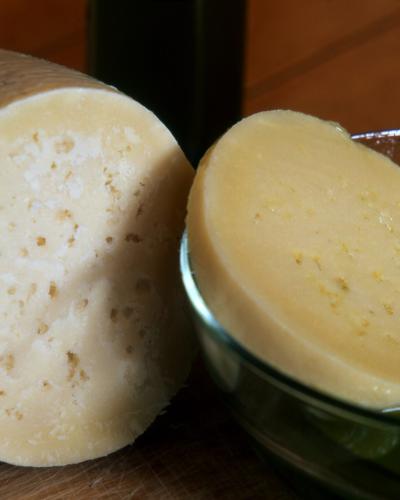
Ladotyri Mytilinis is one of the most recognizable and distinctive cheese products of Greece, with a deeply rooted history on the island of Lesvos. It is a hard table cheese with Protected Designation of Origin (PDO), distinguished by its rich, piquant flavor and characteristic aroma. Its traditional preservation method, immersion in olive oil, from which it also takes its name, endows the cheese with a unique organoleptic identity, linking it inextricably with the island’s strong olive-growing tradition. Its production follows strict specifications that ensure the preservation of the traditional technique and the quality of the raw materials, which come exclusively from local livestock farming.
Ladotyri Mytilinis is registered as a product with Protected Designation of Origin (PDO). This registration certifies that its production, processing and traditional method are directly linked to the geographical area of Lesvos.
- Name and Status:
- Official Name: “Ladotyri Mytilinis” / “Ladotyri of Mytilini”
- Status: PDO (Protected Designation of Origin).
- Year of Registration: The cheese was initially recognized by Ministerial Decision and subsequently registered in the Union’s register.
- Basic Specifications (PDO):
- Raw Material: It is produced from sheep’s milk or a mixture of sheep’s and goat’s milk, in which the proportion of goat’s milk may not exceed 30% of the total. The milk must come from sheep and goats that are traditionally reared and adapted to the flora of Lesvos.
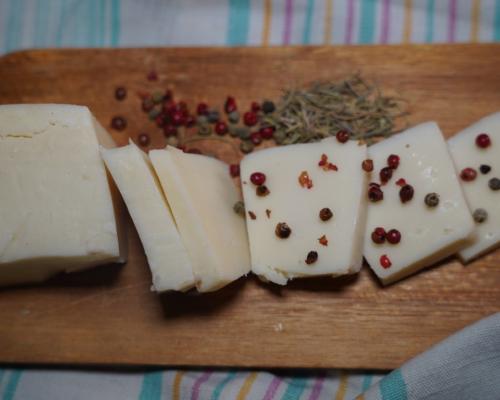
- Type: Hard table cheese.
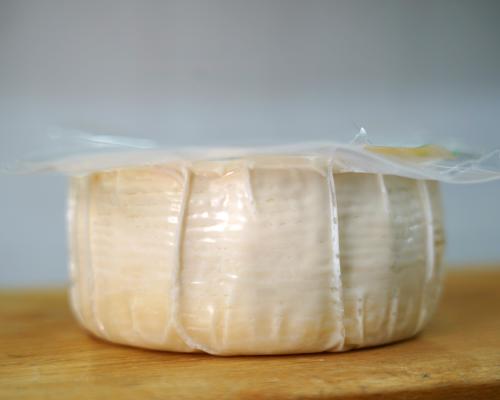
- Shape: Cylindrical, also known as “kefalaki Mytilinis” (“little head of Mytilene”).
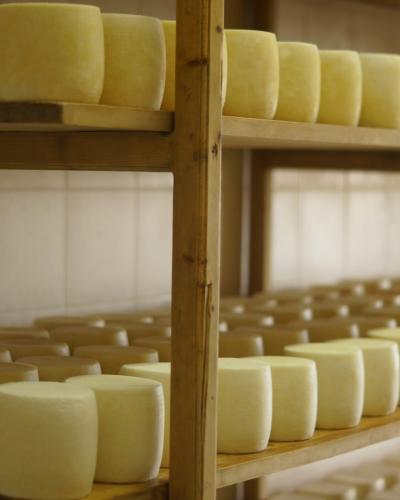
- Maturation: The minimum required maturation period is three (3) months under specific temperature and humidity conditions.
- Chemical Composition: Maximum moisture 38% and minimum fat in dry matter 40%.
- Characteristic Method: After the initial maturation, the cheese is traditionally preserved in extra virgin olive oil (hence the name “Ladotyri”), although today, for commercial reasons, it is often coated externally with paraffin, with the olive-oil version maintained as the traditional and premium option.
The geographical area of production of Ladotyri Mytilinis, as defined in the PDO dossier, is the entire island of Lesvos (Mytilene). The uniqueness of the cheese is directly linked to the island’s distinctive natural environment. Lesvos, known as the “Garden of the Aegean,” has rich flora, which forms the basis of the sheep and goats’ diet.
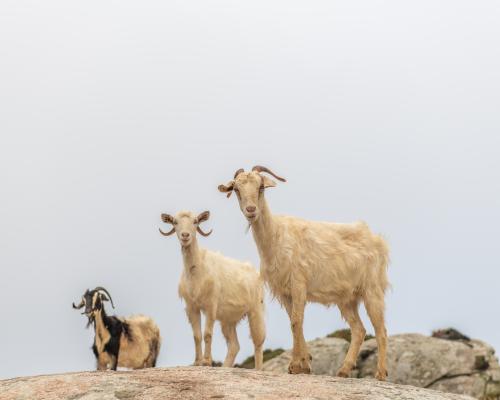
The sheep and goat milk used for its production comes from animals of traditionally reared breeds, under extensive or semi-extensive systems, adapted to the local ecosystem. Their diet, based on the flora of Lesvos pastures – which includes aromatic plants, shrubs and herbs – imparts to the milk, and consequently to the cheese, the distinctive organoleptic characteristics (aroma and piquant flavor) that make it recognizable. The proximity to, and centuries-old tradition of, producing extra virgin olive oil on Lesvos (from the indigenous “Kolovi” variety) is what determined the traditional method of preserving the cheese in oil, further reinforcing its flavor connection to the place.
The production of Ladotyri Mytilinis follows a traditional technology that is passed down from generation to generation, ensuring its quality and authenticity.
- Coagulation of the Milk: The milk (purely sheep’s or a mixture with up to 30% goat’s milk) is usually pasteurized and then coagulated by the addition of rennet, at a temperature between 32–34°C for about 30 minutes.
- Curd Processing: The curd is then cut into small grains and the mass is reheated to 45°C. Next, most of the whey is removed. The grains are pressed at the bottom of the cheese vat to form a compact mass.
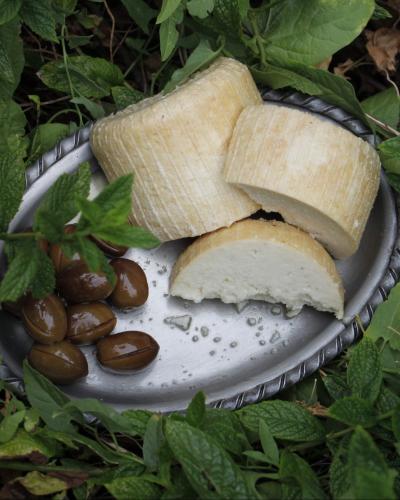
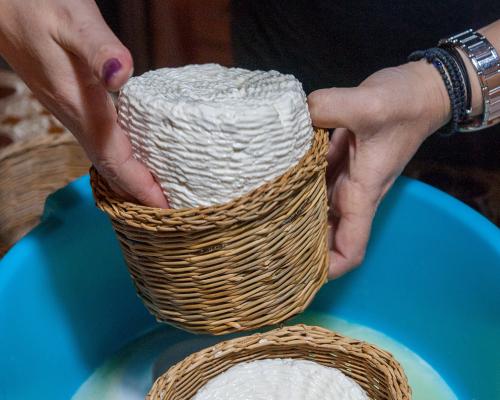
- Shaping & Pressing: The curd is cut into large pieces (5–7 kg), transferred to the cheese table and cut again into smaller, cylindrical pieces that correspond to one Ladotyri (the “little head”). These are placed in special cylindrical molds, which were traditionally woven from bulrush or other wild shrubs of the island (nowadays other suitable materials are also permitted), and are pressed firmly.
- Salting: The cheeses are dry-salted on the surface.
- Maturation: The pieces are transferred to a maturation chamber, where they remain for at least three (3) months. The maturation conditions are particularly critical, with high relative humidity (about 85%) and a temperature of up to 16°C (according to the most recent amendments to the specifications), in order for the characteristic organoleptic features to develop.
- Storage: After maturation and drying, the cheese is either stored in extra virgin olive oil (the traditional and eponymous method) or externally paraffined for reasons of commercial distribution and long-term preservation. Storage in olive oil is what gives it its distinctive, piquant and “full” flavor.
Ladotyri Mytilinis is one of the main pillars of Lesvos’ agricultural economy, strengthening both the livestock and cheese-making sectors.
- Economic Significance: The production of the cheese is inextricably linked to local sheep and goat farming, as the milk must come exclusively from Lesvos. This secures income for livestock breeders, reinforcing the island’s circular economy.
- Preservation of Traditional Practices: The existence of the PDO ensures the continuation of traditional extensive/semi-extensive animal husbandry and classic cheese-making techniques, protecting cultural heritage.
- Tourism Promotion: Ladotyri, together with ouzo and olive oil, is a key gastronomic ambassador of Lesvos. Its recognition attracts gastronomic tourism, with visits to cheese dairies and local delicatessens, showcasing the island’s quality production.
- Cultural Identity: The cheese is linked to the island’s identity, forming an integral part of local customs, diet, and social life.
The cheese-making tradition on Lesvos, and in particular that of Ladotyri, is lost in the depths of the centuries. Its historical reference, as noted in the PDO dossier, underlines that the cheese has been produced on Lesvos since antiquity. Lesvos, being rich in pastures and with a long tradition in animal husbandry, developed techniques for preserving cheese at an early stage.
The technique of preserving cheese in olive oil was not merely a gastronomic choice, but a practical necessity for food preservation before the invention of refrigeration. Olive oil, abundant on Lesvos due to extensive olive cultivation, functioned as a natural preservative. This process gave the cheese its characteristic name, Ladotyri (“oil cheese”). This practice is proof of the historical interconnection between the two most important products of the island, cheese and olive oil. Its cylindrical shape, known as “kefalaki” (“little head”), likewise reflects traditional vessels and molds that have been used for centuries.
Ladotyri Mytilinis is deeply embedded in the dietary habits and celebrations of Lesvos, especially as a key meze.
- Ouzo and Meze: It is the quintessential traditional meze accompanying the famous Ouzo of Lesvos (also PGI), particularly when served as saganaki (fried). The spicy and rich flavor of the cheese balances and highlights the aroma of ouzo, creating a classic local ritual.
- Seasonality: Although it is now produced all year round, traditional production is linked to the seasonality of goat and sheep milk, with the best cheese produced in spring.
- Tsimposi (Feast): At social gatherings, celebrations, and family tables, Ladotyri is always present, either as an appetizer or as an ingredient in local pies and cooked dishes.
The high quality and uniqueness of Ladotyri Mytilinis have been recognized in national and international cheese-making competitions. Producers from Lesvos who produce Ladotyri Mytilinis PDO have consistently received distinctions:
- World Cheese Awards: Various local dairies with Ladotyri Mytilinis PDO have won awards (e.g., Gold, Silver) in this leading international competition.
- Taste Olymp Awards / Global Cheese Awards: Distinctions have been reported in Greek and European competitions, confirming the consistent quality of the product.
Due to its production method and maturation, the cheese has zero carbohydrates and sugars, making it suitable for ketogenic diets. Its high protein content (>26%) makes it an important source of amino acids, while the large amount of calcium (>900 mg/100 g) significantly contributes to bone health. As a hard cheese, it is naturally lactose-free (or contains only minimal traces) after fermentation and maturation are completed, making it tolerable for people with intolerance.
Due to its production method and maturation, the cheese has zero carbohydrates and sugars, making it suitable for ketogenic diets. Its high protein content (>26%) makes it an important source of amino acids, while the large amount of calcium (>900 mg/100 g) significantly contributes to bone health. As a hard cheese, it is naturally lactose-free (or contains only minimal traces) after fermentation and maturation are completed, making it tolerable for people with intolerance.