livestock products
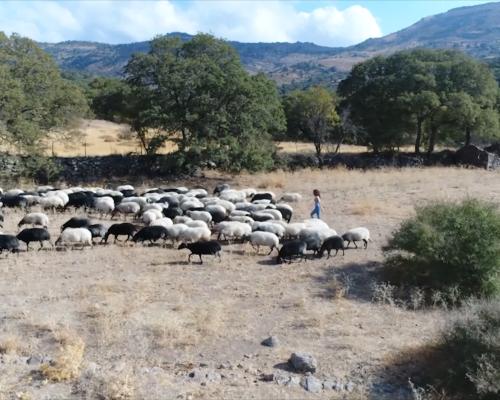
The livestock products (meat) of the islands of the Eastern Aegean, which include small ruminants, beef, pork and poultry, are characterized by extensive or semi‑extensive rearing methods and a close connection with the local vegetation. Animal husbandry is a fundamental activity, especially on Lemnos, Lesvos, Chios and Ikaria, where the animals are excellently adapted to the dry, hot environment. The meat, particularly from sheep and goats, acquires a distinct intensity of flavor and aroma, as their diet is based on the aromatic herbs and shrubs of the Aegean. Emphasis is placed on local breeds, such as the Chios sheep and the Lemnos kid, which have developed resilience and contributed to the creation of unique products. Poultry farming is traditionally small‑scale, usually for household use.
The uniqueness of the livestock products of the islands stems from their origin in specific local breeds and free‑range grazing in the phrygana ecosystems:
- Lemnos Kid & Agios Efstratios Kid: This designation concerns the kids that are raised extensively on the lands of Lemnos and neighboring Agios Efstratios. Their rearing is inextricably linked to the island’s dairy tradition (Lemnos Feta).
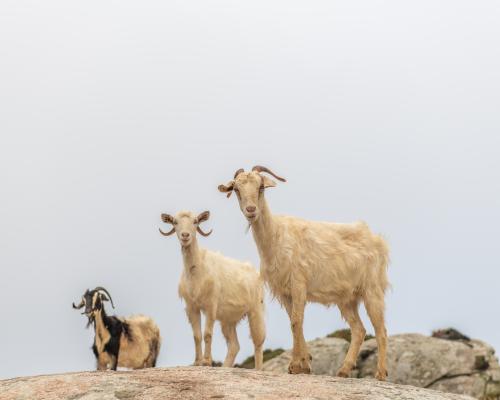
- Local Thymaina Kid: It is characterized by grazing on the wild, sparse vegetation of Thymaina, giving the meat a particularly intense, “wild” flavor.
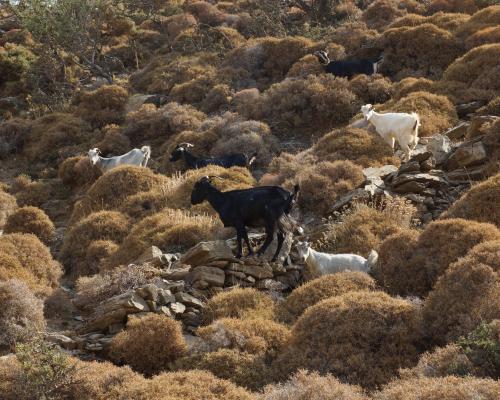
- Ikaria Wild Goat: These are goats and sheep reared under semi‑wild conditions on the forested slopes of Ikaria, feeding almost exclusively on the local flora, which results in meat with very low intramuscular fat and a distinctive taste.
- Evdilos Breed Sheep (Ikaria): A local sheep breed reared in the Evdilos area of Ikaria, adapted to the island’s particular conditions.
- Chios Sheep: Known as one of the most productive sheep breeds in the world, mainly for its high milk yield, its meat (lamb) is also of high quality.
- Lemnos Lamb: Meat from the sheep of Lemnos, reared on the island’s relatively larger plain and fed with cereals, greens and straw.
The geographical area is characterized by heterogeneity in the rearing method, depending on the morphology of each island.
- Lemnos & Agios Efstratios: Lemnos has extensive lowland areas and pastures, supporting both sheep and goat farming as well as cattle raising. Agios Efstratios, smaller and more remote, relies exclusively on extensive sheep and goat husbandry.
- Ikaria & Thymaina: They are characterized by mountainous, rocky terrain and dense maquis vegetation, ideal conditions for extensive, semi-wild goat rearing (wild goat). The Eudilos breed of Ikaria has adapted to these mountainous conditions.
- Chios & Lesvos: They have significant livestock farming zones, where the breeding of Chios sheep and Lesvos sheep and goats is developed, usually in semi-mountainous areas.
The rearing method is essentially extensive, with animal nutrition relying for most of the year on the islands’ natural vegetation.
- Extensive Feeding: The kids (of Lemnos, Ikaria, Thymaina) and the sheep graze freely on the island pastures. The consumption of aromatic plants (thyme, oregano, savory, kermes oak) is decisive for the composition of fatty acids and the intensity of the meat’s aroma.
- Local Breeds: Rearing is carried out with local breeds, which have lower growth rates but produce meat with higher dry matter content and better organoleptic characteristics.
- Supplementary Feeding: Supplementary feeding is necessary during the summer or winter (especially for dairy breeds such as the Chios sheep) and is carried out with locally produced feeds (e.g., Lemnos barley) or by-products.
- Traditional Slaughtering: Meat production follows strong seasonality, with the slaughter of lambs and kids concentrated mainly around Easter and Christmas, meeting the needs of local festive customs.
Livestock farming is a pillar of the rural economy, ensuring social cohesion and the preservation of the landscape.
- Income & Employment: It provides a basic income to the inhabitants of mountainous and semi-mountainous areas, contributing to the economic viability of the islands.
- Processed Products: Meat is the raw material for the production of local cured meats (e.g., kavourmas) and is inextricably linked to the PDO cheeses of the islands (Lemnos Feta, Lemnos Kasseri, Lesvos Ladotyri).
- Environmental Conservation: Gentle extensive grazing contributes to the maintenance of pastures and the reduction of fire risk (vegetation clearing).
Small ruminant farming has been a centuries-old tradition in the Aegean, as it was the most sustainable form of animal husbandry on arid land.
- Local Breeds: The development of breeds such as the Chios sheep and the Evdilos breed constitutes a legacy of centuries of selective breeding and adaptation to the microclimate of each island.
- The Festival of Ikaria: The Wild Goat of Ikaria is a historic symbol of the island and is the main dish at traditional festivals and social events, where it is cooked in large quantities.
The meat of small ruminants is at the heart of island gastronomy, mainly in festive contexts.
- Boiled Ikaria Kid: This is the most iconic recipe, where wild goat (or young kid) is slowly cooked in cauldrons with plenty of onions and wine, usually at festivals, highlighting its simple yet intense flavor.
- Easter Customs: Lamb or kid from Lemnos/Lesvos is the main dish of Easter Sunday, usually cooked in the oven with potatoes and local herbs.
- Kavourmas: The production of cured meats and kavourmas from pork (mainly in Lemnos and Lesvos) is a traditional method of preserving meat for the winter.
The meat of livestock products (small ruminants, cattle) that are raised extensively on the islands of the North Aegean, such as the Wild Goat of Ikaria, is considered nutritionally superior due to its particular composition, which is directly affected by the free-range diet in the phrygana ecosystems. Nutritionally, this meat is characterized by a lower content of intramuscular fat and saturated fatty acids compared to the meat of intensively farmed animals, as a result of the animals’ increased physical activity. Moreover, due to the intake of aromatic plants and flora rich in precursor substances, it exhibits an improved Omega-6 to Omega-3 fatty acid ratio (especially alpha-linolenic acid, ALA), a composition that is beneficial for cardiovascular health. Beyond fats, meat is an excellent source of high biological value proteins, as well as important micronutrients such as Vitamin B12, Iron (Fe), and Zinc (Zn), trace elements that are critical for hematopoiesis and the functioning of the immune system.
The meat of livestock products (small ruminants, cattle) that are raised extensively on the islands of the North Aegean, such as the Wild Goat of Ikaria, is considered nutritionally superior due to its particular composition, which is directly affected by the free-range diet in the phrygana ecosystems. Nutritionally, this meat is characterized by a lower content of intramuscular fat and saturated fatty acids compared to the meat of intensively farmed animals, as a result of the animals’ increased physical activity. Moreover, due to the intake of aromatic plants and flora rich in precursor substances, it exhibits an improved Omega-6 to Omega-3 fatty acid ratio (especially alpha-linolenic acid, ALA), a composition that is beneficial for cardiovascular health. Beyond fats, meat is an excellent source of high biological value proteins, as well as important micronutrients such as Vitamin B12, Iron (Fe), and Zinc (Zn), trace elements that are critical for hematopoiesis and the functioning of the immune system.