Psara figs
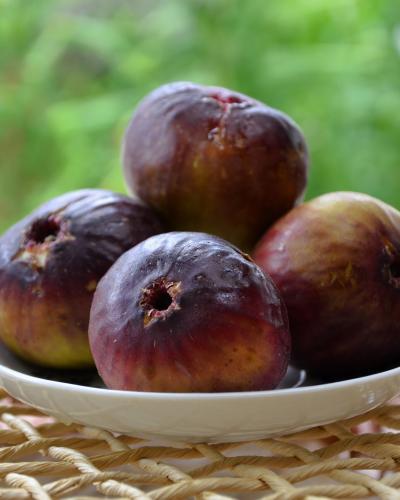
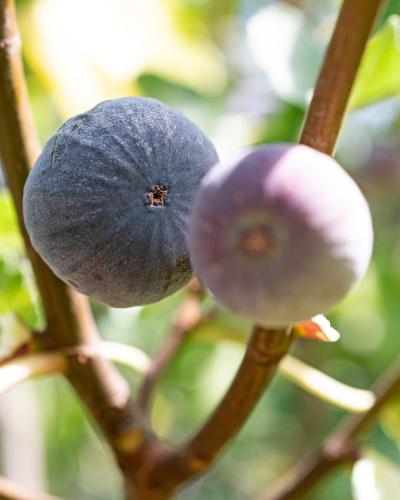
The figs from Psara are an agricultural product that is closely linked to the island’s historical and economic trajectory, even though agricultural production on Psara is limited due to the barren nature of the land. The cultivation of the fig tree (Ficus carica), a plant resistant to drought, though not widespread, is found in small farms or orchards, mainly for personal consumption or for the production of traditional sweets.
The uniqueness of the Psarian figs, which are known mainly in the local market and to visitors, lies in their origin from an arid island environment. This soil and climate condition, combined with the absence of intensive cultivation, contributes to the production of fruits with particularly high sugar content and concentrated aroma, characteristic of products grown under dryland farming conditions. The fruits are consumed fresh or, more often, dried and processed into traditional island sweets, such as almond confections and spoon sweets, where the fig is used either as a base or as a garnish.
The island is characterized by barren and rocky soil. According to historical references, the land of Psara was already poor in antiquity, not providing, for example, the necessary wine for the worship of Dionysus. This arid and poor land has resulted in agriculture being limited and cultivation focusing on drought-resistant plants, such as the fig tree. The cultivation of fig trees is found in small, sheltered plots around the settlement and in small orchards where there is minimal water retention. The climatic conditions are characterized by hot and dry summers and mild winters, typical of the Mediterranean climate, ideal for the fig tree, which is one of the most drought-resistant fruit trees, although fully dry conditions can reduce its yield.
The cultivation of the fig tree on Psara follows traditional dry-farming practices adapted to the calcareous and moderately alkaline island soil, avoiding intensive irrigation.
Fertilization, when applied, is usually organic, using well-rotted manure from local animals. Training pruning (open vase) is applied for better aeration and easier harvesting during the summer months. Figs for fresh consumption are picked when moderately firm, while for drying they are harvested at full ripeness, when the sugar content is at its maximum.
Traditional processing (drying) on the islands includes cutting the figs, flavoring them with cinnamon, sesame, or walnuts, and baking them in an oven or exposing them to the sun. After drying, the figs are pressed, and bay leaves are often placed between the layers, a practice that enhances preservation and imparts a characteristic aroma.
Fig production on Psara, although not the island’s main economic activity, has a significant cultural and local impact.
- Preservation of Rural Identity: The cultivation of fig trees helps preserve rural tradition and biodiversity in an environment characterized as barren and harsh. Fig trees are an indicator of the small, traditional gardens that provide food for residents’ needs.
- Contribution to Tourism: Fig-based products (such as dried figs or preserves) are included among the local delicacies offered to the few visitors, enhancing the authenticity of the island’s gastronomic experience. Together with the renowned thyme honey and almond sweets, figs form an integral part of the local flavors.
- Resilience and Self-Sufficiency: On an island with limited natural resources, the fig tree’s ability to thrive in dry conditions offers a note of self-sufficiency and food security for the small local communities, reducing dependence on imported products.
The fig tree is one of the oldest trees in the Mediterranean, and its cultivation in Greece dates back to antiquity. Although the island is referred to as “barren” already from Homeric times, the presence of hardy trees such as the fig in small orchards has always been vital for the inhabitants’ survival.
The most important historical milestone of the island is the Destruction of Psara by the Ottomans in June 1824, an event that led to the complete desolation of the place and the extermination or flight of its population. This catastrophe also affected every form of agricultural production. After the inhabitants resettled, mainly after 1864, traditional agriculture, including fig cultivation, was revived, reflecting the resilience of the people of Psara. The fig tree, as a tree that symbolizes life and abundance in contrast to Solomos’ “pitch-black ridge,” was once again integrated into the island’s limited agricultural fabric.
Although there are no widely recorded fig-related customs that are exclusively from Psara, such as those found in other regions of Greece, the fruit is incorporated into the traditions of island hospitality and ceremonial sweets.
- Accompaniment to Ouzo/Tsipouro: Dried figs, often combined with local thyme honey, are a traditional meze served with ouzo or tsipouro, especially during the summer months. The sweetness of the fruit balances the flavor of the spirit and symbolizes local abundance, even if only on a small scale.
Figs also contain B-complex vitamins and folic acid. Due to their high dietary fiber content, despite their sweetness, they can help with better control of glucose levels, while their laxative effect makes them useful in healthy eating programs.
Figs also contain B-complex vitamins and folic acid. Due to their high dietary fiber content, despite their sweetness, they can help with better control of glucose levels, while their laxative effect makes them useful in healthy eating programs.