Samos Beer
Samos Beer represents the pioneering effort to establish an authentic, local brewery on the island of Samos. It is a craft beer produced in one of the smallest yet most modern microbreweries in Greece, with particular emphasis on freshness and the use of local elements, such as Samos honey. Beer production began in 2019, initially in collaboration with partner breweries, but the vision was fully realized with the creation of a privately owned brewery in Pythagoreio, leading to the first beer produced exclusively on the island of Samos. This endeavor complements the island’s long tradition in wine products, offering visitors and residents a new, local taste experience.
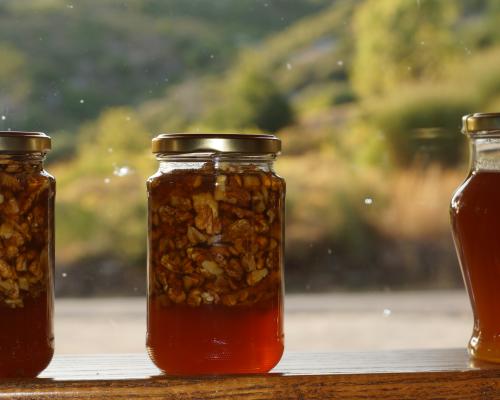
Samos beer is primarily identified by the Samos Beer brand name, with basic name variations corresponding to the types of beer produced. The main products include Valsamo Ale, which is usually a Witbier type and stands out for the addition of Samos honey Blanche and coriander seeds, and Valsamo Lager, which follows the Munich Helles style. This use of local honey, sourced from the island’s rich biodiversity, is a unique taste characteristic that directly links the product to its place of production.
Its production falls into the category of Greek craft beers (beers produced on a small scale), with its uniqueness based on its artisanal character (handcrafted using traditional methods) and the use of local ingredients that are not commonly found in beer.
The natural environment of Samos, with its abundance of high-quality beekeeping products, provides the key ingredient, honey, which is incorporated into certain types of the beer, enhancing its local character. The brewery is housed in the center of Pythagoreio, in a restored classic stone building, a location of significant historical and touristic value.
The choice of Samos as the place of production is directly linked to the quality of the water and the producers’ desire to create a product that reflects the freshness, aromas, and flavors of the island, offering visitors an authentic local experience.
The production of Samos Beer follows modern craft brewing principles, with an emphasis on non-pasteurization and non-filtration, practices that preserve the product’s aromas and flavor intact, ensuring a “fresh” beer.
The basic stages of production include:
- Malting & Wort Extraction (Mash & Lauter): Selected barley malts are used (and wheat for the Witbier/Ale type) together with traditional hops. The mashing and lautering processes aim at extracting sugars from the malt.
- Boiling & Addition of Hops/Ingredients: The wort is boiled, at which point hops are added to impart bitterness, aroma and preservative properties. In the Valsamo Ale (Witbier) type, Samos honey and coriander seeds are added at this stage, while in the Valsamo Lager (Munich Helles) type the emphasis is placed on traditional hops and select malts.
- Fermentation: Yeast is added. Valsamo Ale is fermented with suitable Ale yeasts at higher temperatures, while Valsamo Lager is fermented at lower temperatures with Lager yeasts, following the traditional production method for this style (Munich Helles).
- Maturation & Finishing: The beer matures. The traditional method used (without filters and pasteurization) ensures that the beer retains all its nutrients and its rich flavor. Bottling takes place after maturation is complete, with the beer remaining live and unfiltered.
Although small, the brewery is described as ultra-modern, so that strict control of the process and the quality of the final product is possible.
The establishment and operation of the microbrewery on Samos has a significant multifaceted impact on the local economy and tourism.
- Economic Dimension: The brewery represents a new business venture, creating jobs in production, distribution, and food service (through the tasting room). It strengthens local production through the use of Samos honey and other local raw materials, thus creating a new chain of economic activity.
- Tourism Promotion: Samos Beer functions as an attraction for tourists, offering free tours and tastings at its production facilities in Pythagoreio. This helps promote gastronomic tourism and expand Samos’s image beyond its famous wine. The local beer serves as an ambassador for Samos at both national and international level.
- Cultural Revival: The creation of the “first beer of Samos” in a restored building in Pythagoreio contributes to the preservation of architectural heritage and the revitalization of the urban fabric, breathing new life into the area.
Brewing on Samos, in its modern craft beer form, is a new chapter in the island’s history. While Samos has a deeply rooted winemaking tradition dating back to antiquity (with its renowned Muscat), beer production was non-existent or limited until recently. The history of Samos Beer begins in 2019 with the production of its first type, Valsamo Ale, through collaborations. The dream of the three founders (Irini, Dimitris, Stamatis) was fulfilled after four years, with the installation of the first brewery on the island, marking the beginning of local brewing on Samos.
Culturally, Valsamo beer seeks to connect with the notion of a “balm for the soul,” an expression that reflects the producers’ desire to offer a product that embodies the island’s serenity and euphoria. Although it does not carry the historical weight of Samian wine, the craft beer is part of contemporary Greek gastronomic culture, showcasing local ingredients such as honey.
Due to its recent establishment, the local beer of Samos has not yet developed traditional customs or consumption rituals associated with the product, as is the case with wine. However, the production process itself, carried out with care and dedication on a small scale, alludes to the artisanal and traditional way of preparing foods and drinks.
Beer has now become a key element of modern local customs related to dining and entertainment. Specifically, the brewery in Pythagoreio has become a social space where residents and visitors gather in its courtyard, combining the enjoyment of local beer with the tasting of local dishes, thus creating new gastronomic and social customs. The promotion of freshness and local character as the product’s core values encourages consumers to seek out the beer as yet another symbol of Samian hospitality and quality.
Samos craft beer, being unfiltered and unpasteurized, retains a higher content of certain nutrients compared to industrial beers.
- Macronutrients: Beer consists of approximately 90–95% water. Alcohol content (% v/v) varies depending on the type: for example, Valsamo Ale (Witbier) has an alcohol content of about 5.0% v/v, while Valsamo Lager (Munich Helles) is usually lighter. It contains carbohydrates (from the malt) and a small amount of proteins (from the cereals and the yeast).
- Bioactive Compounds: Due to minimal processing (non-filtration), the beer retains brewer’s yeast, which is rich in B-complex vitamins (such as B6, folic acid, niacin) and minerals (such as magnesium). In addition, hops and malt provide polyphenols (such as phenolic acids and flavonoids), which have antioxidant and potentially anti-inflammatory effects.
- Additional Ingredients: In the case of Valsamo Ale, the addition of Samos honey contributes natural sugars and the honey’s bioactive compounds, offering extra nutritional value, beyond its distinctive aroma and flavor.
Samos craft beer, being unfiltered and unpasteurized, retains a higher content of certain nutrients compared to industrial beers.
- Macronutrients: Beer consists of approximately 90–95% water. Alcohol content (% v/v) varies depending on the type: for example, Valsamo Ale (Witbier) has an alcohol content of about 5.0% v/v, while Valsamo Lager (Munich Helles) is usually lighter. It contains carbohydrates (from the malt) and a small amount of proteins (from the cereals and the yeast).
- Bioactive Compounds: Due to minimal processing (non-filtration), the beer retains brewer’s yeast, which is rich in B-complex vitamins (such as B6, folic acid, niacin) and minerals (such as magnesium). In addition, hops and malt provide polyphenols (such as phenolic acids and flavonoids), which have antioxidant and potentially anti-inflammatory effects.
- Additional Ingredients: In the case of Valsamo Ale, the addition of Samos honey contributes natural sugars and the honey’s bioactive compounds, offering extra nutritional value, beyond its distinctive aroma and flavor.