Throumba of Chios
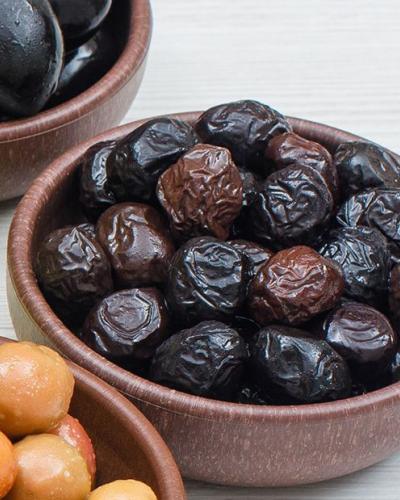
Throumba of Chios is an exceptional table olive variety, which has been recognized as a Protected Designation of Origin (PDO) product by the European Union, a fact that seals its unique quality and its unbreakable bond with the island of Chios. It is a naturally processed, dry, black olive that acquires its characteristic taste and texture directly on the tree, thanks to the special soil and climatic conditions and the traditional method of harvesting and processing. The uniqueness of the product lies in the self-debittering of the fruit, a natural process that results in an olive with soft, wrinkled flesh and a sweet, mildly salty taste, making it a distinctive product of Greek gastronomy and diet.
Throumba of Chios, recognized as a Protected Designation of Origin (PDO) since 1996, is a distinctive table olive of the “Throumba” (or “Throumpoelia”) variety, whose uniqueness stems from the combination of the variety with the special microclimate and soil of Chios. It is characterized by its dark black color and wrinkled (withered) appearance, a result of the natural loss of moisture and the self-debittering that takes place on the tree. This natural process, during which the fungus $Phoma\ oleae$ breaks down the bitter oleuropein, gives Throumba of Chios a mild, slightly sweet and gently salty flavor, without the strong bitterness of untreated olives, while its size ranges at approximately 2.5 to 3.5 grams per fruit.
The geographical area of production, processing and preparation of “Throumba of Chios” PDO is strictly defined and includes various municipalities and communities of the island of Chios. These areas are characterized by a particular Mediterranean climate, with mild winters and cool summers, favorable for the ripening and self-debittering of the fruit.
The soil of the groves contributes decisively to the unique quality. It is usually calcareous, of medium texture, rich in clay and iron oxides, elements that affect the composition of the fruit and enhance the development of the fungus Phoma oleae, which is essential for natural debittering. The olive groves are located in specific communities, such as Gaiatou, Ammades, Vessa, Viki, Volissos, Dievchoun, Elata, Thymiana, Kampos, Keramos, Kourounia, Langada, Leptopoda, Lithio, Melanios, Mesta, Nenitoúria, Neochori, Olympoi, Parparia, Peiramatou, Pispilountas, Pityous, Potamia, Pyrgi, Sidirounta, Spartounta, Sykiada, Trypes, Fyta and Chalandra, a fact that underscores the local character of the production.
The production of Throumpa Chios PDO is based on traditional cultivation techniques and a natural processing procedure that takes place exclusively within the delimited geographical area.
Cultivation Techniques
The growers of Chios apply specific techniques, adapted to the requirements of the Throumpa variety and to the soil and climatic conditions:
- Fertilization: This is carried out with specific quantities of nitrogen, phosphorus and potassium, depending on the needs of the olive grove.
- Soil and Climatic Conditions: The mild temperature and dry atmosphere during ripening are critical for the natural dehydration and debittering of the fruit.
- Pest Control: Control of the olive fruit fly (the main pest of the olive) is carried out mainly by biological methods or with ground bait sprays, in accordance with the PDO specifications, with the aim of minimizing chemical interventions.
Harvesting & Natural Debittering
The most decisive phase is the harvesting of the fruit, which is inextricably linked to the natural ripening process:
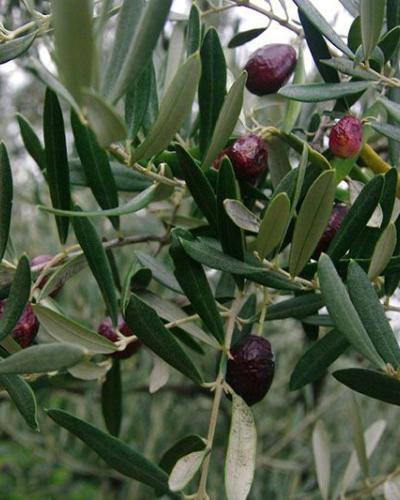
- Full Ripeness and Natural Drop: The olives are harvested when they have reached the stage of full ripeness, acquiring the dark black color and the characteristic mild, slightly sweet taste.
- Self-debittering: At this stage, the fruit has already undergone the process of self-debittering on the tree. This is achieved thanks to the natural fungus Phoma oleae inherent in the variety and its conditions, which breaks down the phenolic compound oleuropein (which is responsible for the bitter taste), without the need for brine or chemicals.
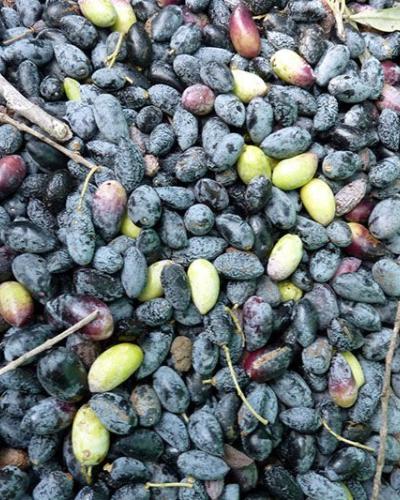
- Harvesting: The harvest is carried out using nets (olive cloths) that are placed on the ground to collect the fruits that naturally fall from the tree due to full ripeness and partial dehydration. Harvesting takes place every 3–5 days to ensure quality.
- Transport: The olives must be healthy and are transported immediately in plastic crates or bags weighing 5 to 10 kilos, in order to ensure the preservation of quality and to avoid damage.
Post-Harvest Processing
After harvesting, processing is minimal and aims mainly at preservation and the enhancement of the naturally debittered flavor. Throumba Chios olives are traditionally preserved dry or lightly in oil or a little brine, maintaining their wrinkled texture.
The production of Throuba Chios PDO has a multidimensional impact on the local economy and environment of Chios. The Throuba olive grove is an integral part of the rural landscape, enhancing biodiversity and protecting the soil from erosion. The economic impact is significant, as recognition as a PDO product ensures added value, boosting the income of olive growers in specific communities on the island and promoting the preservation of traditional cultivation practices. The existence of a recognized PDO product also serves as an ambassador for Chios in international markets, showcasing the island’s agricultural identity beyond its famous mastic, contributing to agritourism and the strengthening of local gastronomy.
Olive cultivation on Chios has deep roots, with the island, like other Aegean islands, being one of the cradles of global olive growing. The Throuba variety is traditionally linked to the rural life of Chios and, in contrast to other products such as mastic, Throuba olives are cultivated in a wide range of communities, mainly in the northern and western parts of the island. The cultivation and processing of Throuba olives are part of the intangible cultural heritage of the inhabitants, as the natural collection of the fruit from the ground and its self-debittering are methods passed down from generation to generation, marking the connection between humans and the cycle of nature and the island’s distinctive microclimate. The presence of the olive fruit and its oil has always been fundamental to the island’s diet and economy, despite the dominance of mastic.
The harvesting of olives, although less steeped in custom compared to mastic, has always been an important agricultural activity. In the villages of Chios, the harvest period of Throumba olives, which takes place when the fruit falls naturally (usually from November onwards), is associated with communal work (solidarity among neighbors and relatives for the gathering) and the use of traditional tools and techniques, such as handmade nets for collection. After the harvest, the sorting of the wrinkled fruits for final processing and preservation in oil or light brine is also a traditional household practice. Throumba, as a fruit that is preserved throughout the year, symbolizes abundance and the blessing of nature.
The main distinction of the product is its recognition as a PDO by the European Union (Regulation 1107/96), which constitutes the highest institutional certification of its quality and geographical uniqueness.
- Distinction (Institutional): Recognition as a Protected Designation of Origin (PDO).
- Organization: European Commission.
- Year: 1996 (by EC Regulation 1107/96).
- Category: Table Olives.
- Level: Highest (Official Protection).