Prehistoric Settlement of Poliochni
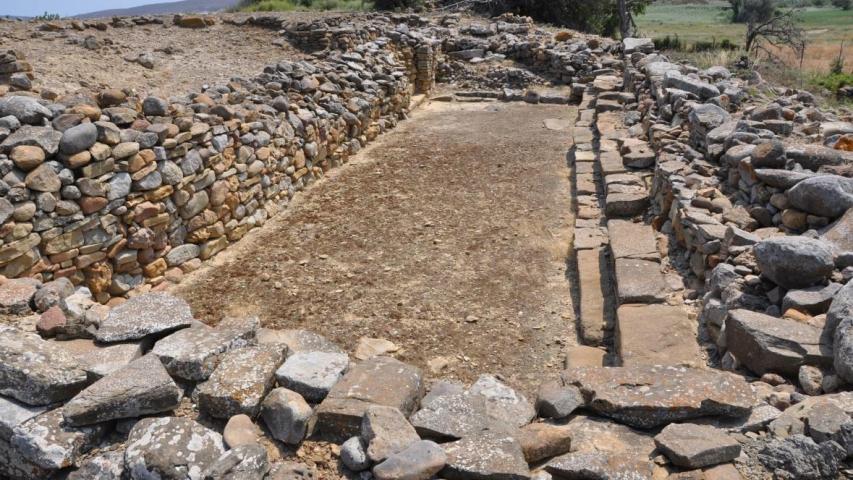
Poliochni, on the eastern coast of Lemnos, extends over an elongated hill that in prehistoric times jutted into the sea, forming a small peninsula. According to excavation data, the settlement arose at the turn of the 4th to the 3rd millennium BC, opposite the city of Troy. It passed through many phases of architectural and cultural development (3700–1200 BC): the Black, Blue, Green and Red, Yellow, Gray, and Violet. Of the architectural remains, those of the Yellow Period are the best preserved. However, from the Blue Period, the “Bouleuterion” and the communal “Granary” have been revealed. Other public constructions include paved streets, squares, the drainage network, and the settlement’s water wells. In the Blue Period, the earliest examples of a sewage and water supply system are detected. The houses, with their small auxiliary spaces, give the impression of complex building groups, each accessible via a courtyard.