Broad Beans (Fouli)
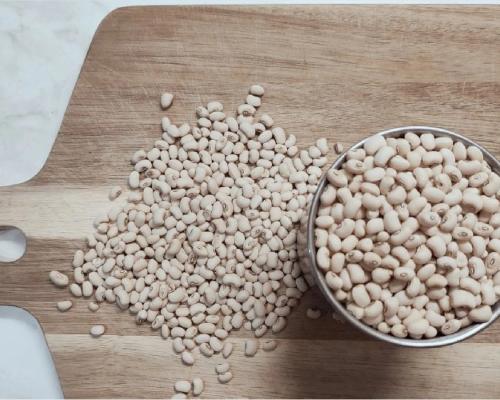
The Broad Beans (Fouli) of Lemnos are a characteristic product of the island’s agricultural production, belonging to the wider category of Pulses. This pulse, which belongs to the species Vicia faba, is traditionally cultivated in the fertile Lemnian soil and is closely linked to its gastronomic identity, which is defined by the abundance and quality of the local agricultural products.
The product is referred to as Broad Bean or Fouli of Lemnos and is the variety Vicia Faba Major, also known as “Chontrokouko” broad bean. Lemnos has revived the cultivation of this local variety, which stands out for its high nutritional value and distinctive taste. The revival of local grain and pulse varieties, including the broad bean, has in recent years become a competitive advantage for the island, thanks to the efforts of local producers in collaboration with academic institutions for the analysis and determination of appropriate cultivation practices. The Lemnos broad bean is a local variety/indigenous population (landrace) of the species Vicia faba Major (“chontrokouko”) that is being revived.
Lemnos is located in the Northeastern Aegean and has historically been renowned as the “granary of the Aegean” due to the exceptional fertility of its land. The island has deep, rich and well‑drained clay and silt loam soils, which are particularly favorable for the cultivation of pulses and specifically of Vicia faba, since broad beans are known to tolerate heavy and saline soils better than other legumes.
The climate of Lemnos is Mediterranean, with mild, wet winters and dry, hot summers. The cultivation of broad beans (as a winter or spring crop) takes advantage of the island’s low temperatures, given that Vicia faba is a cool‑season plant, resistant to cold, and requires cool conditions for optimal development. The island’s geographical and soil‑climatic conditions contribute to shaping the unique genetic material of the local varieties, imparting distinct quality characteristics to the seeds.
The cultivation of fava beans in Lemnos combines traditional practices with modern monitoring, particularly for the preservation of local varieties. Fava beans are sown mainly in autumn, prefer well-drained soils with a pH of 6.5–9 and, as a legume, naturally enrich the soil with nitrogen, contributing to crop rotation. The harvest of dried fava beans takes place in June, traditionally by hand or today with combine harvesters. After harvesting, the beans are dried, threshed and cleaned; in modern standardization, mechanical sorting is applied, while for local varieties hand-sorting is also carried out to ensure high quality before packaging.
The cultivation of Kouki (Fouli) of Lemnos, like the broader production of pulses and cereals, has a multiple impact on the local economy and the environment of the island. It is part of the traditional agricultural identity of Lemnos, contributing to the preservation of its reputation as a fertile land.
Economic Impact: The revival of local varieties, such as Fouli, offers added value to agricultural production, allowing producers to differentiate themselves from imported products and to appeal to markets seeking authentic, traditional products with guaranteed quality. This strengthens local income and helps retain the rural population on the island.
Environmental Impact: As a legume, the broad bean plays a central role in sustainable agriculture and crop rotation, reducing the need for chemical nitrogen fertilizers. This is in line with modern ecological practices and protects the unique quality of Lemnian soils, which are already valuable.
Cultural Impact: The preservation and cultivation of Fouli keep alive the island’s genetic heritage and traditional farming techniques, enhancing cultural tourism and its gastronomic reputation.
Broad beans (Vicia faba) are among the oldest cultivated plants of the Old World, with archaeological finds tracing their domestication in the Near East back as far as 11,000 years ago. Before the arrival of pulses from the Americas (after 1492), the broad bean was the principal edible legume in Europe and the Mediterranean, serving as a primary source of protein.
On Lemnos, the long tradition in agriculture explains the presence and preservation of local varieties, such as Fouli. The island, with its rich agrarian history, has always been a center of production, and pulses such as the broad bean formed the core of the inhabitants’ diet, especially during periods of fasting or low meat consumption. The effort to revive old varieties by local producers, through collecting seeds from older growers and from the Hellenic Agricultural Organization (N.AG.RE.F.), attests to the continuity and importance of the product for the island’s cultural and agricultural memory.
Broad beans, due to their historical significance, are embedded in various folkloric sayings and traditions, although information on specific Lemnian customs relating exclusively to Fouli is limited.
- Sowing and the agricultural cycle: The traditional sowing of broad beans in October is associated with the folk saying “On Saint Luke’s Day, sow your broad beans” (18 October, feast of the Evangelist Luke), indicating the synchronization of cultivation with the agricultural cycle.
- Folk sayings: Many proverbs, common throughout Greece, reflect the importance of this legume:
- “Separate the broad beans from the chickpeas”: Expresses the need for clarity and straightforward talk.
- “It was a bean and it burst”: Used to indicate a strong resemblance, often of a child to a parent.
On Lemnos, the cultivation of pulses is linked to the broader cycle of harvesting and preparing winter foods, with families participating collectively in the processes of threshing and cleaning.
Fava beans (Vicia faba) are a legume with exceptionally high nutritional value, which makes them an important component of the Mediterranean diet and, in particular, of the rich Lemnian cuisine. Their nutritional composition makes them an excellent source of plant-based protein and dietary fiber.
Fava beans (Vicia faba) are a legume with exceptionally high nutritional value, which makes them an important component of the Mediterranean diet and, in particular, of the rich Lemnian cuisine. Their nutritional composition makes them an excellent source of plant-based protein and dietary fiber.