Chios Mastic Oil
Chios Mastic Oil is the only essential oil derived from mastic resin, the “tear” of the mastic-bearing lentisk (Pistacia lentiscus var. chia), an endemic shrub that thrives exclusively in the southern region of the island of Chios. The natural resin, Chios Mastiha, is one of the first natural products used by humans as chewing gum and as a medicine, with a history that is lost in ancient times. Mastic Oil, as a distillation product of this resin, constitutes a concentrated form of the aromatic and bioactive components of mastic. The global uniqueness of the oil is inextricably linked to the geographical area and the traditional cultivation methods, which have been recognized and protected at the European level, making it one of Greece’s most important export products.
Chios Mastic Oil, also known as Chios Mastic Essential Oil or Mastic Essential Oil, has official recognition as a Protected Designation of Origin (PDO) product. This recognition is based on the technical dossier of “CHIOS MASTIHA AND OTHER PRODUCTS” (Minister of Agriculture decision 317707/1994, Government Gazette 17/B’/1994), which was registered in Regulation (EC) no. 123/97. Mastic Oil (Class 33.01.30.00) is strictly defined as the product produced solely from the natural “CHIOS MASTIHA” (PDO), by means of distillation, and its production must take place exclusively within the administrative boundaries of the Mastic Villages of the island of Chios. Its technical characteristics, such as its liquid colour (white or yellowish) and the strong, distinctive aroma and taste of mastic, are certified by specific legislation, ensuring its authenticity and high quality.
The geographical production area of Mastic Oil is southern Chios, which includes the 24 Mastic Villages of Vavyloi, Vessa, Elata, Mesa and Exo Didyma, Tholo Potami, Thymiana, Kalamoti, Kallimasia, Karyes, Katarraktis, Kini, Leivadia, Lithi, Mesta, Nenita, Olympoi, Patrika, Pyrgi, Skoupia, Aipos, Agioi Theodoroi, Agios Georgios Sykiousis and Armolia. The uniqueness of the product is directly linked to the extremely special microclimate of the area, which is dry and warm, with mild winters and high sunshine. The soil is mainly calcareous and poor in organic matter, but rich in trace elements. The combination of these pedoclimatic factors (drought, temperature, soil type) with the presence of the endemic subspecies Pistacia lentiscus var. chia is the main reason why the mastic tree secretes this specific resin, which it does not produce in any other region of the world. The demarcated geographical zone covers the cultivated lands of the Communities that have traditionally been engaged in the cultivation and production of Chios Mastic, which is the raw material for Mastic Oil.
The production of Mastic Oil is inextricably linked to the traditional cultivation of Chios Mastic, which is protected as Intangible Cultural Heritage by UNESCO (2014).
The production process of the essential oil follows these stages:
- Harvesting of Mastic: The raw material is the natural resin. Harvesting takes place during the period July–September, after the “engraving” process (making incisions in the trunk of the tree), during which the resin flows and solidifies on the ground (the “table”) that has previously been cleaned and covered with white powder (the “whitening”).
- Cleaning: The raw mastic is meticulously cleaned of soil, stones and foreign bodies, traditionally by hand (“sifting” and “washing”), until it becomes clean, white or pale yellow “crystals”.
- Distillation (Hydrodistillation or Steam Distillation): The clean mastic is transferred to stills (cauldrons) where it is heated in the presence of water or by the injection of superheated steam. During heating, the volatile components (essential oils) of the mastic evaporate.
- Condensation: The vapors are led into a condenser where they liquefy. The result is a biphasic mixture consisting of Mastic Oil (the upper, oily, lighter phase) and the aqueous distillate (mastic hydrolat/floral water).
- Separation and Standardization: The essential oil is separated from the water using a separator (Florentine flask) and standardized in bottles, preserving its characteristic aroma and its quality as a PDO product.
The cultivation of mastic and the production of Mastic Oil form the core of the economic and social structure of southern Chios. The product is directly linked to the Primary Sector and the employment of the local population. The Chios Gum Mastic Growers Association (C.G.M.G.A.), a secondary cooperative, has exclusive control over the production and distribution of natural mastic and its products, including PDO Mastic Oil, ensuring a stable income for the families of the Mastic Villages. The monoculture of mastic functions as a key development lever for the island, supporting the economy, the preservation of the rural population, and the protection of the natural environment and the cultural landscape of the Mastic Villages.
The use of mastic dates back at least to the 5th century BC, when Herodotus mentioned that the Greeks chewed the resin to clean their teeth and freshen their breath. Hippocrates and Dioscorides extolled its healing properties for the digestive system. During the Byzantine and, primarily, the Genoese period (14th–16th century), mastic became one of the most valuable commodities of the Mediterranean, known as “the white gold of Chios.” The production of mastic and its subsequent distillation into Mastic Oil constitute an uninterrupted cultural heritage, which is kept alive through the traditional cultivation and harvesting techniques that are passed down from generation to generation in the Mastic Villages.
As a PDO product, the quality of Chios Mastic Oil (and its raw material, Chios Mastic) has received international recognition.
- Cultural Heritage Distinction: The traditional cultivation of Chios Mastic, which is directly linked to the production of Mastic Oil, was inscribed on UNESCO’s Representative List of the Intangible Cultural Heritage of Humanity (Year: 2014).
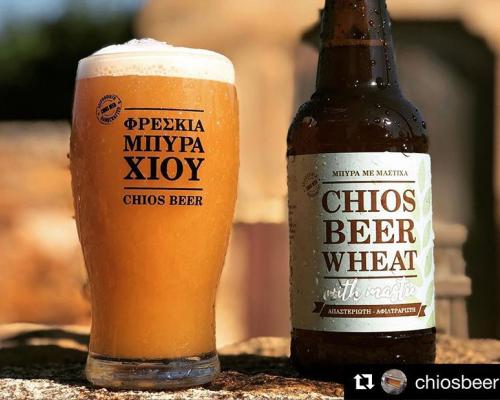
- Products with Mastic Oil: Derivative products that use Mastic Oil as a key ingredient, such as Chios Mastic Liqueur, have received multiple international distinctions in taste and quality competitions.
Chios Mastic Oil is not traditionally considered a food with significant macronutrient value (proteins, carbohydrates, fats), but is classified in the category of essential oils, with its value lying in its high concentration of bioactive compounds. Its chemical composition, which is also the source of its beneficial properties, has been extensively studied by the scientific community.
- Main Components: Mastic Oil consists mainly of monoterpenes (in a proportion ranging between 90–95%) and, to a lesser extent, sesquiterpenes.
- Primary Bioactive Compound: The main compound is α-pinene, which often exceeds 80% of the total composition. Other important constituents include β-myrcene, limonene, and β-pinene.
- Beneficial Actions: This unique composition, especially the high content of α-pinene, has been credited with the strong antimicrobial (against pathogenic bacteria such as Helicobacter pylori), antioxidant, anti-inflammatory, and antifungal activity of the oil, making it valuable in pharmaceuticals, dentistry, and cosmetology.
Chios Mastic Oil is not traditionally considered a food with significant macronutrient value (proteins, carbohydrates, fats), but is classified in the category of essential oils, with its value lying in its high concentration of bioactive compounds. Its chemical composition, which is also the source of its beneficial properties, has been extensively studied by the scientific community.
- Main Components: Mastic Oil consists mainly of monoterpenes (in a proportion ranging between 90–95%) and, to a lesser extent, sesquiterpenes.
- Primary Bioactive Compound: The main compound is α-pinene, which often exceeds 80% of the total composition. Other important constituents include β-myrcene, limonene, and β-pinene.
- Beneficial Actions: This unique composition, especially the high content of α-pinene, has been credited with the strong antimicrobial (against pathogenic bacteria such as Helicobacter pylori), antioxidant, anti-inflammatory, and antifungal activity of the oil, making it valuable in pharmaceuticals, dentistry, and cosmetology.