Kalloni Sardine
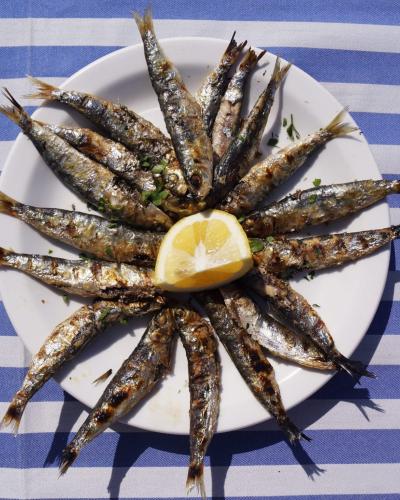
The Kalloni Sardine, also known as Papalina, is a unique fishery product of Lesvos, with particular historical, gastronomic and economic importance for the island, especially the area of the Gulf of Kalloni. Its distinctiveness is due to the combination of the gulf’s special aquatic environment and the traditional, very rapid salting method.
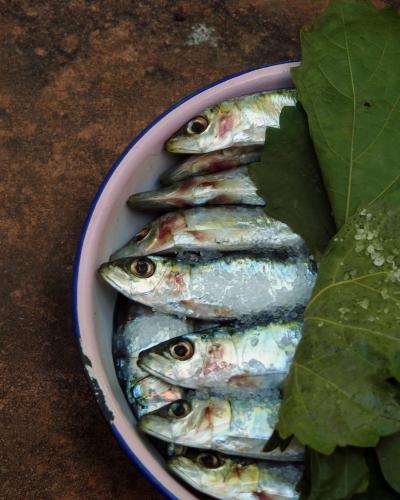
The product concerns the harvested population of the species Sardina pilchardus (common sardine) that is caught exclusively in the Gulf of Kalloni on Lesvos and bears the local synonym Papalina. The Papalina is distinguished from the open-sea sardine mainly by its smaller size and its milder taste, characteristics attributed to the gulf’s special ecosystem.
The Kalloni Sardine is seeking recognition as a Protected Designation of Origin (PDO) product. The relevant dossier, prepared in collaboration with the Agricultural University of Athens, was submitted to the Ministry of Rural Development and Food and subsequently to the European Commission. Once completed, this recognition will make the Kalloni Sardine the first Greek fishery product with PDO status, highlighting the inseparable link between the product and its geographical area. Until the final approval and registration in the eAmbrosia register, the product remains under evaluation.
The geographical area of reference is the Gulf of Kalloni in Lesvos. It is the largest natural gulf of the island, which is connected to the Aegean Sea via a narrow and shallow channel approximately 4 kilometers long. The gulf is shallow (average depth about 10 m, maximum 20–25 m) and covers an area of roughly 110 square kilometers.
The distinctive geomorphological and hydrological regime of the Gulf of Kalloni creates a unique microenvironment. The limited exchange of waters with the open Aegean, the low salinity, the higher water temperature and, above all, the abundance of nutrients flowing in from the surrounding wetlands (such as the Kalloni Salt Pans) and the river estuaries lead to an exceptionally rich production of phytoplankton. This high-quality, high-quantity phytoplankton is the main food of the sardine, directly affecting its organoleptic characteristics (smaller size, finer fat, distinctive taste), thus justifying the name Papalina. The Gulf has also been recognized as a wetland of international importance.
The fishing of the Kalloni Sardine is carried out by professional fishermen of the gulf, mainly during the peak summer period (July–August), when the quality of the fish is at its best, due to the increased food availability and its biological characteristics.
Fishing Method
Fishing is traditionally done using light attraction and purse seine (vinzotrata). The small fishing vessels of the gulf (purse seiners) use intense light (photogono) to gather pelagic fish, such as sardines, at the surface during the night hours. The fish are then encircled by the net. Fishing is strictly regulated in terms of periods and methods, to ensure the sustainability of the stocks in the gulf’s closed ecosystem.
Traditional Processing (Salting)
The uniqueness of the Kalloni Sardine is inextricably linked to its traditional processing method, salting (alipastoma), which differs from usual preservation procedures.
- Immediate Processing: The critical factor is speed. The Papalina must be salted immediately after fishing, often within a few hours, in order to preserve its freshness and distinctive organoleptic properties.
- Use of Salt: Coarse salt is used, ideally originating from the Kalloni Salt Pans (a local product).
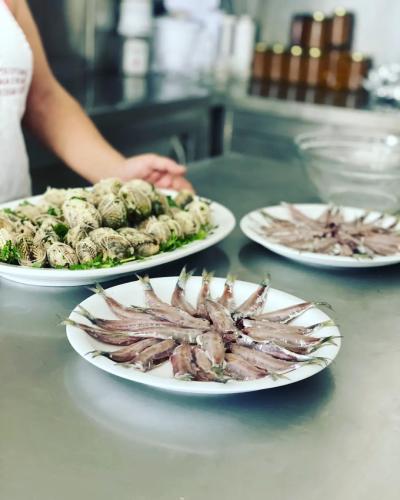
- Process: The sardines are placed in layers and covered with coarse salt. The traditional “quick” curing that highlights the freshness of Papalina requires very little time, often just two to three hours, before they are cleaned and consumed. This “half-cured” or “minimal” form is what has established the product’s reputation, as it preserves the flavor of fresh fish with a light saltiness.
- Standardization: For commercial distribution, the sardines undergo more thorough curing (of longer duration) and are then packaged in containers, usually preserved in olive oil.
Fishing and curing of sardines on Lesvos have deep roots in the island’s history. Aristotle himself, during his stay on Lesvos, studied the marine life of the Gulf of Kalloni, which is why the area is also internationally referred to as “Aristotle’s Lagoon.”
The Papalina has always been considered “the people’s fish” or “the poor man’s fish,” due to its abundance and low price, serving as a staple food and source of protein for local communities. The tradition of salting developed as the main preservation method, allowing fishermen and locals to make use of the entire fishing yield of the brief peak season. The know-how of salting was passed down from generation to generation, creating an unbroken cultural heritage that shaped the identity of the coastal settlements of the gulf, such as Skala Kallonis.
The Papalina has a decisive economic and social impact on Lesvos, especially on the Municipality of Western Lesvos.
- Economic Pillar: Sardine fishing and its processing (salting, canning) constitute one of the key economic pillars of the area. It supports an entire value chain, from fishermen and processors to traders and local catering.
- Tourism Promotion: The reputation of the Kalloni Sardine functions as a gastronomic attraction. The establishment of the Sardine Festival in Skala Kallonis, held every August, is one of the most highly attended cultural and gastronomic events on Lesvos. The festival attracts thousands of visitors, boosting tourism and promoting local products.
- Preservation of Tradition: The pursuit of PDO status and the ongoing engagement in traditional fishing and salting contribute to the preservation of traditional techniques and to the protection of the unique ecosystem of the Gulf of Kalloni, since the sustainability of fishing is inextricably linked to the health of the gulf.