Almonds
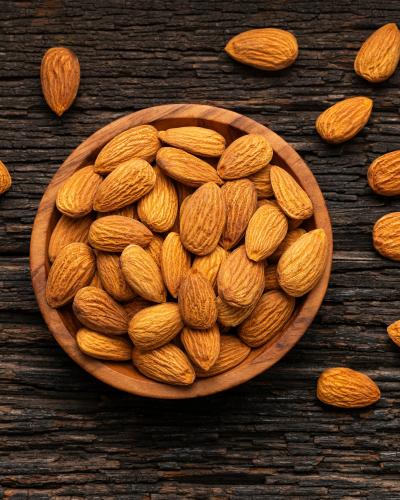
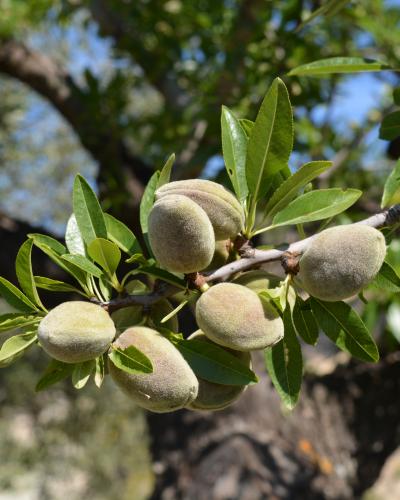
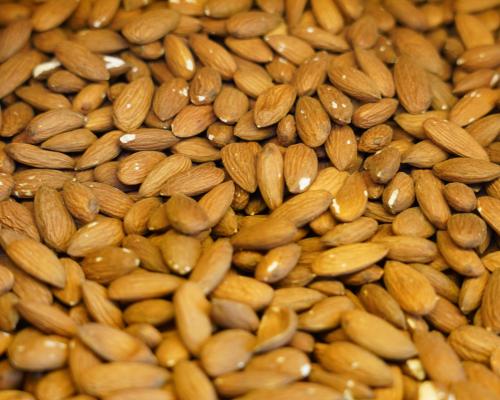
Almonds are the fruit of the almond tree (Prunus dulcis), a tree belonging to the Rosaceae family, traditionally cultivated in many regions of Greece, especially in dry, hot and island environments such as the Aegean. The soil and climatic conditions of the island, which is described as “small, barren” with harsh winters and severe storms, indicate that almond production is limited to small, rainfed almond orchards intended to cover local needs and does not constitute the dominant economic activity, as fishing does.
The uniqueness of the almonds of Thymaina lies in the dry, hot, insular nature of their cultivation, which, in such an isolated and barren environment as that of the Fournoi Korseon complex, may impart distinctive organoleptic characteristics due to the particular microclimate and soil.
Thymaina is a small island belonging to the island complex of Fournoi Korseon in the Eastern Aegean, with an area of just over 10 square kilometers and a population of about 130 inhabitants. It lies between the larger islands of Ikaria and Samos. It is described as a remote “borderland” gem with two small settlements, the main settlement and Keramidou, and is known for its barren landscape and lack of basic infrastructure, such as a road network or public transport. The almond tree, being a hardy tree, is adapted to the dry conditions prevailing on many small Aegean islands, exploiting the rocky, poor soils and limited rainfall, which explains its presence despite the generally barren character of the island.
The cultivation of the almond tree on Thymaina follows traditional, rainfed methods due to the tree’s resistance to drought and the lack of water resources.
To cope with these conditions, adapted techniques are applied: planting is usually carried out by direct seeding and grafting of the most vigorous seedling, while wide planting distances are necessary to limit competition for moisture in the poor soils. Traditional practices, such as good soil preparation and organic fertilization, are used to retain water.
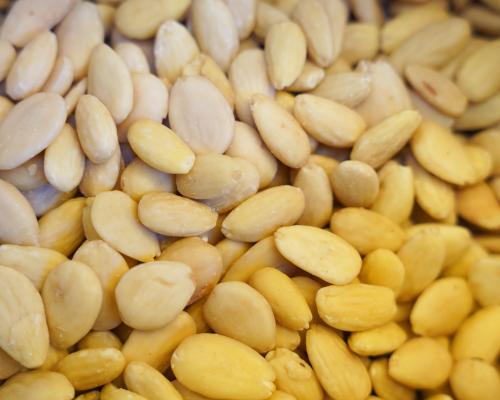
As an early-blooming species, the almond tree yields fruits that are harvested in the summer months. Processing includes breaking the shell to extract the kernel (usually manually in small facilities), followed by drying and storage to preserve quality.
Although fishing predominates, the cultivation of almond trees on Thymaina has a significant social and environmental impact. It contributes to the self-sufficiency of the few inhabitants and to the preservation of agricultural tradition in an isolated environment. Environmentally, the almond tree, as a dry-farmed tree, is crucial for soil retention and the prevention of erosion on the steep slopes of the island. Finally, the production of local nuts strengthens the island’s small gastronomic identity, providing raw material for traditional sweets beyond fishery products.
The cultivation of the almond tree in Greece has deep roots, dating back to antiquity. Especially on the Aegean islands, the almond tree, together with the olive and the vine, was one of the basic elements of the dryland agricultural economy. Although there are no specific historical references to Thymaina, as part of the Fourni island complex, the island has a long history. During the Byzantine period, the area was abandoned and became a pirates’ hideout, while today the main occupation is fishing. The presence of the almond tree on Thymaina constitutes a timeless practice of survival and self-sufficiency for the inhabitants, who strive to make use even of the most barren soils for the production of basic foodstuffs.
Almonds, in general, are considered nuts of high nutritional value, especially when they come from dry and warm cultivation systems, which often lead to a higher concentration of bioactive compounds due to water stress.
- Macronutrients: Almonds are an excellent source of plant-based protein (about 6g per 28g serving) and healthy fats, mainly monounsaturated fatty acids (about 9g of monounsaturated fats per 28g serving), which make up around 50% of their total weight. They also contain a significant amount of dietary fiber (about 3.5g per 28g serving), contributing to satiety.
- Vitamins and Minerals: They are one of the best natural sources of Vitamin E (a powerful antioxidant) and are rich in minerals such as:
- Magnesium (important for bone density and blood sugar regulation)
- Calcium (particularly useful for those who do not consume dairy products)
- Manganese, Copper and Phosphorus.
- Bioactive Compounds: Beyond vitamins, they contain antioxidants that protect cells from damage, while their overall composition is associated with benefits for heart health and improved brain function. Their caloric value is high (about 579 kcal/100g), therefore consumption is recommended in moderation.
Almonds, in general, are considered nuts of high nutritional value, especially when they come from dry and warm cultivation systems, which often lead to a higher concentration of bioactive compounds due to water stress.
- Macronutrients: Almonds are an excellent source of plant-based protein (about 6g per 28g serving) and healthy fats, mainly monounsaturated fatty acids (about 9g of monounsaturated fats per 28g serving), which make up around 50% of their total weight. They also contain a significant amount of dietary fiber (about 3.5g per 28g serving), contributing to satiety.
- Vitamins and Minerals: They are one of the best natural sources of Vitamin E (a powerful antioxidant) and are rich in minerals such as:
- Magnesium (important for bone density and blood sugar regulation)
- Calcium (particularly useful for those who do not consume dairy products)
- Manganese, Copper and Phosphorus.
- Bioactive Compounds: Beyond vitamins, they contain antioxidants that protect cells from damage, while their overall composition is associated with benefits for heart health and improved brain function. Their caloric value is high (about 579 kcal/100g), therefore consumption is recommended in moderation.