Lemnos Almonds
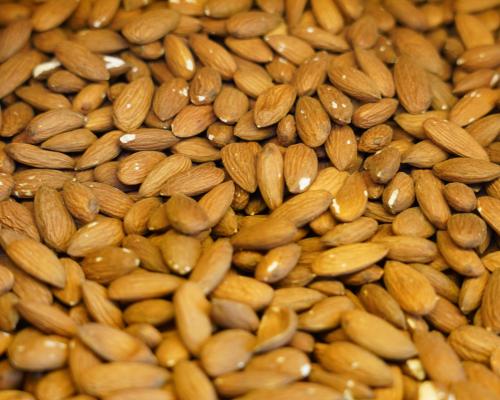
Lemnos Almonds are cultivated on the island in the traditional way and stand out thanks to their local varieties, which have adapted to the area’s distinctive microclimate and soil. The cultivation of the almond tree (Prunus amygdalus or Amygdalus communis) on Lemnos – as in the whole of Greece – has deep historical roots. On the island there are trees that can remain productive for up to 50 years, forming an important pillar of local agriculture and gastronomic tradition.
The uniqueness of Lemnos Almonds lies mainly in the local varieties that have prevailed in the area. Among them stand out varieties such as “Large Karydáki” and “Hard Karydáki.” “Large Karydáki” is characterized as late-flowering and produces a medium-sized nut with a shell of medium hardness, while it is harvested in early September and intended for fresh consumption. “Hard Karydáki” has a hard shell with an extended suture, which makes harvesting easy, and it is also used for fresh consumption in early September. These local varieties, adapted to the soil and climate conditions of Lemnos, give the nuts a distinctive taste and texture that sets them apart from international varieties (such as Nonpareil, Ferragnes, Texas) that are also cultivated in Greece. The existence and preservation of these local genetic resources is an important element of the island’s agricultural heritage.
Lemnos offers a Mediterranean climate with particular characteristics that favor the cultivation of the almond tree, which thrives in areas with hot, dry summers and mild, wet winters. In general, the almond tree requires 300 to 600 chill hours below 7°C for bud dormancy to be broken and flowering to begin, while late varieties, such as “Large Karydáki,” are more resistant to potential spring frosts. The soils of Lemnos, which are often light but can also be clay-loam-sandy with good drainage, are suitable for the development of the almond tree, which has deep roots and tolerates dry conditions. Cultivation usually takes place in sheltered locations, as most varieties require the mediation of bees for pollination, while strong winds can negatively affect this process.
The method of cultivation and processing of Lemnos Almonds largely follows the traditional practices of almond growing, with certain particularities due to the local varieties.
Cultivation and Seasonality: The almond tree usually enters into production from the 3rd–4th year, while it reaches full fruiting at 8–9 years. Flowering begins from mid-to-late January for early varieties and can last until mid-March for late ones. Lemnos, hosting local varieties such as the late-blooming “Large Karidaki,” has adapted cultivation to these conditions.
Harvesting: The harvesting period is defined from late August to early September, depending on the variety. The appropriate stage is when the hull (outer husk) has fully split open in the inner canopy of the tree. The local varieties “Large Karidaki” and “Hard Karidaki” are specifically harvested in early September. In Lemnos, where the orchards may be smaller or the use of traditional varieties requires different management, harvesting may be done by hand (shaking the branches with poles or by hand) or by mechanical means (trunk shakers) in larger areas.
Post-Harvest Processing: After harvesting, hulling (removal of the outer fuzzy husk) follows, which must be done immediately. Then, the almonds in shell are dried to reduce moisture. The final shelling (removal of the hard shell to extract the kernel) can be done mechanically or, in the case of harder shells such as that of “Hard Karidaki,” may require special care or traditional tools. In Lemnos, part of the production, especially from the local varieties, is used for fresh consumption. The almonds can be consumed raw, roasted, salted, or used in confectionery.
The cultivation of almonds on Lemnos is an important part of the island’s agricultural economy and cultural identity. The preservation and cultivation of local varieties such as “Karydaki” contributes to the conservation of biodiversity and local genetic resources. In addition, almonds, as a key ingredient in traditional confectionery (amygdalota), enhance local gastronomy and give the product outward reach through visitors and local food businesses.
The almond tree (Prunus dulcis), as one of the earliest domesticated fruit trees with a history of at least 3,000 years in the Middle East and subsequently in the Mediterranean, also has deep roots in Lemnos. The presence of local varieties indicates a centuries-long adaptation and cultivation evolution within the island environment. The almond, apart from its nutritional value, has always had a symbolic character in Mediterranean cultures, associated with rebirth and abundance due to its early blossoming.
In Lemnos, as in many Aegean islands, the almond plays a leading role in customs relating to joyous occasions. “Amygdalota” and “venizelika” (almond-based sweets) are traditional treats at engagements, weddings and name days. These sweets were offered as the first welcome to guests, symbolizing sweetness and the wish for a prosperous life. The process of preparing these sweets, often with the participation of the women of the family or the community, formed part of the social and cultural tradition.
Almonds, in general, are a particularly nutrient-dense food, and Lemnos Almonds are no exception, although there are no specific data for the nutritional analysis of the local Lemnos varieties alone. The almond kernel contains a rich composition of macro- and micronutrients.
Bioactive Compounds: Almonds contain polyphenols (such as tannins, proanthocyanidins and flavonoids), which confer antioxidant and anti-inflammatory properties. Regular consumption of almonds has been associated with benefits for cardiovascular health (reduction of LDL cholesterol), body weight management and improvement of the gut microbiome.
Almonds, in general, are a particularly nutrient-dense food, and Lemnos Almonds are no exception, although there are no specific data for the nutritional analysis of the local Lemnos varieties alone. The almond kernel contains a rich composition of macro- and micronutrients.
Bioactive Compounds: Almonds contain polyphenols (such as tannins, proanthocyanidins and flavonoids), which confer antioxidant and anti-inflammatory properties. Regular consumption of almonds has been associated with benefits for cardiovascular health (reduction of LDL cholesterol), body weight management and improvement of the gut microbiome.