Chios Almonds afrata
Chios Almonds (afrata, “fluffy/soft”) constitute an important local variety of almond tree (Prunus dulcis) rooted on the island of Chios, contributing to the island’s agricultural production and local gastronomy and, more broadly, to that of Greece. The cultivation of the almond tree has its own significance on Chios, as almonds are a key raw material for the island’s renowned amygdalota and koufeta, sweets with a deep-rooted tradition in weddings and celebrations. The variety’s adaptability to hot, dry climates has made it popular in other regions of southern Greece as well, although Chios remains its homeland.
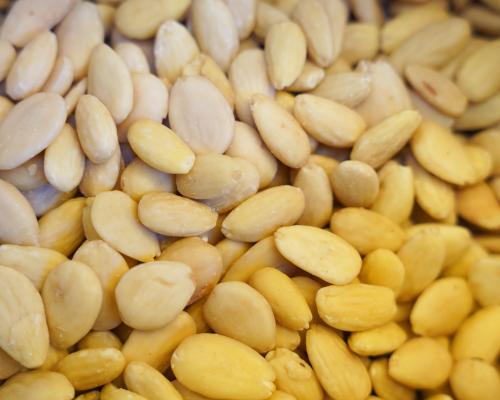
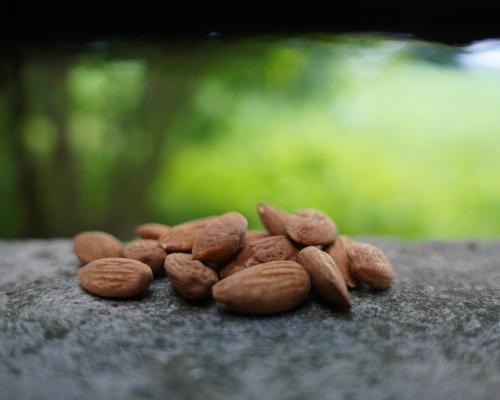
The variety Chios Almonds Afrata is identified by the synonymous names “Chios” or “Chiotika,” which underscores its local origin and its enduring connection with the island. It is an indigenous Greek variety originating from Chios. Its main characteristics are the semi-soft-shelled nut and the small-sized, regular-shaped, flavorful kernel. The ratio of kernel to nut in shell is noteworthy, at around 50–52%. Its small yet tasty nut is particularly sought after and ideal for the production of koufeta, where the regular shape and high quality of the kernel play a decisive role. According to sources from the Ministry of Rural Development and Food, the variety is characterized as early flowering, with harvest usually taking place in late August.
As a local variety, the Chios almond tree has its origin and core presence on Chios, although its cultivation has expanded to other regions of southern Greece due to its adaptability. Chios is characterized by a Mediterranean climate with mild, wet winters and dry, hot summers. The early-flowering nature of the variety means that it is vulnerable to spring frosts in colder areas, which makes it more suitable for the relatively milder climates of the Aegean. The almond tree is particularly resistant to drought, having a deep and strong root system, a trait that makes it well suited to the hot, dry soils of Chios.
The cultivation of the fluffy Chios almonds, as well as other local Greek varieties, follows traditional agricultural practices adapted to the island’s soil and climatic conditions. Due to its drought resistance, it is often grown under dry (non-irrigated) conditions. The variety flowers early, which requires care in choosing the planting site to avoid frosts. Harvesting takes place around the end of August, when the fruit’s exocarp (husk) begins to open and dry out. Traditionally, the harvest was carried out by shaking the branches and collecting the fruits from the ground or on sheets.
After harvesting, dehulling follows, that is, the removal of the outer, downy husk, and then the cracking of the shell to extract the kernel. Due to its semi-soft-shell character, this process is relatively easier compared to hard-shell varieties. The kernel, because it is preferred for the production of sugared almonds and almond confections, often requires further processing, such as cleaning and “whitening” (blanching), meaning the removal of the brown skin by scalding, in order to acquire the characteristic white color that is desirable in confectionery.
The impact of cultivating “afrata” almonds in Chios is primarily cultural and gastronomic. This variety directly supplies local confectionery, sustaining the production of traditional sweets such as “amygdalota” and “masourakia,” which are an integral part of social events and the cultural identity of the island. The preservation and cultivation of local varieties, such as the Chios afrata, is of vital importance for maintaining the genetic diversity and agricultural heritage of Chios. At the same time, their use in local products adds qualitative value to the island’s tourism and gastronomic offerings.
The cultivation of the almond tree in Greece, and by extension in Chios, dates back to antiquity, as it is one of the first trees to have been domesticated by humans. In Chios, although mastic dominates historical and economic interest, the almond, and especially the local variety “Chios Afrata,” has played a significant role in traditional diet and above all in customs. The almond, blanched and processed into amygdaloto or koufeto, became inextricably linked with joyful occasions (weddings, baptisms, engagements), symbolizing fertility, luck and purity, thanks to its white color.
“Chios Afrata” almonds are inextricably connected with the traditional customs of Chios and of the Aegean more broadly, as they are at the heart of amygdalota, the “sweets of joy.” The offering of white sweets on joyful occasions, such as weddings and baptisms, is a custom observed throughout Greece, which in Chios is expressed through amygdalota, masourakia and white kourabiedes. The almond tree itself, due to its early flowering that heralds the spring, is considered a symbol of hope and rebirth. In addition, the traditional soft drink “soumada” (known in antiquity as “thiasion”) is made from almonds, a white beverage from an emulsion of almond, which is also offered at weddings and celebrations.