Lesvos Almonds
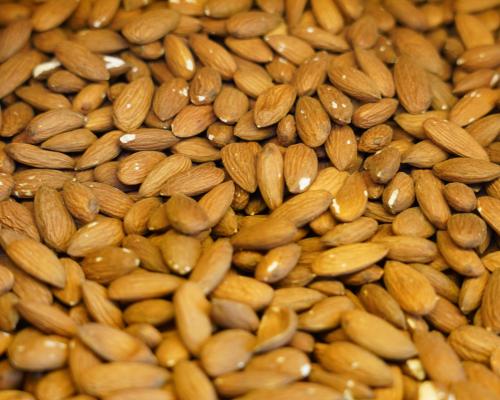
Lesvos Almonds are a nut with a significant presence in the island’s agriculture and cultural heritage. The almond tree (Prunus dulcis), a tree that thrives in hot, dry climates, has found on Lesvos the appropriate soil and climatic conditions, allowing for the cultivation of local, adapted varieties. Almond production on the island does not concern only the kernel of the fruit, but is inextricably linked to the production of traditional sweets, such as the famous “Gemata” or almond sweets, and sweet baklava, which form an integral part of the ritual at weddings and joyful occasions.
The almonds of Lesvos, beyond their general classification as nuts, stand out thanks to the existence of local varieties that have adapted to the island’s particular conditions. One of the local varieties of Lesvos, specifically of the Agiasos area, is “Limnou Karydato” or “Karydaki Megalo” or “Karydaki Skliro”. The uniqueness of the product lies in its integration into local gastronomy and in the local varieties that have been preserved over time, as mentioned in studies on local tree varieties. Characteristically, the local variety Limnou Karydato is described as native to Lesvos, with a hard-shelled fruit and a kernel yield of about 24%.
Lesvos, the third-largest Greek island, has varied relief and soil-climatic conditions that favor the cultivation of the almond tree. The climate is Mediterranean, hot and dry, with mild, rainy winters and dry, warm summers, ideal conditions for the almond tree, which is particularly resistant to frost and prefers dryness over the humid environment that favors fungal diseases. The soils of Lesvos where almonds are cultivated are usually of medium texture, fertile and well-drained, although the almond tree has the ability to grow even in dry, barren, calcareous or rocky soils, thanks to its strong root system. Almond cultivation is found in various areas of the island, often at altitudes where conditions are drier and the soil poorer, while local varieties are specifically associated with the area of Agiasos.
Cultivation Method
The cultivation of almond trees on Lesvos follows general agricultural practices adapted to local soil and climate conditions, with emphasis on varieties suited to dry climates. The trees are planted at distances of 6–$ meters and, although the almond tree is drought-resistant, irrigation may be applied for better yield, even though dryland cultivation is often observed, where rootstocks resistant to water scarcity, such as GN 22, are used. Successful pollination is critical for annual production; it is achieved by planting suitable pollinizers and is often assisted by placing beehives in the almond orchard. Fruit-bearing pruning is usually light, aiming to maintain many fruiting organs and to facilitate harvesting, preventing excessive height growth. Fertilization is essential, with high requirements in Nitrogen (N) and Phosphorus (P), especially when the trees enter production.
Harvesting & Processing
The harvesting of almonds, depending on the variety and climatic conditions, usually takes place from early August to late September. Traditionally, harvesting was done manually by beating the branches, whereas in modern orchards shakers are used. After harvesting, the stages of hulling and drying follow. First, the green hull of the fruit is removed. Then follows the drying of the kernel, which was traditionally done by spreading the fruits in the sun. At a professional level, hulling is carried out in special hulling machines and drying can be done in ovens. Drying is vital for reducing moisture and facilitating the preservation of the final product.
Although the almond tree is not the dominant crop on Lesvos (that position is held by the olive), almond production has an important cultural and local economic impact. The cultivation of almond trees contributes to the preservation of the island’s biodiversity, by safeguarding local varieties that are adapted to the environment of Lesvos, such as Limnou Karydato. The greatest impact, however, is observed in local gastronomy and confectionery. Almonds are the basic raw material for traditional sweets (such as “gemata” and wedding baklava), which attract visitors and strengthen the island’s image as a destination with a rich gastronomic tradition. Their production, although limited, supplies small local businesses and pastry workshops, keeping traditional preparation techniques alive.
The almond tree is one of the first trees to have been cultivated by humans, with its presence dating back to the Middle East. On Lesvos, the cultivation and use of the almond has a centuries-old history, interwoven with the culture of the Aegean. Historically, the almond tree thrived in areas where other crops struggled due to drought, making its fruit valuable. The most important cultural heritage of the almond on Lesvos is directly linked to traditional confectionery and the ritual surrounding major life events. The almond was not just a food, but a symbol of abundance, luck and fertility that was used in ceremonies.
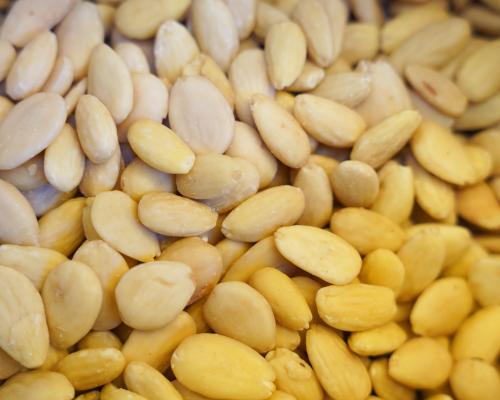
Almonds in Lesvos are an integral part of weddings, engagements and baptisms. The “Gemata” or almond sweets or “prospesmata” of Mytilene are the quintessential bridal sweet and the classic treat for joyous occasions. These are unbaked almond confections made from blanched and finely ground almonds, kneaded with icing sugar and orange blossom water (a distillate from orange or lemon blossoms), and shaped into elaborate, tiny forms of flowers, jewelry or other imaginative figures. Their traditional technique includes natural air-drying.
Another traditional sweet associated with the almond and the wedding ritual is Lesvos’ wedding baklava (the “baklavou”), which is made exclusively with snowy white blanched almonds and has dozens of thin layers of pastry. Its preparation and intricate cutting often contained an important allegory for the couple’s life together. Finally, flaked almonds can also be used in other traditional sweets, such as Balezés (a local muhallebi-type cream flavored with orange blossom water), which was traditionally offered in the home of a new mother.