Amygdalota Chios
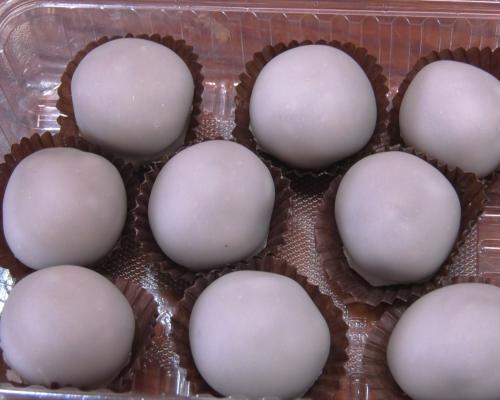
Amygdalota are one of the most representative and timeless traditional sweets of Greek confectionery, with Chios holding a prominent place in their production, imparting to them the unique aroma of mastic and local citrus fruits. As a sweet belonging to the category of sugar confections, made mainly from ground almond kernel, sugar and flavored with rose water or mastic water, the amygdalota of Chios are closely associated with the island’s great celebrations and ceremonies. Their texture is characterized by the outer coating of icing sugar, which conceals a soft, chewy interior full of nutty flavor. Their reputation extends beyond the boundaries of the island, making them a characteristic gift of hospitality and a gastronomic keepsake of Chios.
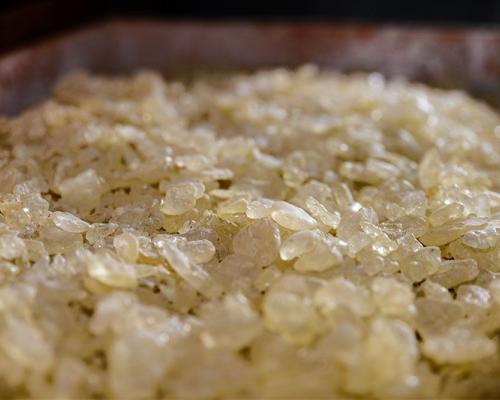
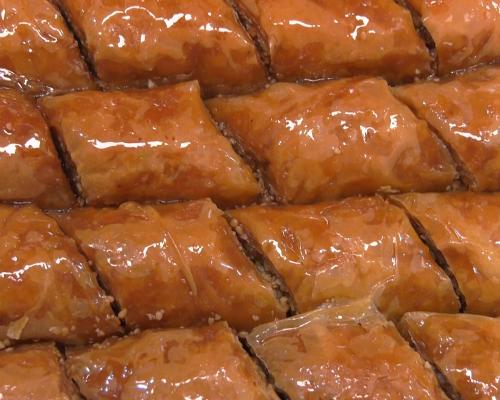
The amygdalota of Chios stand out from other island variations mainly due to the use of Chian mastic (in powder or mastic oil form) and rose water/mastic water, which is added for the characteristic aroma and moisture. Synonyms or variations, depending on the shape and traditional recipe, may include “masourakia” (when wrapped in filo pastry with almond paste) or “glyko amygdalaki” (sweet little almond).
The production of Amygdalota is linked to the whole of Chios; however, their gastronomic identity is inextricably connected with the local products of Fragrant Chios, such as Chios Mastiha (PDO) and citrus fruits (such as Chios Mandarin PGI). The areas with the historically greatest tradition in confectionery, particularly in nut-based sweets, are found both in the town of Chios and in traditional settlements. Chios, as a central island of the North Aegean, has rich almond production, which forms the basis of the sweet.
The traditional method of producing the Amygdalota of Chios follows specific stages, with the addition of local aromas constituting the defining element. The process begins with the preparation of the almond kernel, which is scalded, peeled (blanched) and ground until it becomes a fine powder or fine granules. This base is then kneaded either with sugar syrup (granulated sugar boiled with water) or with meringue (egg whites beaten with sugar).
The key ingredient that gives them their Chian identity is the addition of mastiha, often in combination with bitter almond essence or lemon zest from the local orchards. In certain recipes, mastiha “submarine” (a type of spoon sweet) melted in a bain-marie is added, imparting extra aroma and a chewy, mastic-like texture. The final dough is shaped into small forms, usually oval, balls, or little pears, and baked at a low temperature (around 180°C) for a short period (about 15 minutes), so that they brown on the outside but remain soft and moist on the inside. Immediately after baking, they are sprinkled with rose water or mastiha water to retain their moisture, and finally they are generously dusted with icing sugar for the characteristic “snowy” white color.
Almond sweets have a significant economic and cultural impact for Chios. They are a key product of the local confectionery craft industry, contributing to the local economy and tourism. Their production, especially by traditional houses with a long history, promotes Chios’s image as a gastronomic destination. Furthermore, due to the use of mastiha – the island’s most famous product – the interconnection and added value of local raw materials are enhanced. Almond sweets are among the most frequently purchased souvenirs by visitors, thus preserving traditional recipes and preparation techniques.
The tradition of almond sweets in Greece, and especially in the Aegean islands, is considered to have roots lost in time, possibly influenced by the Arabs or the Venetians through the sugar and spice trade. The use of almonds in the Mediterranean is age‑old. In Chios, the tradition of almond sweets flourished in parallel with the cultivation of almond trees and the island’s unique production of mastiha.
Their cultural heritage is closely linked to life events. Because of their white color, which symbolizes purity and joy, almond sweets became established as the traditional treat at weddings, engagements, and baptisms in Chios, as well as in many other Aegean islands. The recipe was passed down from generation to generation, forming part of the dowry and the knowledge of every housewife.
In Chios, almond sweets are an integral part of the ritual of social occasions:
- Wedding Treat: They are the main sweet offered to guests after the ceremony, often in elegant paper boxes, symbolizing the happiness and prosperity of the new couple.
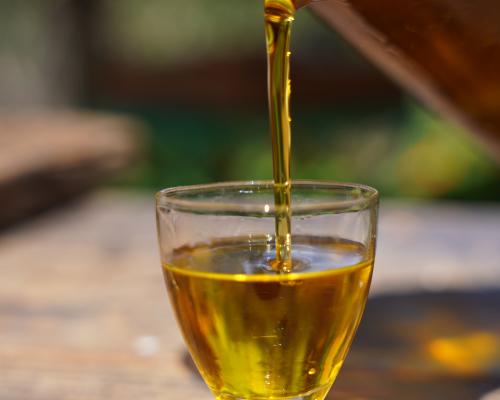
- Welcoming Visitors: Traditionally, this sweet, together with a glass of soumada (an almond-based drink), is the welcoming treat during formal visits or festive occasions.
- Mastiha Aroma: The addition of mastiha is not only a matter of taste, but also symbolic, as Chios Mastiha is the island’s quintessential flagship product, embodying local identity in the treat.