Venizelika of Lemnos
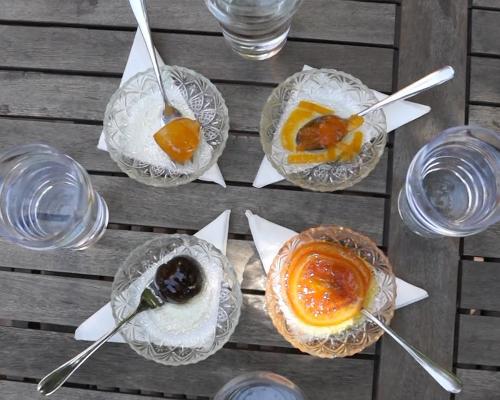
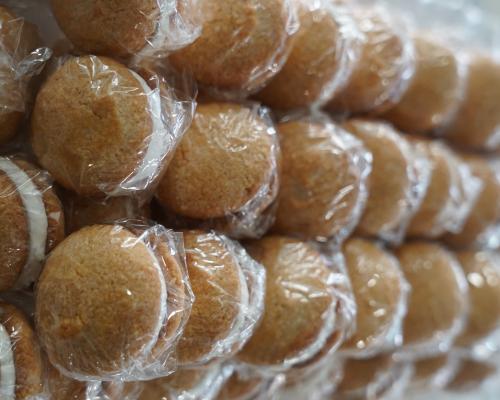
Venizelika are one of the most characteristic and historic sweets of Lemnos. They are small, handmade confections that fall under the broader category of island-style almond sweets, but stand out thanks to their distinctive composition, which combines nuts with chocolate and aromatic alcohol, as well as their striking, smooth, white coating. Their presence is inextricably linked with the most important moments of Lemnian society, as they are the traditional sweet used to welcome guests and treat them at weddings, baptisms, and major celebrations. Their preparation is based on simple yet demanding techniques, passing down the island’s culinary heritage from generation to generation, and symbolizing the famed Lemnian hospitality.
The product is widely known as “Venizelika of Lemnos” or, more simply, “Venizelika”. It is often described as “small fondants” because of its shape and white coating, or as an almond sweet, due to its main ingredient. A name variation that indicates the place of production is “Kaspakines Delicacies – Venizelika”, referring to Kaspakas, a village of Lemnos. Its uniqueness lies mainly in the filling, which usually consists of almond, cocoa and grated couverture chocolate, in contrast to purely white almond sweets. The sweet is traditionally coated with “vanilla ypovrichio” (sugar and glucose flavored with vanilla), which is melted in a bain-marie to create a glossy, white, thick icing.
The gastronomy of Lemnos, and by extension the existence of Venizelika, is based on its rich agricultural production. Although almonds – the key ingredient – are cultivated in many regions, the island’s tradition in cereal production (such as the local mavragani wheat) and dairy products forms a broader gastronomic environment that favors the development and preservation of traditional sweet and baked-goods recipes. Myrina, the island’s capital, and villages such as Kaspakas are often mentioned as centers of production of this sweet. The particular Mediterranean climate of Lemnos, with its dry summer months, is crucial for the cultivation of nuts and the development of their unique aromas and nutrients, which are carried through into the final product.
The production of Venizelika follows a traditional process that requires patience and precision, similar to that of classic almond sweets. The traditional method begins with preparing the nuts: the almonds are usually blanched, lightly roasted, and ground into a fine powder. Then, the ground almonds are mixed with the remaining dry ingredients, namely icing sugar, cocoa, and grated couverture chocolate. The addition of couverture (and/or cocoa) is what gives the filling its characteristic dark color and chocolatey flavor, distinguishing it from other white almond confections.
As a binding and aromatic agent, a syrup (sugar and water) is used, which must be thick and completely cold before being incorporated, as well as an aromatic alcohol such as brandy, orange liqueur (e.g., Cointreau), or Grand Marnier, which enhances the aroma and consistency of the mixture. The dough is kneaded by hand until fully homogenized, avoiding over-kneading so that the nut does not release its oils. Then, small round or slightly oval balls are shaped, approximately the size of a walnut. A traditional “secret” is to wet the hands with brandy during shaping, for moisture and fragrance.
The pieces are left to dry and “firm up” for one day, before the critical glazing process follows. The traditional white coating is made with vanilla “submarine” sweet (also known as fondant sugar paste), which is melted in a bain-marie until it becomes fluid but not hot. The sweets are dipped one by one into the glaze and left to dry on a rack, acquiring their characteristic smooth, white, and glossy surface.
The impact of the Venizelika on Lemnos is primarily cultural and tourist-gastronomic. They function as a recognizable gastronomic symbol of the island, reinforcing local identity and gastronomic heritage. Essentially, they are one of the main souvenirs purchased by visitors, indirectly supporting local confectionery and biscuit-producing units. In addition, their production, although based on imported ingredients such as couverture and fondant, largely incorporates local almonds and aromas (e.g. local distillates or liqueurs), connecting the product with the local agricultural economy. The preservation of the traditional recipe and technique ensures the continuity of the island’s confectionery tradition.
The history of the Venizelika is inextricably linked with Eleftherios Venizelos, the charismatic Greek politician and seven-time prime minister. Before its current name, the sweet was a simple, anonymous almond confection offered as a traditional treat to the island’s dignitaries. The decisive moment comes with Eleftherios Venizelos’ visit to Lemnos, which sources place either immediately after the liberation of the island in 1912 (or in early 1913) or later, in May 1934.
According to the prevailing narrative, Venizelos disembarked at Romeikos Gialos in Myrina, and the locals, wishing to honor him for the incorporation of Lemnos into the Greek state, offered him these small, white, little sweets. The politician was so delighted by the distinctive taste of the treat that he asked for more. As a gesture of honor and in recognition of his enthusiasm, the people of Lemnos decided to give the until-then anonymous sweet the name of the great statesman, christening it “Venizeliko.” This story, although anecdotal, has become entrenched in collective memory, turning the sweet into a monument of the island’s modern history and of its connection with Greece.
Venizelika are a classic sweet treat in Lemnos, with a strong presence in social customs and family ceremonies. Due to their pure white color, which comes from the vanilla icing, they are traditionally associated with events that symbolize purity, joy, and a new beginning. They are offered as a main treat at:
- Weddings: This is the sweet offered to guests, symbolizing the happiness and purity of the union. They are often arranged on trays together with other almond confections.
- Engagements and Baptisms: Their white color perfectly matches the white mystery of baptism and the commitment of engagement.
- Feasts and Formal Receptions: They are used to welcome visitors and dignitaries, continuing the tradition of offering them to Eleftherios Venizelos.
This sweet is an expression of Lemnian hospitality, and the shaping of Venizelika, as with other almond confections, has always been a collective act carried out by the women of the family, taking place in a festive atmosphere.
Venizelika, as a nut-based sweet, have high nutritional value and are rich in energy. Their main ingredient, the almond, makes them a rich source of monounsaturated fatty acids (healthy fats), proteins, and dietary fiber, in comparison with sweets that contain mainly flour. At the same time, they are an important source of vitamins (especially Vitamin E) and minerals (such as magnesium and calcium).
The bioactive ingredients include the antioxidants in the couverture chocolate and cocoa (flavonoids), as well as the Vitamin E in the almond, which acts as a natural antioxidant protecting the cells. The high sugar content makes them an energy-dense sweet, offered as a dessert or treat of high gustatory and nutritional density.
Venizelika, as a nut-based sweet, have high nutritional value and are rich in energy. Their main ingredient, the almond, makes them a rich source of monounsaturated fatty acids (healthy fats), proteins, and dietary fiber, in comparison with sweets that contain mainly flour. At the same time, they are an important source of vitamins (especially Vitamin E) and minerals (such as magnesium and calcium).
The bioactive ingredients include the antioxidants in the couverture chocolate and cocoa (flavonoids), as well as the Vitamin E in the almond, which acts as a natural antioxidant protecting the cells. The high sugar content makes them an energy-dense sweet, offered as a dessert or treat of high gustatory and nutritional density.