Cheese products: Kopanisti, Kefalotyri, Touloumotiri, Mizithra Add to Default shortcuts
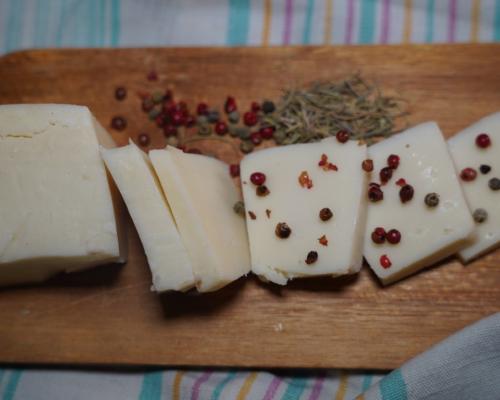
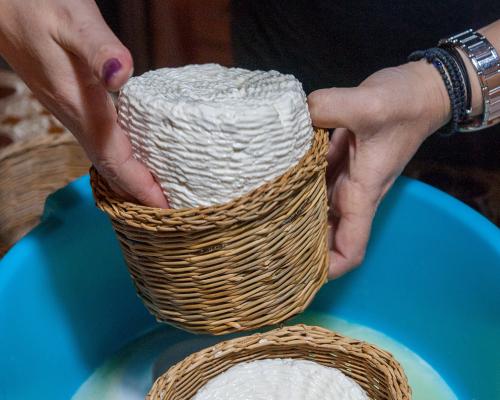
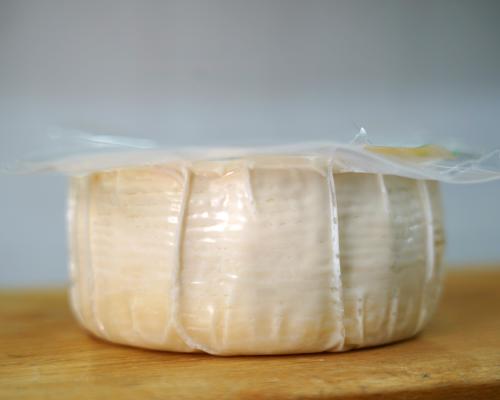
Despite the adverse climatic and geophysical conditions that characterize most islands of the Aegean, Psara maintains a small yet historic tradition in cheese-making. Livestock farming on Psara, as on other small islands, traditionally relied on animals adapted to the dry, hot environment, such as sheep and goats. This milk, rich in fat and aromas due to grazing on the local flora, constituted the raw material for the production of various cheeses, mainly to cover the needs of the inhabitants. Among the cheeses traditionally produced on the Aegean islands, including Psara, are Kopanisti, Myzithra, Kefalotyri and Tulumotyri.
Cheese-making on Psara focuses primarily on Kopanisti, with Psarian Kopanisti being a local, non-standardized variation of the common Cycladic production technique. Beyond this, production includes more widely known Greek cheeses. Kefalotyri is one of the oldest hard cheeses, produced in many regions, including the Aegean islands. Myzithra is a basic whey cheese produced throughout Greece, while Tulumotyri is a cheese that traditionally matures in a “tulumi” (animal skin), known mainly in the Cyclades and elsewhere.
Psara is a small, arid island in the North Aegean, known for its naval history. The island’s geographical isolation and limited natural resources (sparse vegetation, dry-hot climate) determined its small-scale, traditional livestock farming, mainly sheep and goat rearing. The milk produced in this environment is characteristically dense, with a high content of aromas derived from the wild herbs and shrubs of Psara’s dry soil. This richness of the raw material forms the basis for the distinctive flavor of the local cheeses, even if their production is not officially standardized or on a mass scale.
The production of cheeses on Psara, especially Kopanisti, follows traditional Cycladic techniques, as the know-how is shared throughout the Aegean. The process begins with the coagulation of whole fresh milk (sheep’s, goat’s or a mixture, while on other islands cow’s milk is also used) by adding rennet.
Kopanisti stands out because of its successive fermentation and maturation.
- Initial Curd: The first curd is called tyrovolia or myzithra zymithra (in the Cyclades).
- Beating Process: This initial curd mass is beaten (kneaded, stirred) continuously over a period of several days or weeks. Each time, salt and a small amount of old Kopanisti are added as a “starter” (microbial culture) to enhance the growth of fungi and microorganisms. This repeated kneading (stirring) gives the cheese its characteristic spreadable texture and intense, piquant flavor (from which the name “Kopanisti” is derived). Total maturation lasts about 30–40 days.
Myzithra is produced by adding fresh milk to the whey left over from the production of other cheeses. It is a fresh, soft cheese.
Kefalotyri and tulum cheese require a firmer curd and prolonged maturation. Tulum cheese in particular follows the traditional method in which the curd is placed in a tulum (animal skin), where it matures, acquiring a distinct intense and piquant flavor.
Cheesemaking on Psara, although limited in volume, is a vital part of the local economy and the island’s self-sufficiency. Due to the small scale of production, the impact is primarily social and cultural rather than massively commercial. Specifically:
- Preservation of the Primary Sector: It supports goat and sheep farming, keeping traditional professional paths open and contributing to the biodiversity of local animal breeds adapted to the island’s harsh conditions.
- Gastronomic Tourism: Local cheeses, especially the spicy Kopanisti, serve as ambassadors of Psara’s gastronomic identity, offering visitors an authentic taste experience directly linked to the island’s landscape and history.
- Cultural Heritage: Traditional production know-how is passed down within families, preserving the intangible cultural heritage of cheesemaking in the Aegean.
Cheesemaking in the Aegean, and by extension on Psara, has deep roots going back to ancient times, as cheese production was the primary way of preserving milk. The maritime history of Psara, with its inhabitants often absent, made it necessary to produce hard and slightly spicy cheeses such as Kefalotyri or Touloumotyri, which had a long shelf life and could be transported easily. The presence of these cheeses on Psara is directly linked to the self-sufficiency of island households, where the production process was domestic, seasonal, and tied to the abundance of milk in spring.
The dairy products of Psara were traditionally linked to seasonality and festive periods. The production of Kopanisti and other cheeses, such as Mizithra, took place mainly in spring (after the end of the rainy season) and at Easter, when the quality and quantity of goat and sheep milk were at their peak, due to the rich vegetation. Kopanisti and Mizithra were always an integral part of the meze that accompanied ouzo or tsipouro in taverns and homes. The pounding of the cheese curd, although a technical process, was often also a social custom, since in traditional households the process of mixing and maturation required daily care and the transfer of knowledge among family members.
The nutritional analysis is based on general values for Cyclades Kopanisti PDO, which is the closest standardized product. Kopanisti is a cheese of high nutritional value, particularly rich in proteins and fats.
- Macronutrients (per 100 g, indicative values for Kopanisti PDO):
- Energy: ≈1374 kJ/328 kcal
- Proteins: ≈25.1 g
- Fat in dry matter: ≥43%
- Maximum Moisture: ≤56%
- Bioactive Compounds:
- Kopanisti is rich in calcium and phosphorus due to its high milk content.
- Its intense flavor is owed to a complex mixture of volatile fatty acids and amino acids produced during multi-stage microbial fermentation and maturation, a process that makes it a relative of “blue” cheeses (e.g., Roquefort).
- Its high salt content (≈3–4%) contributes to its preservation and to its piquant taste.
The nutritional analysis is based on general values for Cyclades Kopanisti PDO, which is the closest standardized product. Kopanisti is a cheese of high nutritional value, particularly rich in proteins and fats.
- Macronutrients (per 100 g, indicative values for Kopanisti PDO):
- Energy: ≈1374 kJ/328 kcal
- Proteins: ≈25.1 g
- Fat in dry matter: ≥43%
- Maximum Moisture: ≤56%
- Bioactive Compounds:
- Kopanisti is rich in calcium and phosphorus due to its high milk content.
- Its intense flavor is owed to a complex mixture of volatile fatty acids and amino acids produced during multi-stage microbial fermentation and maturation, a process that makes it a relative of “blue” cheeses (e.g., Roquefort).
- Its high salt content (≈3–4%) contributes to its preservation and to its piquant taste.