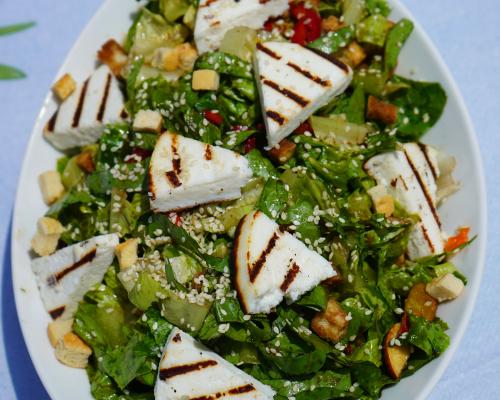
Melichloro (Melipasto)
Melichloro or Melipasto is a traditional cheese, deeply rooted in the rural and gastronomic identity of Lemnos, and constitutes a typical example of the island-style cheesemaking method. It is produced from goat’s and sheep’s milk, usually from the spring and summer seasons. Its distinctive feature is its dual nature: in its early stage it has a creamy, semi-dry texture, to which it owes the name “Melichloro” (from “meli”, due to its sweet/full-bodied flavor, and “chloro”, meaning fresh) or “Melipasto” (from “pastos”, which means salted/dry). However, as maturation progresses, especially during traditional draining and drying, the cheese hardens significantly, acquiring a characteristic dense texture and a rich, complex flavor. The art of its production has been officially recognized as an element of the Intangible Cultural Heritage of Greece, underscoring its importance for the culture of the island.
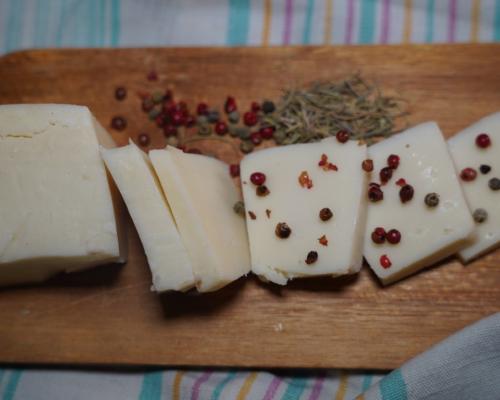
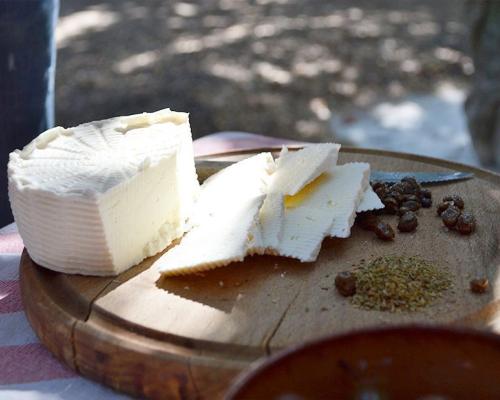
Melichloro or Melipasto is a brined cheese with a semi-firm to hard texture, depending on the stage of maturation. Its taste is rich, slightly salty and milky, with mild notes of nuts and butter that develop during drying.
- Identification/Synonyms: The cheese is known by two names on Lemnos, Melichloro and Melipasto, which are used interchangeably and refer to the same product. “Melichloro” alludes to its initial, fresher and “sweeter” state, while “Melipasto” refers to its final, “pasto-like” (dry, salted) form.
- Intangible Cultural Heritage: The art of producing Melipasto/Melichloro cheese was inscribed in the National Inventory of Intangible Cultural Heritage of Greece in 2020 (Directorate of Modern Cultural Heritage, Ministry of Culture and Sports). This recognition safeguards and highlights the traditional know-how and practices associated with its production.
The production of Melichloro is exclusively associated with the island of Lemnos in the Northern Aegean. The uniqueness of the cheese is directly due to the island’s microclimate and biodiversity, which are characterized by lowland areas, volcanic soil and flora rich in endemic plants. The quality of the milk, which is the main raw material, is determined by the diet of the local sheep and goat breeds that graze on the natural, non-irrigated pastures of Lemnos. This diet, rich in aromatic grasses and herbs, imparts to the milk (and consequently to the cheese) its distinctive organoleptic characteristics. Furthermore, the traditional maturation and drying take place under controlled natural ventilation on the island, where the relatively low humidity levels during the summer months (after the end of spring) favor proper dehydration.
The production of Melichloro follows an ancient, traditional technique that combines cheesemaking with controlled drying.
- Raw Material: Sheep and goat milk is used, usually pasteurized in modern facilities, although traditionally it was used fresh.
- Cheesemaking: The milk is coagulated by adding rennet. The resulting curd is cut into small pieces, approximately the size of trachanas, either mechanically or traditionally by hand.
- Draining and Shaping: The curd is placed into special molds, known in Lemnos as tyrovolia or tyrvolia (traditionally made from rushes, today mainly plastic), which are placed on the cheesemaker’s table (a wooden or stainless-steel cheese table) to drain off the whey.
- Salting and Drying (The critical stage): This phase is what differentiates Melichloro. Initially, the cheese is soft and semi-dry (“chloro”, i.e. fresh). After salting, the small wheels are removed from the brine and placed for prolonged drying and maturation in well-ventilated areas, away from the sun. Traditionally, “kafas” were used, special cupboards with mesh screens for ventilation, where the wheels were stacked. Drying was carried out mainly after the end of spring, when relative humidity is low, allowing the cheese to lose a large part of its moisture and to harden, acquiring its rich, full and “salt-cured” (dry) taste, hence the name “Melipasto”.
Melichloro/Melipasto has a multifaceted impact on the economy and cultural preservation of Lemnos.
- Economic & Livestock Impact: Its production directly supports the island’s livestock farming. It functions as a second, specialized cheese (beyond PDO Feta), offering added value to the sheep and goat milk of Lemnos. The seasonality of its production (a large part is produced in spring) contributes to the smooth management of the surplus milk production of that period.
- Touristic & Gastronomic Impact: As a recognized traditional product and element of Intangible Cultural Heritage, it serves as a gastronomic ambassador of the island. It is promoted at local events, such as Lemnos Philema (a gastronomy festival), enhancing Lemnos as a tourist destination and strengthening its identity.
- Preservation of Traditional Know-how: Its recognition by the Intangible Cultural Heritage ensures the preservation of the traditional know-how, tools, and practices (such as the tyrvolia and kafas) associated with the cheesemaking of Lemnos and their transmission to the next generations of cheesemakers.
Cheesemaking on Lemnos has a centuries-old history, linked to the island’s rural economy, which is based on sheep and goat farming. Melichloro/Melipasto is a typical survival and storage cheese, since its hard form, resulting from dehydration, allowed for long-term preservation without refrigeration, an essential practice in earlier times. The technique of drying it in special spaces (kafas) during the dry summer months is a know‑how that has been passed down from generation to generation. This cheese was not just food; it was an important means of exchange in the island’s barter economy, especially in difficult periods, highlighting its economic and social significance.
Melichloro is inextricably linked with the local customs and food culture of Lemnos.
- The Cheesemaking Season: Its production is connected with the spring abundance of milk, following the animals’ spring births. The cheesemaking process and its preparation for summer drying was an important event for the farming family.
- Accompaniment and Means of Welcome: Traditionally, hard, mature Melichloro was consumed throughout the year, accompanying farmers’ main meals, or served sliced as an appetizer alongside local spirits (such as rakomelo or tsipouro), offering a rich flavor to visitors and serving as a token of hospitality in the Lemnian countryside.
- Tool Heritage: The use of rush cheese molds and kafas for maturation are traditional practices that are still preserved in small units and are highlighted through its inscription in the Intangible Cultural Heritage.
- World Cheese Awards 2018 , Producer: P. Chrysafis S.A.
- Mediterranean Taste Awards 2021, Producer: Local Producers
- Άυλη Πολιτιστική Κληρονομιά 2020, Producer: Community of Lemnos