“hard goat’s cheese”
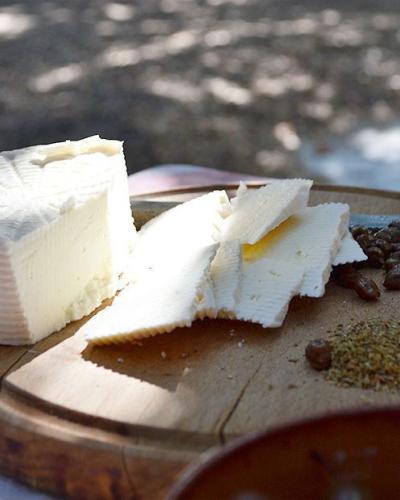
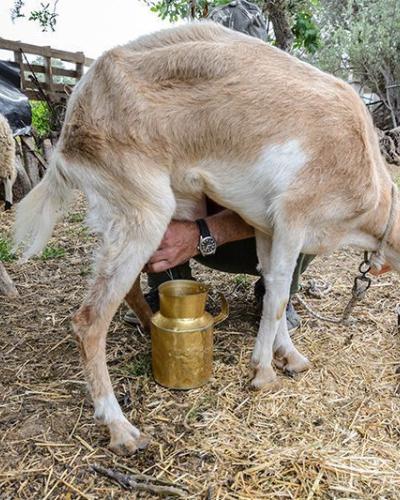
The “hard goat’s cheese” of Chios is a distinct product category that is traditionally produced on the island by local dairy units. This cheese is made from the whole goat’s milk of the small-bodied animals raised in the mountains of Chios, whose diet is based on the island’s unique, aromatic natural flora, imparting to the milk and, by extension, to the cheese, particularly distinctive taste characteristics. Beyond the widely known soft cheese “Mastelo Katsikaki,” the hard goat’s cheese of Chios is often marketed as “Hard Brine Cheese” or “Grated Hard Brine Cheese” by local producers such as the dairy “Tou Tsopani” in Lagada, Chios, indicating a traditional method of preservation and maturation.
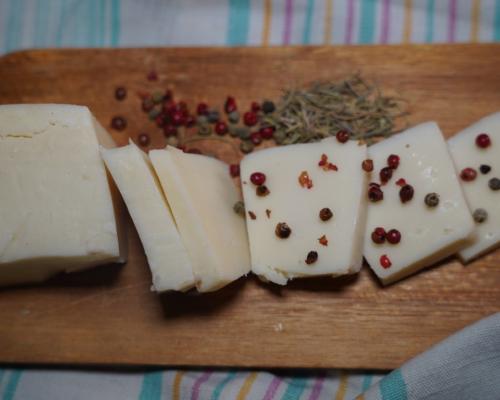
The hard goat’s cheese of Chios is distinguished by the fact that it is made exclusively from 100% Greek goat’s milk of local production. In contrast to the soft Mastelo Katsikaki, which is known for its chewy texture when grilled, the hard goat’s cheese has a saltier and more intense flavor, making it ideal for grating or for table use. Specifically, the “Tou Tsopani” dairy (Georgoulis Farm) in Chios mentions the production of “Grated Hard Brine Cheese” from 100% goat’s milk, as well as “Hard Brine Cheese,” confirming the existence of a hard product based on the island’s goat’s milk. Its hard texture and salty taste, resulting from maturation in brine, place it in the category of hard/aged cheeses, offering a distinctive aroma, a product of the Chian flora.
The geographical area of production of this hard cheese is the island of Chios, and more specifically the mountainous and semi-mountainous areas where the goats are raised. Chios, with its pronounced relief and peculiar flora, mainly in the northern and central parts, provides ideal conditions for free-range grazing of small-bodied goat breeds. The animals’ diet, which includes endemic aromatic plants and shrubs such as mastic in the southern areas, thyme, lentisk, and various other herbs, is the main factor that transfers the distinctive aromas to the milk. The “Tou Tsopani” dairy, which produces such hard cheeses, is based in Lagada, Chios, an area with a long tradition in livestock farming.
The production of hard goat’s cheese in Chios follows traditional cheesemaking techniques, adapted to 100% goat’s milk.
Traditional Method
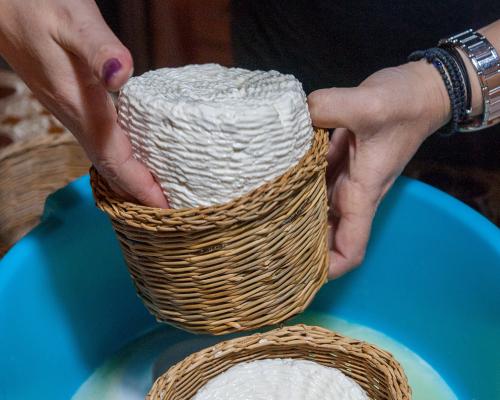
The process begins with the collection of fresh, whole goat’s milk, which in the case of commercial units is usually pasteurized for reasons of hygiene and safety. Then rennet (usually microbial) and lactic culture are added to coagulate the milk and form the curd. This is followed by cutting the curd into small grains and heating it to expel the whey and harden the mass. The cheese mass is placed in molds to drain and take on its final cylindrical or square shape.
Maturation (Brine)
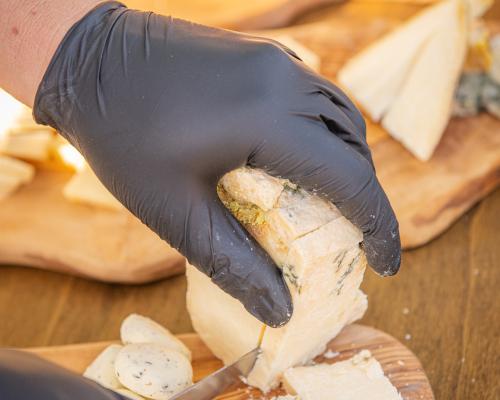
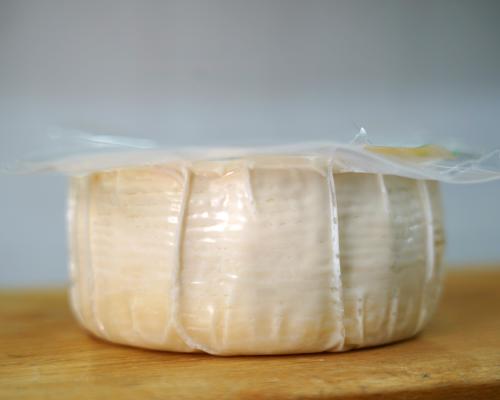
The decisive stage for the hard texture and salty taste is maturation. The cheeses are salted on the outside and then placed in brine (a solution of salt and water), which halts the further development of undesirable microorganisms, contributes to preservation, and leads to dehydration and hardening of the outer surface, as well as to the pronounced salty taste. The length of maturation varies depending on the desired degree of hardness and flavor intensity, but in order to be classified as “hard” a longer maturation period is required compared to soft or semi-hard cheeses, as well as maintaining the moisture at lower levels (possibly below 40%).
The production of hard goat’s cheese, as well as other dairy products from goat’s milk in Chios, is vital for local livestock farming and for the preservation of the rural landscape. The raising of goats in mountainous and hard-to-access areas makes use of pastures that are not suitable for other forms of agriculture, helping to prevent fires and to maintain the biodiversity of the flora. Essentially, this cheesemaking supports small, family-run units that maintain traditional breeding practices, while at the same time adding value to the local primary sector. Hard cheeses, thanks to their long shelf life, ensure that the milk is utilized even in the months of increased production, making cheesemaking an important pillar of the local economy beyond mastiha.
Cheesemaking has deep roots in the rural tradition of Chios, as in every island environment in Greece where livestock farming was a necessary complement to the diet. Historically, hard cheese (as well as other salty brined cheeses) was born from the need of livestock farmers, of shepherds, to preserve surplus milk, especially during the spring months, in a way that would keep for a long period of time. Brine was the most widespread and effective traditional preservation method in the island environment. The hard goat’s cheese of Chios, which today is also found under the commercial name “Tou Tsopani” (“The Shepherd’s”), is a direct reference to this historical connection of the product with the traditional livestock farmer of Chios and his practices.
Goat cheesemaking is intertwined with daily life and with the seasonal tasks of the Chian countryside. Traditionally, the peak season for cheese production is spring, when the milk is richer due to abundant grazing. The production of hard cheese was a family custom, where knowledge was passed down from generation to generation, with each family having its own small technique. Hard brined cheese was a staple of the diet of sailors and farmers of Chios, because of its resistance to heat and its long storage time, serving as a kind of food reserve. Today, this cheese is traditionally used in local pies and as an accompaniment to pulses.