Kalathaki Limnou
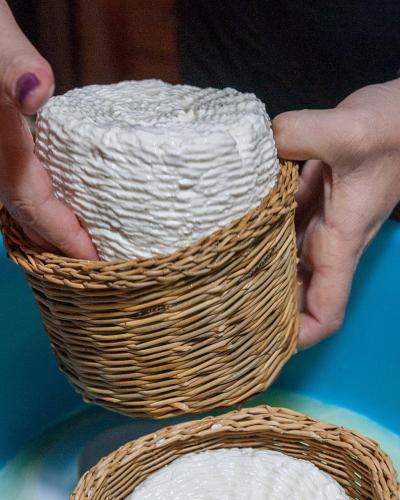
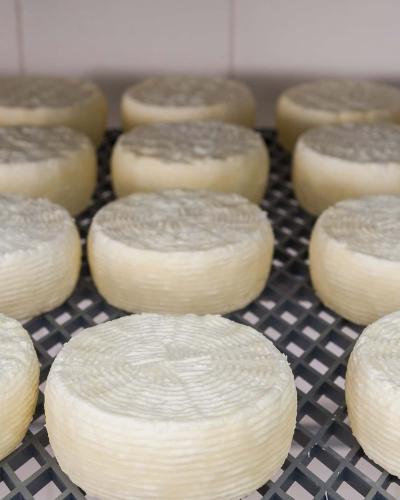
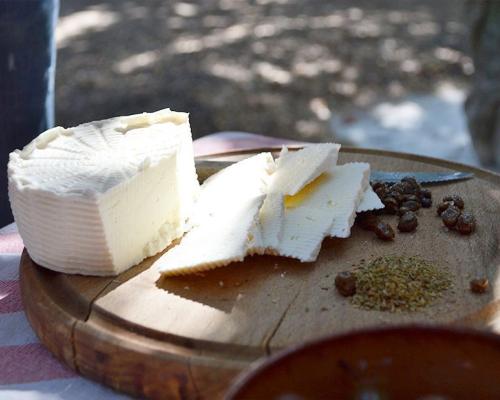
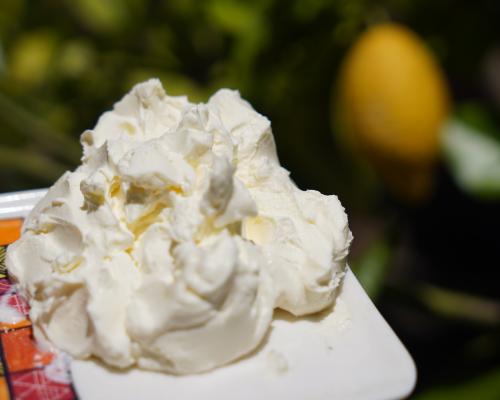
Kalathaki Limnou is a traditional, white, semi-hard brined cheese, which is one of the most important gastronomic ambassadors of the island of Lemnos. Its distinctive identity is inextricably linked to traditional livestock farming and the indigenous flora of the region. It is characterized by its compact texture, its white color, and the presence of scattered small holes in which liquid fat is often retained, enhancing its full-bodied, slightly salty and piquant flavor. Its name derives from the characteristic woven baskets (tyrovolia), originally made from wicker or rushes, in which the curd is placed to drain and to acquire its particular cylindrical shape with the embossed ridges on its surface.
Kalathaki Limnou is recognized as a Protected Designation of Origin (PDO) product. This recognition confirms the inseparable connection of the product with its geographical area and the traditional production methods applied exclusively within the boundaries of the island of Lemnos.
Basic PDO Specifications:
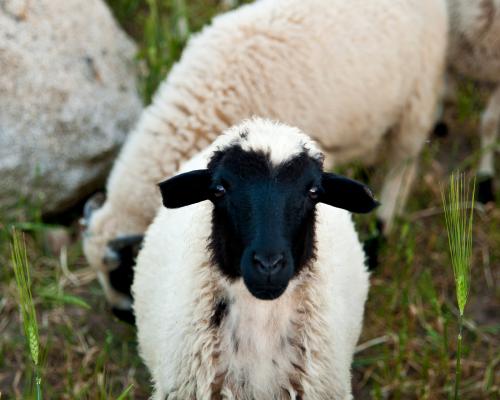
- Milk: Produced from pasteurized sheep’s milk or a mixture of sheep’s and goat’s milk, with the proportion of goat’s milk not exceeding 30%. The milk must come exclusively from sheep and goats that are traditionally raised and grazed in the geographical area of Lemnos.
- Maturation: The minimum maturation period is 60 days.
- Technical Characteristics:
- Maximum moisture: 56% by weight.
- Minimum fat content in dry matter: 43%.
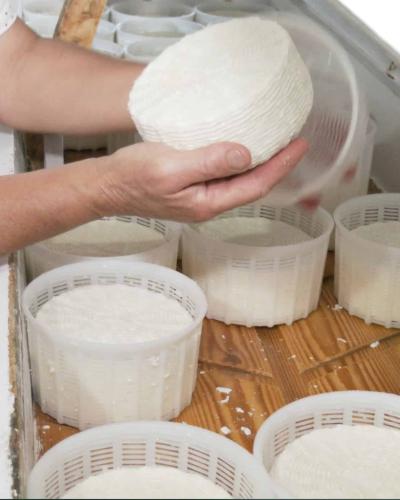
- Shape: Cylindrical, obtained from the draining molds (small baskets or tyrovolia).
Synonyms or name variations are not mentioned in the official specifications, although the reference to “cheese in a little basket” clearly alludes to the method of preparation.
The geographical area of production of the PDO cheese “Kalathaki Limnou” is strictly limited to the administrative boundaries of the island of Lemnos in the North Aegean. Lemnos, unlike other Aegean islands, has extensive plains and low hillsides, which has traditionally made it a place with a strong agricultural and livestock-breeding tradition.
The soil and climatic conditions of the island play a decisive role in the unique taste of the cheese. The flora of Lemnos, with its wild aromatic plants and the great variety of herbs that form the basis of the diet of free-range sheep and goats, imparts to the milk, and consequently to the cheese, rich aromas and a full, distinctive flavour profile. The composition of the animals’ feed, which is directly linked to the local vegetation, is the main factor that differentiates Kalathaki Limnou from other white brined cheeses.
The production of “Kalathaki Limnou” cheese follows a traditional process that has remained unchanged, with the only modern addition being the use of pasteurised milk for safety and hygiene reasons. The process dates back at least to the 20th century, when cheesemaking was established first as a household craft and later in cooperative forms.
- Milk Collection: The milk (sheep’s or a mixture of sheep’s and goat’s) is collected from animals raised on Lemnos and fed on the local flora. According to the specifications, the milk must be collected at least 10 days after lambing/kidding.
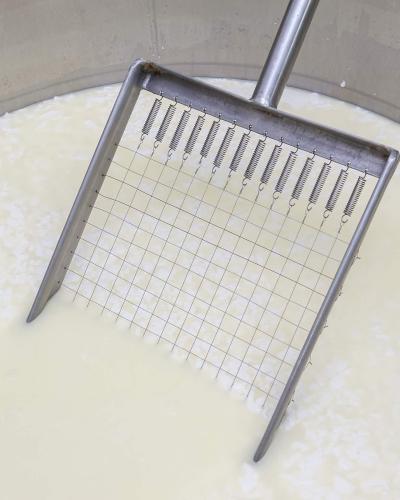
- Coagulation: The pasteurised milk is coagulated at a relatively low temperature, usually at 33°C–34°C, with the addition of rennet of animal origin or other enzymes with a similar action, together with a starter culture. Coagulation lasts about 45–60 minutes.
- Cutting of the Curd and Draining: The curd is then divided into small, soft pieces. Immediately afterwards, the curd mass is placed in moulds or small baskets, which are woven moulds (formerly made of wicker or rushes, today mainly plastic woven), from which it takes its characteristic shape and embossed texture. The draining cheese is pressed lightly by hand, according to the traditional method, in order to expel excess moisture.
- Salting: This is followed by dry salting of the surface of the cheese for a few hours, imparting the desired salty taste.
- Maturation: After salting, the cheese is placed in containers with brine and transferred to a maturation chamber, where it remains for at least 60 days at a temperature of approximately 6°C or at 2°C - 4°C for storage, in order to acquire its final texture and the full-bodied flavor that characterizes it.
The production of “Kalathaki Limnou” cheese, as a PDO product, has a multiplier effect on the island’s economy and social cohesion. First of all, it directly supports the livestock sector of Lemnos, ensuring the viability of local sheep and goat breeds and traditional free-range grazing, which helps preserve the natural landscape. The requirement to use exclusively local milk ensures that the added value remains on the island.
Moreover, its recognition as a PDO has elevated the cheese to an ambassador of Lemnos in Greece and abroad, strengthening local pride and promoting agritourism and sustainable development. The preservation of traditional know-how, including the weaving of the cheese molds (tyrovolia), links modern production with intangible cultural heritage, helping to preserve collective memories and community practices that are passed down from generation to generation.
Cheesemaking on Lemnos has deep roots, as the island has always been an agricultural and livestock-based place. Kalathaki, together with other local cheeses such as Melichloro (or Melipasto), forms part of this centuries-old tradition. The historical development of the product is linked to the need of livestock farmers to preserve surplus milk, especially during times of abundant production, through the making of cheese in brine.
The most characteristic element of Kalathaki’s cultural heritage is the tyrovoli. The traditional molds were woven by the island’s few remaining basket weavers, using natural materials such as bulrush or wicker. This technique, which gave the cheese its distinctive shape and embossed surface, is today a custom and a craft that people strive to keep alive, even though plastic molds have prevailed in modern industrial production. Its recognition as a PDO in 1994 sealed its historical and cultural value.
Kalathaki of Lemnos, thanks to its quality and unique taste, has received significant distinctions, which enhance its recognition beyond the boundaries of the island:
- Gold Taste Award:
- Organization: Milk & Cheese Festival.
- Year: 2009.
- Producer: Mentioned for a specific producer (Chrysafis).
- Level: Gold.
- Quality Award:
- Organization: Gastronomos.
- Year: 2012.
- Producer: Mentioned for a specific producer (Chrysafis).
*The analysis is based on data provided by various producers and nutritional tables, with small deviations.
Cheese is rich in protein, making it important for muscle building and overall health. Its high Calcium content (about 25% of the recommended daily intake per 100g) is vital for the health of bones and teeth. Due to being made from milk and the maturation process, it also contains vitamins such as B12, essential for nervous system function and the formation of red blood cells.
*The analysis is based on data provided by various producers and nutritional tables, with small deviations.
Cheese is rich in protein, making it important for muscle building and overall health. Its high Calcium content (about 25% of the recommended daily intake per 100g) is vital for the health of bones and teeth. Due to being made from milk and the maturation process, it also contains vitamins such as B12, essential for nervous system function and the formation of red blood cells.