Kopanisti Chios
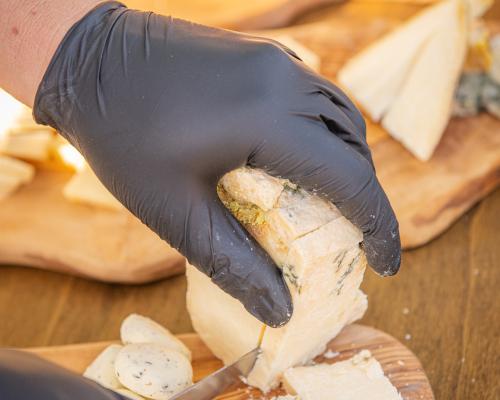
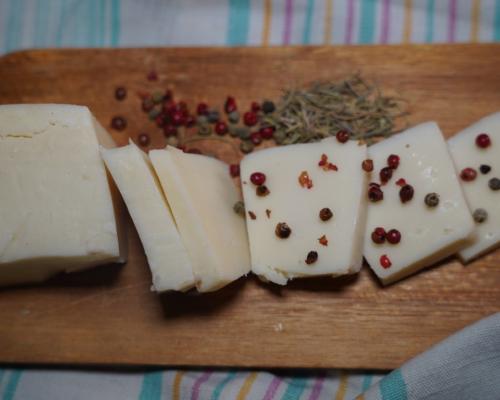
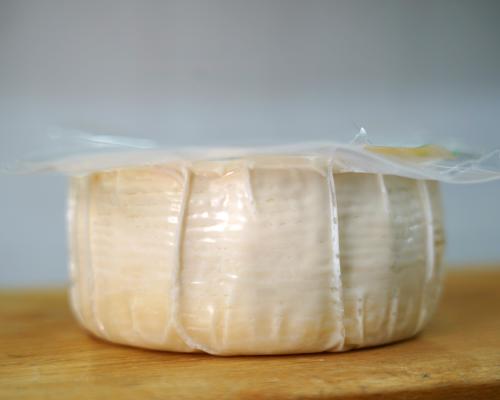
Kopanisti is a traditional, soft fermented cheese produced on various Aegean islands, including Chios. It is characterized by its intensely tangy to peppery taste, its spreadable texture, and its creamy, off-white to light fawn color. In Chios, the production of Kopanisti is part of the local cheesemaking tradition, although the best-known and legally protected form is Kopanisti Cyclades PDO, which geographically covers Mykonos, Tinos and Syros. Chian Kopanisti (or Kopanisto) is a local, non-PDO variation, with locals noting that its peppery intensity is often more moderate and refined compared to the Cycladic version, possibly due to differences in production technique or in the milk used.
Kopanisti is one of the most authentic Greek cheeses and belongs to the category of soft fermented cheeses. Its name probably derives from the process of “kopanisma,” that is, the continuous kneading and mixing of the curd, which is crucial for its final texture and for the development of its distinctive tangy character. Kopanisti has been designated as a Protected Designation of Origin (PDO) product, but this protection applies exclusively to Kopanisti Cyclades (year of registration 1996), which is produced in Tinos, Syros and Mykonos. This means that, although Chios traditionally produces a similar cheese called Kopanisti or Kopanisto, it cannot bear the PDO indication unless there were a separate recognition. Chian Kopanisti is distinguished from the Cycladic versions mainly in terms of the intensity of its spiciness, with some connoisseurs noting that the Chian type has a milder, less “wild” burn.
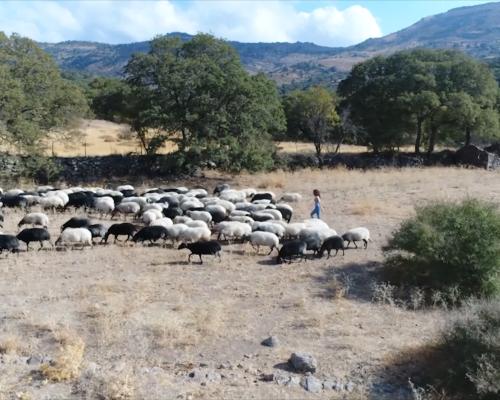
The production of Kopanisti cheese in Chios is inextricably linked to the island’s Mediterranean insular agriculture and animal husbandry. Chios, although located close to the coasts of Asia Minor and geologically different from the Cyclades, has a rich and diverse local flora in its pastures which, combined with the temperate climate, directly affects the quality of the milk from the farmed animals. The animals (mainly sheep, goats and/or cows, depending on the local producer) are raised on natural vegetation and supplemented with hay from local cereals, something that is considered to impart distinctive aromas and flavors to the final cheese. “Chian Shepherd’s Kopanisti Cheese” is a commercial name that highlights the local origin and the link with the quality of the island’s raw material.
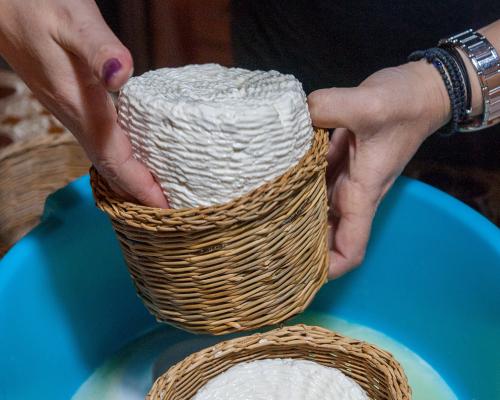
The production of Chios Kopanisti follows the general principles of traditional fermented cheese, with variations that give it a local character. Traditional production begins with the coagulation of fresh, whole milk (cow’s, sheep’s, goat’s, or a mixture, depending on the season and availability) by adding rennet at a lukewarm temperature, resulting in the creation of sour milk after about 24 hours. The sour milk is then drained, often in muslin cloths (cheesecloth bags), to remove the whey and produce tyrovolia (a fresh, soft cheese similar to mizithra).
The critical stage is the fermentation and pounding: the tyrovolia is salted and kneaded/mixed repeatedly (three to four times or more, depending on the cheesemaker) with the addition of old kopanisti (as a “starter” containing the necessary fungi and enzymes) in wide-mouthed containers. This fermentation process, which can last several weeks or months, is responsible for the development of the peppery and pungent taste and the spreadable texture. Chios Kopanisti is reported to have a milder peppery intensity, which may indicate a different fermentation method or the use of different microorganisms compared to the Cycladic version. Finally, the cheese is stored in containers, traditionally in oil or in brine, and nowadays mainly in the refrigerator, where the fermentation continues, gradually increasing its piquant flavor.
The production of Kopanisti, although smaller in volume than Cyclades Kopanisti, constitutes an important part of Chios’s gastronomic identity and contributes to the local economy and the preservation of traditional practices. The existence of local dairies that produce Chios “Kopanisto” (such as “Chiotiko cheese of Tsopanis Kopanisti”) supports the island’s livestock farming, providing an additional outlet for local milk (sheep, goat, cow). This helps to maintain pastures and rural life, linking production to the area’s cultural heritage. Kopanisti functions as a quality local product that promotes Chian gastronomy, both to residents and visitors, strengthening agri-food tourism.
The tradition of Kopanisti in Chios is deeply rooted, as it is in many Aegean islands, constituting a characteristic example of cheesemaking that takes advantage of the seasonal abundance of milk. Historically, the preparation of Kopanisti (from leftover curd cheese or myzithra) was a method of preserving fresh cheese for long periods of time, in an era without refrigerators. The fermentation process and the addition of salt ensured that the product would be kept throughout the year. Oral tradition and the local practices of shepherds and housewives shaped today’s Chian version, with its own flavor nuances which, as noted, are milder and more refined compared with the intense Mykonos variety. The mention of the product in local recipes, such as Kopanisti pies (Kopanistopites), testifies to its uninterrupted presence on the Chian table.
Kopanisti, as a fermented cheese made from whole milk, is a food with high nutritional value and nutrient density. Due to its prolonged fermentation, it contains probiotics and enzymes. Kopanisti is rich in high–biological-value proteins, which are essential for tissue building and repair. In addition, because it is made from milk, it is a good source of calcium and phosphorus—minerals critical for bone health. Its content of B-complex vitamins, especially B12, is also noteworthy. Its high salt (sodium) content is a nutritional factor that requires attention, especially for individuals with hypertension.
Kopanisti, as a fermented cheese made from whole milk, is a food with high nutritional value and nutrient density. Due to its prolonged fermentation, it contains probiotics and enzymes. Kopanisti is rich in high–biological-value proteins, which are essential for tissue building and repair. In addition, because it is made from milk, it is a good source of calcium and phosphorus—minerals critical for bone health. Its content of B-complex vitamins, especially B12, is also noteworthy. Its high salt (sodium) content is a nutritional factor that requires attention, especially for individuals with hypertension.