Chios Ouzo
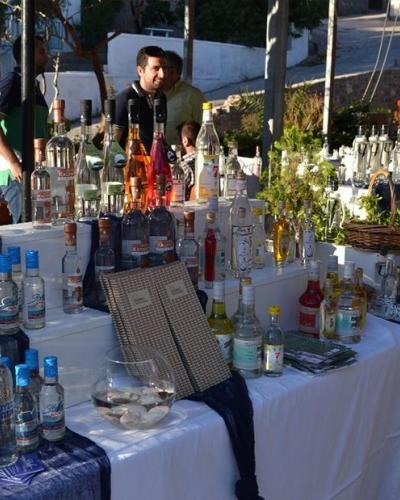
Chios Ouzo is one of the island’s most characteristic spirits, combining the traditional know-how of Greek distillation with the unique aromatic elements of Chian soil, foremost among them the famous Chios Mastiha. It is distinguished by its smooth and aromatic character, inextricably linked with the island’s social life and gastronomy.
Chios Ouzo is an alcoholic beverage belonging to the broader category of ouzo, which is a recognized Geographical Indication (GI) at the level of the European Union. Chios is a recognized center of ouzo production, and its product is significantly differentiated from other ouzos due to the use of Chios Mastiha as a primary or auxiliary aromatic factor, in addition to anise. The use of Chian mastiha (Pistacia Lentiscus Chia) as an aromatic substance in ouzo is explicitly provided for in the Technical File for the Geographical Indication “Ouzo,” underscoring the island’s role in the qualitative differentiation of the Greek spirit. Its alcoholic strength usually ranges between 38%−42% vol., while certain local labels bear traditional names, such as “Ouzo Psychis Rembiko,” taking their name from the copper still (“rembiko”) in the Chian dialect.
Chios Ouzo is produced entirely on the island of Chios, in the Northeastern Aegean. Its geographical location, combined with the dry, warm, mild climate and the centuries-old tradition in the cultivation of aromatic plants, creates the ideal environment for the production of this distinctive spirit. Chios is globally known as the only place of production of natural mastiha, which is extensively used as one of the main aromatic ingredients of the local ouzo, imparting a distinct, slightly sweet and resinous note. Beyond mastiha, Chios is rich in other spices and aromatic herbs used in local distillers’ recipes, contributing to the “light and smooth” character of Chian ouzo. The production of ouzo on Chios is traditionally associated with the island’s urban centers and ports, where the distilling industry developed.
The production of Chios Ouzo follows the general, but strict, specifications of the Geographical Indication “Ouzo”, enriched with local know-how and Chian aromatics. The process includes the flavouring of ethyl alcohol of agricultural origin (usually from cereals or molasses) either by distillation or by maceration of aromatic seeds and herbs, or by a combination of both.
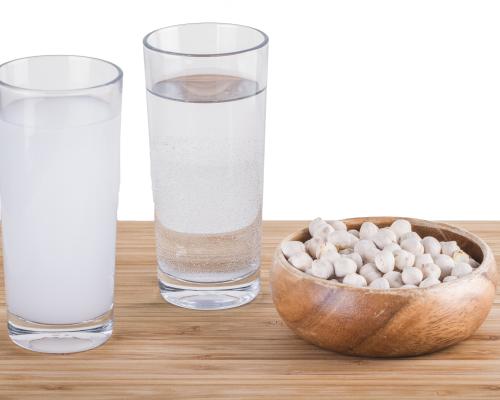
- Selection of Aromatic Ingredients: The basic ingredient is anise (anisum), which is responsible for the characteristic “cloudiness” (emulsion) of ouzo when water or ice is added, due to its anethole content. The distinctive element is the addition of Chios Mastiha, which imparts a unique aroma and contributes to flavour complexity, as well as other local aromatics, such as fennel and coriander, depending on each distiller’s family recipe.
- Maceration: The selected aromatics (seeds, herbs, mastiha) are placed in tanks with ethyl alcohol and water so that they release their essential oils, in a process that usually lasts several hours or even days.
- Distillation: The flavoured alcohol is distilled exclusively in traditional copper pot stills operating in batch mode, with a capacity of up to 1,000 litres. During distillation, the distiller separates the “heart” of the distillate from the “head” (first part, highly volatile) and the “tail” (last part, less aromatic), ensuring the high quality and the desired aromatic character, with the alcoholic strength of the distillate ranging between 55% and 80% vol.
- Dilution & Standardization: The final distillate is mixed with clean and soft Chian water to reach the desired final alcoholic strength (usually 38–42% vol.). Homogenization, filtration (for clarification) and bottling then follow. According to ouzo legislation, the sugar content must not exceed 50 grams per litre. Some Chios producers use 100% distillate (without the addition of neutral ethyl alcohol after distillation), thereby enhancing the traditional and distinctive character of the product.
The specifications of Chios Ouzo are defined by the general legal requirements for Ouzo as a Geographical Indication (GI), with local tradition and the use of Chios Mastiha adding the distinctive characteristics.
- Definition & Category: Ouzo is an anise-flavoured alcoholic beverage, obtained by mixing alcohols that have been flavoured by distillation and/or maceration of anise seeds and possibly other aromatic seeds, plants and fruits, such as Chios Mastiha.
- Alcoholic Strength of Final Product: The minimum alcoholic strength by volume is 37.5% vol. Ouzos from Chios are often marketed at 38% vol. to 42% vol.
- Distillation:
- The flavouring of at least 20% of the alcoholic strength of the final product must be obtained by distillation in copper pot stills operating discontinuously, with a capacity of up to 1,000 litres.
- The alcoholic strength of the distillate must range between 55% vol. and 80% vol. (Chios Ouzo often bears labels indicating 100% distillate).
- Aromatic Substances: Anise (common, star), fennel (fennel seed), and additionally Chios Mastiha (Pistacia Lentiscus Chia), coriander and other local herbs.
- Organoleptic Characteristics: Colourless, clear, with a predominant aroma of anethole and a distinct, light aromatic complexity due to mastiha. It exhibits the characteristic louche (cloudiness) upon the addition of water or ice.
- Sugar: The content of dry matter/sugar in the final product must not exceed 50 grams per litre.
The production of Chios Ouzo has a significant economic and cultural impact on the island, albeit on a smaller scale compared to mastiha. The local distilleries, many of which are family businesses with a long tradition, form an important link in Chios’s processing industry. Chios Ouzo makes use of the local origin of Chian aromatic ingredients, with mastiha as the dominant one, boosting demand for local agricultural products. In addition, it contributes to the tourist identity of the island, as visitors seek local delicacies and drinks, with Chios Ouzo being a characteristic gastronomic souvenir, integrated into the experience of the “Chian meze”. The preservation of the traditional distillation method in copper stills ensures the continuity of know-how and local tradition.
The tradition of distillation on Chios is deeply rooted, dating back to the 19th century, a period during which spirits production flourished in the Aegean. The history of Chios Ouzo begins, for some of the best-known distilleries, as early as the end of the 19th century (e.g. 1896), when the first official distillation licenses were issued by the Ottoman administration. Chios, as an important port and commercial hub between Europe and the East, quickly developed industrial production of alcoholic beverages, differentiating its products through the abundance of local spices and, above all, its unique mastic. In contrast to Lesvos, where ouzo has been associated with the PGI of Plomari and Mytilene, Chios Ouzo retains a lighter and smoother character, based on the subtle balance of anise and mastic. Culturally, Chios Ouzo became integrated into social life as the quintessential welcoming drink and aperitif, associated with the ritual of the table and conviviality, establishing its role as an integral part of the Chian gastronomic identity, clearly distinguished from the local grape distillate, Souma.
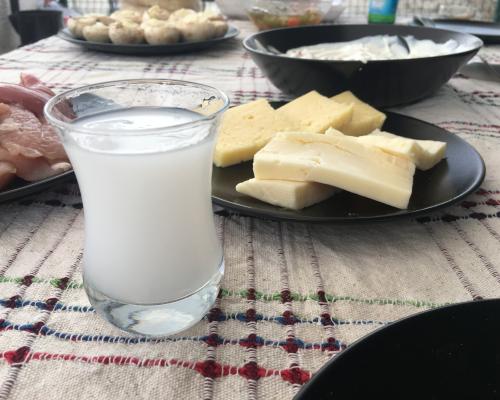
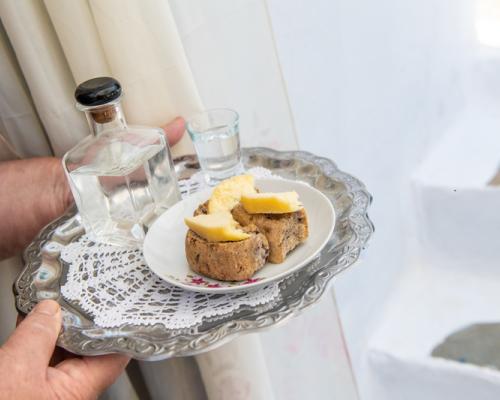
Chios Ouzo is deeply embedded in the social customs of the local community, acting as a catalyst for social interaction. Its consumption is inextricably linked with the meze, a ritual that requires a variety of small dishes (seafood, salted fish, cheeses) and slow, relaxed conversation. On Chios, as throughout Greece, ouzo is never consumed on its own or in a hurry. Tradition dictates serving it in a tall, narrow glass, often with the addition of water and/or ice, observing the characteristic emulsion (clouding) caused by anethole. This process is not merely practical (for diluting the alcohol), but is part of the enjoyment and the ritual. Chios Ouzo, with its distinctive aromatic note of mastic, is also used in local celebrations, festivals and gatherings, marking the cheerfulness and hospitality of the people of Chios.
Ouzo, as an alcoholic beverage, does not provide significant macronutrients (proteins, fats, carbohydrates), but only energy derived mainly from ethyl alcohol (approximately 7 Kcal per gram of alcohol).
- Caloric Value: Depending on the alcoholic strength (38%−42% vol.) and sugar content, the calories range:
- Indicatively, 100 ml of ouzo (≈40% vol.) provide approximately 245−285 Kcal (depending on the source and degree).
- One serving (45 ml) of ouzo provides about 98 Kcal (without the addition of soft drink).
- Bioactive Compounds: The nutritional value of ouzo lies mainly in the aromatic and bioactive compounds derived from the herbs:
- Anethole: The dominant compound, originating from anise and fennel, is a terpene that gives it its characteristic aroma and sweet taste. Modern studies support that terpenes (such as anethole) can have antioxidant action and inhibit the oxidation of LDL (“bad” cholesterol), although consumption should be moderate.
- Mastic oil: The addition of Chios Mastiha introduces the therapeutic properties of mastic oil into the distillate. Mastiha has been known since antiquity for its antimicrobial and anti-inflammatory properties, as well as its beneficial effect on oral and digestive health. These compounds pass into the ouzo, enhancing the distinctiveness of the Chian distillate.
Ouzo, as an alcoholic beverage, does not provide significant macronutrients (proteins, fats, carbohydrates), but only energy derived mainly from ethyl alcohol (approximately 7 Kcal per gram of alcohol).
- Caloric Value: Depending on the alcoholic strength (38%−42% vol.) and sugar content, the calories range:
- Indicatively, 100 ml of ouzo (≈40% vol.) provide approximately 245−285 Kcal (depending on the source and degree).
- One serving (45 ml) of ouzo provides about 98 Kcal (without the addition of soft drink).
- Bioactive Compounds: The nutritional value of ouzo lies mainly in the aromatic and bioactive compounds derived from the herbs:
- Anethole: The dominant compound, originating from anise and fennel, is a terpene that gives it its characteristic aroma and sweet taste. Modern studies support that terpenes (such as anethole) can have antioxidant action and inhibit the oxidation of LDL (“bad” cholesterol), although consumption should be moderate.
- Mastic oil: The addition of Chios Mastiha introduces the therapeutic properties of mastic oil into the distillate. Mastiha has been known since antiquity for its antimicrobial and anti-inflammatory properties, as well as its beneficial effect on oral and digestive health. These compounds pass into the ouzo, enhancing the distinctiveness of the Chian distillate.