Samos Ouzo
Samos Ouzo is a distinctive local expression of the traditional Greek anise-flavoured spirit, known as Ouzo, which has been registered by the European Union as an alcoholic beverage with anise aroma. Samos, an island with a deeply rooted tradition in winemaking and distillation, produces an ouzo that is often distinguished by its smooth, easy-drinking character and its rich aromatic bouquet which, in addition to the dominant anise, includes a secret blend of local aromatic herbs and seeds. This drink is inextricably linked to Samian culture and the Mediterranean way of life, traditionally consumed as an aperitif or as an accompaniment to select meze.
The product is officially recognized as Ouzo with the supplementary geographical indication “of Samos” or “Samian”. This geographical indication, combined with the general recognition of Ouzo as an exclusive product of Greece, registered by the EU as Distilled Anis, ensures its origin and the adherence to specific specifications.
Official Specifications and PGI Status (Protected Geographical Indication):
- Status: “Ouzo of Samos” or “Samian” has been recognized as a Geographical Indication (G.I.) supplementary to the sales denomination “Ouzo”.
- Production Area: Production takes place on the island of Samos in the North Aegean Region.
- Basic Specifications (Ouzo):
- It is produced by mixing agricultural-origin alcohols with infusions and/or distillates of aromatic seeds and/or herbs (mainly anise).
- According to the regulation, at least 20% of the alcohol comes from distillation in copper alembics (stills), although several Samian distilleries produce Ouzo that is 100% distilled.
- The final alcoholic strength usually ranges between 40% vol. and 45% vol., although variations exist.
- Its characteristic taste and aroma are due mainly to anethole, the essential oil of anise.
The geographical indication “Samos” is conferred on ouzo produced exclusively on the Island of Samos, in the Northeastern Aegean. The island is renowned for its mild Mediterranean climate and its flora-rich environment. Samos is historically known for viticulture, particularly for Samos Muscat. The island’s rich agricultural production and its centuries-old distilling tradition (such as the production of souma, a pomace tsipouro), created the ideal basis for the development of the local ouzo. The proximity to the sea and the use of water (which is a key ingredient for diluting the distillate) contribute to the particularly smooth and refreshing flavor profile of Samian ouzo.
The production of Samos Ouzo follows the traditional and legally established methods of Greek ouzo, incorporating local techniques and recipes.
- Raw Materials: The base of the drink is ethyl alcohol of agricultural origin (usually 96°), which must be neutral and of excellent quality so that the aromas of the botanicals can stand out. The main aromatic ingredient is anise (Pimpinella anisum), often of local or Greek origin. Each distillery on Samos maintains its own secret family recipe, which includes a combination of aromatic seeds and herbs. Common additional aromatics include fennel (Foeniculum vulgare), star anise, mastic, cinnamon, coriander, and other local fruits or roots.
- Distillation: Distillation takes place in traditional copper alembics (stills), under strictly controlled temperature (usually around 80°C). In Samos, some producers advertise 100% distilled Ouzo, while the law requires at least 20% of the final alcohol to come from distillation. During the process, the aromatic ingredients are extracted and distilled together with the alcohol and water, creating the aromatic distillate.
- Dilution & Final Product: The distillate is then diluted with soft, treated water in order to reach the desired alcohol content (usually 40%–42% vol.). The quality of the water is considered crucial for the final organoleptic result. The final product is filtered and bottled. Certain variations may contain a small quantity of sugar or honey to impart sweetness.
The production of Samos Ouzo constitutes an important pillar of the island’s local economy and artisanal tradition, complementing the dominant activity of winemaking, which has historically been the main support of the Samian economy.
- Craft Industry and Employment: The distilleries of Samos, such as the historic Giokarinis Distillery founded in 1910, the Frantzesko Distillery, the Zarbani Distillery and the Victor Distillery, preserve family know-how and provide jobs. Artisanal production supports the local supply chain, using local aromatic herbs wherever possible and linking ouzo production with local agriculture.
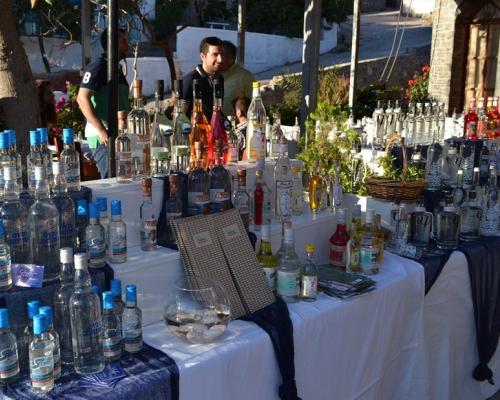
- Tourism: Samos Ouzo serves as a cultural and gastronomic ambassador of the island. Distilleries offer tours and tastings, integrating the product into tourist experiences and promoting the image of Samos as a gastronomic destination.
Samos has a long history in the production of alcoholic beverages, which begins in antiquity with its renowned wine. The production of ouzo on the island, although more modern than winemaking, has deep roots in the distillation technique already applied for the production of local distillates from grape pomace, known as “souma.”
The modern history of Samos Ouzo is linked to the first distilleries that were founded in the early 20th century. A characteristic example is the establishment of the first distillery by Eleni Giokarini in 1910, with the product becoming known as “The Widow’s Ouzo.” This development marked the transition from homemade production (household economy) to an organized, small-scale industrial activity, which passed on family know-how from generation to generation. Samian ouzo, with its reputation as mild and aromatic, became an integral part of the island’s social and gastronomic habits.
Samos Ouzo is inextricably linked with the mezedopoleio and “ouzo-drinking,” a ritual of social interaction.
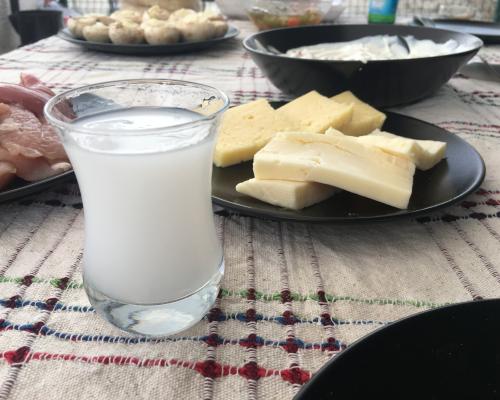
- Ouzo time: Traditionally, ouzo is consumed before lunch or dinner, as an aperitif that stimulates the appetite thanks to anethole (2.4). In Samos, as in the whole Aegean, it is consumed in a relaxed manner, under the shade of trees or by the sea, usually with the addition of water and ice, which gives it its characteristic milky appearance (due to the precipitation of essential oils).
- The Meze: Samian ouzo is always accompanied by meze. This is not just a custom, but a practical necessity, as the alcohol is consumed slowly and in a way that enhances social contact. In Samos, meze is often associated with seafood and salted delicacies of the Aegean, such as anchovies, sardines, marinated octopus, as well as local cured meats, aged cheeses and traditional appetizers.
Bioactive Compounds:
- Anethole: The main essential oil contained in ouzo, derived from anise. Anethole is responsible for the characteristic aroma and taste, as well as for the drink’s “cloudiness” when it comes into contact with water. It is considered that anethole may stimulate appetite and have a mild antiparasitic effect in the intestine, while it also causes vasodilation and possibly reduces blood pressure.
Bioactive Compounds:
- Anethole: The main essential oil contained in ouzo, derived from anise. Anethole is responsible for the characteristic aroma and taste, as well as for the drink’s “cloudiness” when it comes into contact with water. It is considered that anethole may stimulate appetite and have a mild antiparasitic effect in the intestine, while it also causes vasodilation and possibly reduces blood pressure.