Ouzo Lemnos
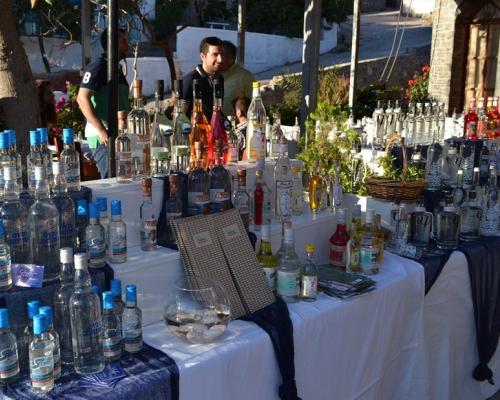
Ouzo is a traditional Greek alcoholic beverage, which belongs to the category of distilled anise spirits and has been registered by the European Union as a product with Protected Geographical Indication (PGI), with its production being exclusive to Greece and Cyprus. The ouzo of Lemnos, although it does not have a distinct local PGI as is the case with other regions, constitutes an important part of the island’s gastronomic identity and local economy. Its production on the island is intertwined with the rich agricultural tradition and especially with viticulture, as tsipouro and ouzo are produced in local distilleries, known as lakaria.
The uniqueness of Lemnian ouzo lies in the incorporation of local raw materials and in the care taken by small, family-run distilleries. Specifically, the use of grape marc from the local aromatic grape variety Muscat of Alexandria (PDO Lemnos) for the production of the basic alcoholic distillate (tsipouro), which often constitutes the base or part of the base of the island’s ouzo, as well as the possible use of local aromatic plants, imparts a distinctive aromatic profile that sets it apart.
Lemnos, a volcanic island in the Northeastern Aegean, is characterized by shallow, clayey, sandy soils and a climate with mild, wet winters and dry, hot summers, dominated by strong winds. These soil and climatic conditions, together with low rainfall, have shaped a flora that includes many aromatic plants and herbs, which are traditionally used in the local cuisine and, by extension, in the aromatic ingredients of ouzo.
Its strong viticultural tradition, especially with Muscat of Alexandria and Limnio (or Kalabaki), plays a central role. The winemaking by-products (grape marc) from these varieties constitute the raw material for the island’s tsipouro (or souma), which in turn is often used as a base for the production of Lemnos Ouzo, imparting distinctive aromas. The traditional distilleries (“lakaria”) are scattered across various settlements of the island, such as Kontias or Moudros, keeping the art of distillation alive.
The production method of Lemnos Ouzo follows the general requirements of the legislation for Ouzo (PGI), while preserving traditional practices.
1. Alcohol Base and Aromatization: The basic raw material is ethyl alcohol of agricultural origin (96–100% vol.). On Lemnos, local production of tsipouro (souma) from grape marc, mainly of the Muscat of Alexandria variety, plays an important role. Many local distilleries use this distillate as part of the base of their ouzo. Aromatization is carried out either by infusion (masitsa) or, more commonly, by distillation (or a combination) of the aromatic seeds, plants, and fruits inside the copper alembic together with the alcohol and water.
2. Distillation: Distillation is carried out in traditional, copper, discontinuous-operation alembics (stills) with a capacity usually up to 1,000 liters (as defined by law). The process is slow and requires special know-how (family secrets) for the regulation of temperature and duration. The aromatic components, such as anise and fennel, release their essential oils, the most important of which is anethole.
3. Selection of the “Heart” (Head/Tail): During distillation, the final product is separated into three fractions: the head (first part), the heart (the central, highest-quality portion), and the tail (last part). The distillers of Lemnos, as in other regions, place particular emphasis on the selection of the “heart” of the distillate, which is the most aromatic and free from undesirable substances. The heart distillate must have an alcoholic strength between 55% vol and 80% vol.
4. Aromatic Herbs: Beyond the mandatory anise, producers from Lemnos may use local aromatic plants and herbs.
5. Dilution and Bottling: The heart distillate is diluted with deionized water (or specially treated water) to reach the final desired alcoholic strength (>37.5% vol), often around 40% vol or even higher. At this stage a small amount of sugar may be added (up to 50 g/liter of dry extract) or additional aromatic substances (distillates or extracts of the botanicals used).
The production of ouzo in Lemnos has a multifaceted impact on the local economy and society. First, it strengthens the primary sector, as it uses as raw material the winemaking by-products (grape pomace) from local grape varieties (especially Muscat of Alexandria), offering an additional use for viticulture. In addition, the demand for local aromatic plants (anise, fennel), albeit on a small scale, supports local agriculture.
The most important impact is on tourism identity and gastronomy. Lemnos Ouzo is promoted as a local product, inextricably linked to the traditional way of life and the island’s seafood. The local distilleries are a pole of attraction for visitors, offering tasting and tour experiences, thus strengthening gastronomic tourism. The preservation of the “lakaria” and the traditional distillation methods ensures the safeguarding of the island’s cultural heritage.
The history of Ouzo on Lemnos, as on other Aegean islands, is inextricably linked with viticulture and distillation know-how, which was particularly reinforced after the Asia Minor Catastrophe of 1922, when refugees brought with them the tradition and secrets of spirit production from Asia Minor.
In Lemnos, the production of ouzo and tsipouro (souma) has always taken place in the “lakaria” (local distilleries). The “lakaria” were not just production sites, but also social hubs, where the people of Lemnos gathered, especially during the “kazanisma” period, to distill, exchange news and celebrate, turning the process into a ritual and custom. Certain distilleries on Lemnos have a history of over 100 years, with recipes and know-how passed down from generation to generation, preserving unchanged the quality and character of Lemnian ouzo.
Lemnos Ouzo is deeply rooted in the island’s daily life and social habits. The main custom is associated with the distillation period (“kazanisma”), usually after the grape harvest, in autumn.
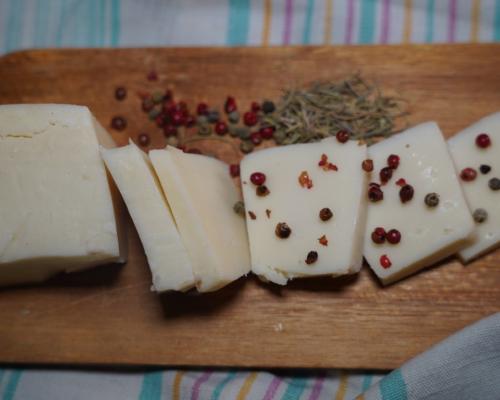
- The Kazanisima (The Lakaria): The distillation process in the “lakaria” was and remains a celebration. Producers and friends gather around the copper still, tasting the “prototagma” (first distillate) and accompanying it with local meze, such as cured fish (sardines, mackerel), cheeses (e.g., Kalathaki Lemnou) and ladotyri saganaki. This distillation “ritual” is an important social event that highlights the notion of collectivity and “mouhabbeti” (relaxed companionable conversation).
- Ouzo Drinking: In Lemnos, as in the whole Aegean, the consumption of ouzo is not just a drink, but a complete social practice. It is traditionally drunk with water (which makes it “turn white” due to the anethole) and/or ice, necessarily accompanied by meze. Ouzo drinking is the quintessential summer habit by the sea, inextricably linking the product with the image of Greek island hospitality.
Ouzo is a pure alcoholic beverage and its nutritional value derives almost exclusively from its alcohol content.
- Bioactive Compounds: The most important bioactive compound is anethole, the main component of the essential oil of anise and fennel. Anethole is responsible for the characteristic emulsion (louche effect) of ouzo when water or ice is added. It has been studied for potential antimicrobial and antioxidant properties.
- Additives: Certain Ouzos of Lemnos may contain traces of essential oils from local herbs (e.g., sage, coriander), which enrich the aroma and flavor but do not add significant nutritional value.
Ouzo is a pure alcoholic beverage and its nutritional value derives almost exclusively from its alcohol content.
- Bioactive Compounds: The most important bioactive compound is anethole, the main component of the essential oil of anise and fennel. Anethole is responsible for the characteristic emulsion (louche effect) of ouzo when water or ice is added. It has been studied for potential antimicrobial and antioxidant properties.
- Additives: Certain Ouzos of Lemnos may contain traces of essential oils from local herbs (e.g., sage, coriander), which enrich the aroma and flavor but do not add significant nutritional value.