Chios sheep's hard cheese
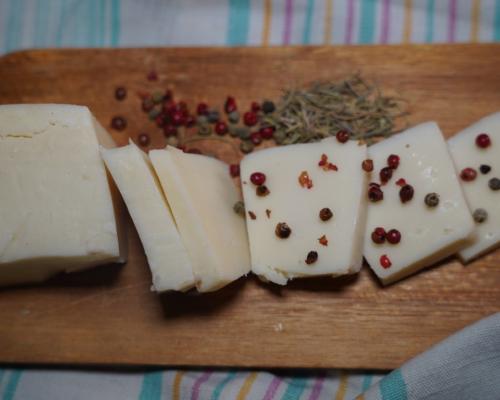
Cheesemaking on Chios has a noteworthy tradition in cheese production, which is based mainly on the rich sheep’s and goat’s milk that comes from free‑range animals. The hard sheep’s cheese of Chios has not been standardized under a single, recognized PDO/PGI name. Instead, it appears on the market under local names, such as “Chian Shepherd’s Cheese” or “Little Graviera of Chios,” and constitutes a variation of long‑matured Greek hard cheeses (Graviera‑type). It is a product made either from pure sheep’s milk or from a sheep‑goat milk blend, with an intense, piquant character that is brought out through the long maturation following traditional cheesemaking.
Identification, Synonyms and Protection Status
The hard cheese of Chios, such as “Graviera‑type of Chios” or “Shepherd’s Cheese,” is essentially a Graviera‑type cheese or an aged Kefalotyri made from sheep‑goat or exclusively sheep’s milk.
Specifications (Estimation based on typical Graviera and local products)
A typical Hard Cheese of Chios presents the following characteristics:
- Texture: Hard cheese, compact.
- Milk: Sheep’s or sheep‑goat (with sheep’s milk predominating or reaching 100%).
- Maturation: Usually many months (3 to 6 months or more) for the development of its piquant character.
- Color: Pale yellow to yellow/light brown.
- Taste: Slightly salty, piquant, and with a rich aroma, due to maturation and the animals’ diet.
- Moisture: Maximum moisture content approximately 33% (for “Gravieraki”).
- Fat on dry matter: Minimum fat content on dry matter 56% (for “Gravieraki” – see source).
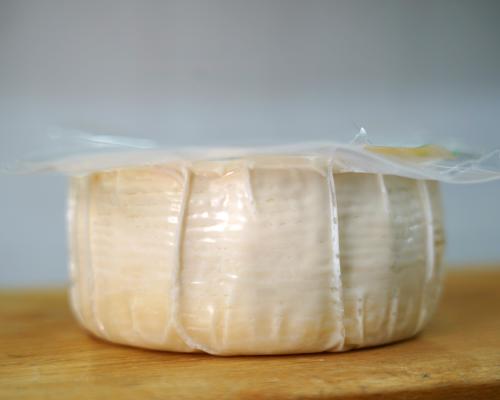
- Shape: Cylindrical wheel, with weight varying depending on the producer.
The production of the hard sheep’s cheese in Chios is limited to the island territory of Chios and, possibly, its smaller surrounding islands. The area is characterized by the particular soil and climatic conditions of the Eastern Aegean islands. Livestock farming, which supplies the raw material (sheep’s milk) for cheesemaking, is based on extensive free-range grazing. The island’s flora, especially thyme, wild grasses and the aromatic plants consumed by the sheep and goats, is critical. Chios’s reputation for mastic has also influenced local cheesemaking, with certain producers incorporating mastic into variations of fresh cheeses, adding an even more distinctive local touch to the products.
The production of the hard sheep and goat cheese of Chios follows the basic principles of Greek hard cheesemaking, with adaptations based on local tradition and the raw material.
The process begins with the collection of fresh sheep’s milk (either pure or mixed with goat’s milk), which often comes from free-range animals. The milk, usually pasteurized for safety and standardization, is standardized in fat content and then coagulated by adding rennet (traditionally natural) at a temperature of about 34–36°C. The resulting curd is cut into small grains, about the size of a grain of rice or a lentil, followed by reheating of the curd to higher temperatures, a critical phase for whey expulsion and for achieving the hard texture.
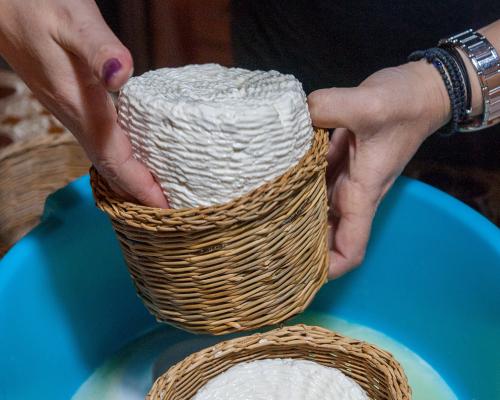
Subsequently, the cheese mass is transferred to molds for draining and pressing, giving the cheese its characteristic cylindrical shape. Salting then follows, which may be either dry (rubbing the surface with coarse salt) or by immersion in brine, with the aim of enhancing the flavor, forming the rind, and preserving the cheese. The most decisive phase is maturation, which takes place in refrigerated chambers with controlled temperature (15–18°C) and humidity. During maturation, which lasts several months (usually 3 to 6+), the cheese is regularly turned and cleaned. It is this long process that develops its compact, elastic texture, the scattered holes, and the piquant, intense flavor that characterizes hard sheep’s milk cheeses.
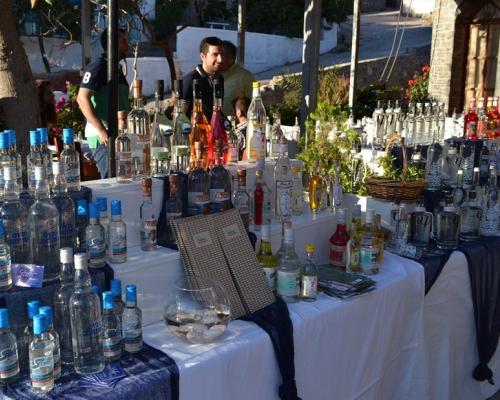
The production of hard cheeses on Chios plays an important role in the local agricultural economy and in maintaining the island’s livestock farming. The demand for local, quality dairy products secures income for the sheep and goat farmers of Chios, encouraging traditional, extensive grazing in the mountains and rural areas. Cheesemaking creates local jobs in the primary and secondary sectors (milk collection, cheesemaking, maturation, packaging) and contributes to the local gastronomic identity. In addition, the sale of hard cheeses to visitors and their pairing with other local products, such as ouzo or wine, strengthens agritourism and the promotion of Chios’s quality cuisine.
Cheesemaking is an integral part of the rural life of Chios, as on every Greek island, with roots lost in antiquity. Historically, livestock farmers produced their own cheeses to cover their families’ needs and to preserve milk throughout the year. Hard cheeses (such as sheep’s milk cheeses) were particularly important, as their long maturation ensured survival during periods of reduced milk production.
In Chios, the specialization of production in dairy products with a strong sheep’s or goat’s milk base is closely linked to small-scale herds and to cheesemaking methods passed down from generation to generation. While the most famous cheese of Chios today is Mastelo, local varieties of hard cheese (such as Graviera-type “Gravieraki”) represent the continuation of the tradition of the shepherd’s aged cheeses, which were produced with simple means and natural maturation.
Dairy products have always been intertwined with the customs of Chios, especially around livestock festivals and the seasonality of milk production.
- Completion of Milking: The period of peak milk production (mainly in spring) was associated with the production of large wheels of hard cheese, intended for long-term consumption. Hard cheese was the family’s “reserve” and an important barter good.
- Offering and Hospitality: Aged cheese, because of its value and rich character, traditionally constituted an offering of hospitality to visitors, usually accompanied by local wine or ouzo.
- Accompaniment to Mastiha: The island’s unique identity has led to modern gastronomic habits, such as pairing hard cheeses with spoon sweets or dried fruits that contain mastiha, creating a distinctive Chian taste experience.