gemata (sweets)
Greek cuisine, and island cuisine in particular, is renowned for its almond-based confections, which are traditionally associated with moments of joy and celebration. The “Gemata” of Lesvos, also known as Mytilene Almond Sweets (Amygdalota Mytilinis), are a characteristic example of this, being a pure, unbaked almond paste sweet that expresses the gastronomic tradition of Lesvos. It is a “sweet of the word,” intertwined mainly with the rituals of engagements and weddings, where its white color and pure taste symbolize purity and the wish for a sweet and happy life together. This traditional sweet constitutes an integral part of the island’s cultural and social life.
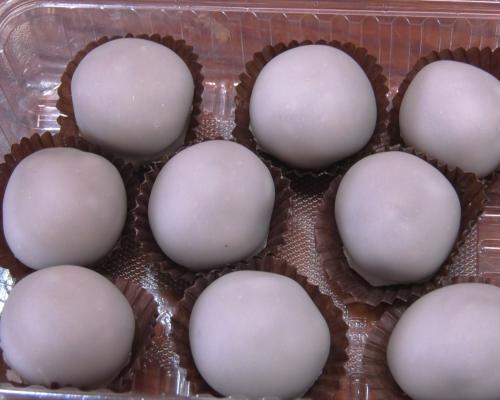
The Gemata or Almond Sweets of Lesvos are a traditional air-dried confection (not baked), made from blanched ground almonds, sugar, and rose water (often from orange blossoms and leaves of Lesvos). The name “Gemata” is particularly widespread in Mytilene and probably derives from their use as “prospermata” or “peskesi” (gifts) offered at social events, that is, as “full” or “laden” gifts of love and good wishes.
The Gemata are inextricably linked with Lesvos, where, in the capital Mytilene, this sweet gained its reputation as the official treat of social occasions. However, variations of the almond sweet are also found in other parts of the island, such as Mesotopos, where their almond sweets are also called “aeros” (“of the air”) due to the traditional practice of drying them in the open air without baking. The geographical position of Lesvos, with its influences from Asia Minor, and its rich natural environment—particularly the extensive cultivation of the olive—have contributed to the development of a refined gastronomy in which the use of almond, although not a primary agricultural product like the olive, is deeply rooted, probably due to the island’s commercial and cultural connections.
Traditional Method of Sweet Production
The production of Gemata is based on a simple yet technically demanding process that results in an unbaked, white confection. The process begins with the preparation of the basic raw material:
- Almond Preparation: Blanched almonds (without the skin) are used, which may come from local or imported varieties. The almonds are first scalded to remove the skin and then left to dry very thoroughly, often for 2–3 days, as moisture is the greatest enemy of the sweet’s success.
- Grinding and Kneading: The dry almonds are ground into a very fine powder, which is mixed with granulated sugar. In some variations (such as that of Mesotopos) powdered sugar is also added. The critical stage is the kneading, during which orange blossom water (from orange blossoms and leaves of Lesvos) is gradually added and, optionally, a tiny amount of bitter almond essence or lemon juice. The orange blossom water is used with great care, “drop by drop,” as an excessive quantity initially makes the dough sludgy and then excessively hard. The dough must attain a firm, elastic texture (almond paste) so that it can be shaped.
- Shaping and Drying: The dough is shaped into small forms, traditionally resembling a small pear or a cone. A clove is often pinned to the top of the sweet, which imparts a subtle aroma and serves as a decorative element. The shaped pieces are then left to air-dry for several hours, which justifies the name “aeros” (“of the air”), forming a delicate outer crust while remaining soft inside. Finally, they are dusted with or dipped in powdered sugar, although in Mytilene they are often served plain, highlighting their white color.
Gemata constitute a deeply rooted element of the urban and rural cultural heritage of Lesvos. Their history is inextricably linked with the customs of marriage and family joy. The tradition of offering almond sweets has its roots in a broader Aegean and Asia Minor gastronomic culture, where the almond symbolizes fertility and happiness.
In Mytilene, “Gemata” had a unique, institutional role: they were the sweet that accompanied the “logos” (the promise of marriage). The bride would bring the sweets to her mother-in-law during the engagement, hence their older name “prospesmata” (from “prosfero,” meaning “to offer”). In addition, they were offered as “peskesia” (gifts) to people toward whom the family felt a sense of obligation or honor. Their white color was considered a symbol of purity, while their sweet taste expressed the wish for sweetness and longevity in life. In more recent years, the custom continues, with Gemata being offered at weddings, baptisms, and important celebrations.
Gemata have a significant social and economic impact on Lesvos, transcending their role as a simple confection.
- Preservation of Tradition: Their production keeps alive traditional aerated confectionery techniques and the ritual significance of the wedding sweet.
- Local Economy: They are produced mainly by Women’s Agritourism Cooperatives (such as that of Mesotopos) and small family-run pastry workshops, supporting local employment, especially in rural areas, and strengthening female entrepreneurship.
- Gastronomic Tourism: They are one of the gastronomic souvenirs of the island. Along with ouzo and olive oil, they promote the gastronomic identity of Lesvos and attract visitors seeking authentic local flavors.
Their reputation and quality are ensured through:
- Recognition of Local Cooperatives: Many local women’s cooperatives (e.g. the one in Mesotopos) and traditional workshops have received recognition at local and regional level for preserving the authentic recipe and traditional techniques.
- Showcasing at Gastronomic Festivals: Gemata are systematically showcased at events such as the Lesvos Food Fest, contributing to their wider recognition.