Honey (thyme, citrus and pine)
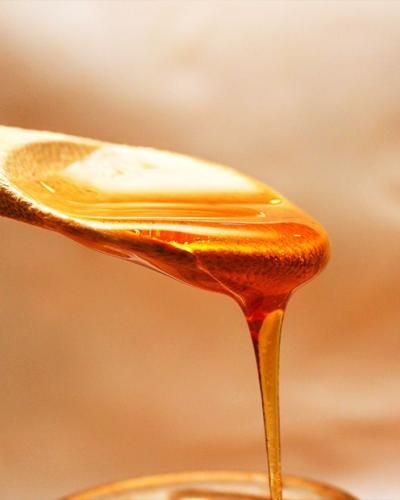
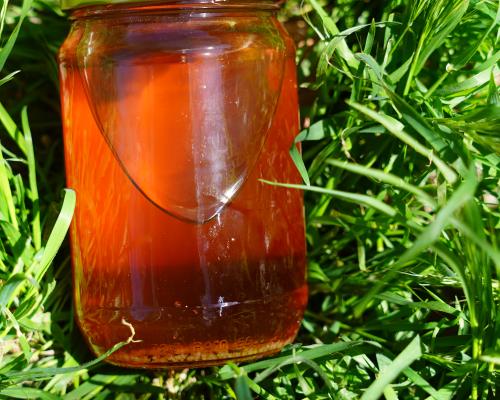
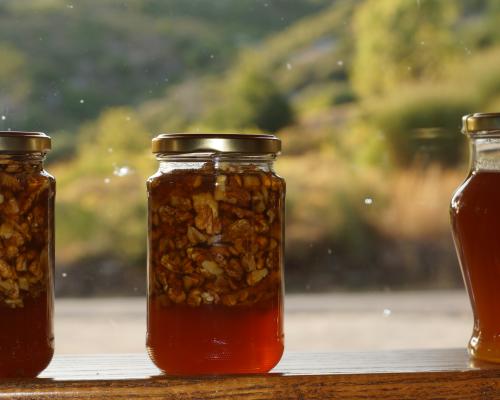
Honey is one of the most important traditional products of Chios, with beekeeping having a centuries‑long presence on the island. Chian honey, known for its distinctive aromatic identity, derives from the variety of flora that thrives on the island, including thyme, citrus fruits (such as mandarins and oranges) and pine. Honey production in Chios is carried out mainly by the local Chios Beekeeping Cooperative, as well as by individual producers. The combined presence of honey from thyme, pine and citrus blossoms yields a honey with a complex flavour profile, bringing together the dark colour and mild character of pine honey with the light‑coloured, intensely aromatic and fast‑crystallizing thyme and citrus honey, creating an extremely popular product of high nutritional value.
The product concerns a type of honey that is polyfloral or a blend of the main beekeeping flowerings and honeydew secretions of Chios: Thyme (Thymus), Pine (Pinus) and Citrus fruits (such as Citrus reticulata – Chios Mandarin PGI and Citrus sinensis – Orange). While thyme honey and pine honey are monofloral honeys, the practice on the island allows for the collection of a final product that bears the characteristics of this unique blend. Synonyms or name variations include “Chian Honey” or “Chios Forest and Flower Honey”, depending on the dominant variety of each season.
“Chios Honey” is among the candidate products under evaluation for the designation of PDO or PGI status. This research demonstrates the recognition of the distinctive organoleptic and traditional characteristics of Chian honey.
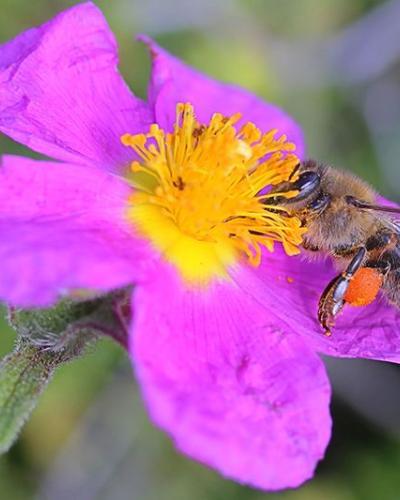
Beekeeping on Chios benefits from the island’s diverse geography and flora. Chios is characterized by a Mediterranean climate, with mild, wet winters and hot, dry summers, conditions that favor flowering and honey secretion. Thyme (mainly Coridothymus capitatus) thrives in dry, rocky soils, especially in the hills and southern areas, where beekeepers move their hives during the June–July period. The pine forests (Pinus brutia, Pinus halepensis) cover significant areas, particularly in the northern and central mountainous parts of the island, where honeydew is collected in the autumn. Finally, citrus trees, especially the Chios Mandarin (PGI), are intensively cultivated in the fertile plain of Chios, where beekeepers place their colonies in spring (flowering period March–April) to collect the highly aromatic nectar, which contributes to the light color and intense aroma of the honey. The possibility of moving bee colonies within the island, between the plain, the thyme-covered hilly areas and the pine forests, allows producers to collect honeys of different varieties throughout the beekeeping year.
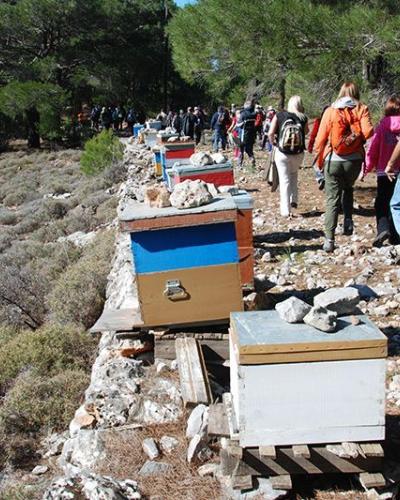
Beekeeping on Chios mainly follows modern practices of migratory beekeeping, although historically there were traditional methods and hive types. Today, beekeepers primarily use modern frame hives (Langstroth type), which allow for the removal of individual combs, facilitate extraction, and enable disease control.
The collection method differs by variety:
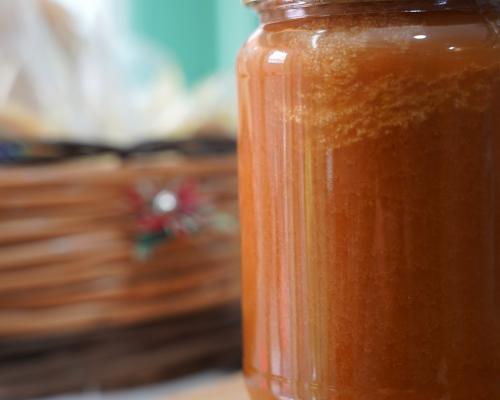
- Citrus Honey (Spring): The colonies are placed in the Plain of Chios during the flowering period of Mandarin and Orange trees (March–April). Extraction takes place immediately after the end of flowering, as citrus honey crystallizes very quickly (within 1–2 months) due to its high glucose content.
- Thyme Honey (Summer): The colonies are moved to hilly and mountainous areas with extensive thyme growth, mainly in June and July. The collection of thyme nectar is particularly critical, as it requires dry weather.
- Pine Honey (Autumn): The collection of pine honey, which is a honeydew honey (not floral), is carried out from honeydew secretions produced by the insect Marchalina hellenica on the island’s pine trees (Pinus brutia), mainly in the autumn months (September–October).
After collection, the filled combs are transported to the honey extraction facility, where uncapping and centrifugation follow for the extraction of the honey. The honey is then filtered and left to mature in stainless steel tanks before final standardization and packaging. Traditional practices, such as the triangular clay or stone hives historically mentioned for Chios, have been abandoned with the prevalence of the modern hive, although the know-how of moving bee colonies (nomadic beekeeping) is preserved as a traditional technique for the exploitation of seasonal flora.
By-products: The beekeeping process also yields other important products such as royal jelly, pollen and beeswax, which is used for the production of candles and cosmetics. Specifically for Chios, there is also the product “honey with Chios Mastiha,” where the honey is enriched with natural Chios mastiha (PDO), combining two of the island’s most characteristic products.
Beekeeping, and by extension the production of Chian honey, has a significant economic, social and environmental impact on Chios. Economically, honey is one of the island’s main agricultural products, after Chios Mastiha and Chios Mandarin (PGI). The Beekeeping Cooperative of Chios plays a central role in organizing production, packaging and marketing of the honey, contributing to the preservation of agricultural income and the strengthening of the local economy. Socially, beekeeping sustains a traditional rural activity and passes on know-how from generation to generation, while the activity of beekeepers is often linked to the development of local communities. Environmentally, the role of the bee is pivotal for the pollination of Chios’ unique ecosystem, including the flowering of thyme and, above all, the fruiting of the citrus groves of Kambos, as well as other cultivated and wild plants, ensuring biodiversity and the quality of crops.
Beekeeping on Chios, as throughout the Aegean, has ancient roots, with evidence pointing to the use of traditional methods and hives. Historically, the use of special triangular hives made of clay or stone slabs on Chios is mentioned, which form part of the island’s distinctive beekeeping heritage, although their use has been displaced by modern techniques. These primitive hives bear witness to the adaptation of methods to local materials and climatic conditions. Honey production has always been linked to food self-sufficiency and the exchange of products, serving as a sweetening agent before the widespread diffusion of sugar. Beekeeping is recognized as a traditional craft, and its preservation constitutes cultural heritage, contributing to the island’s local identity, which is known worldwide for its unique flora and its products.
Although there are no widely documented specific customs exclusively associated with honey harvesting on Chios, as is the case with Mastic, beekeeping activity is integrated into the broader cycle of the island’s agricultural customs. The nomadic movement of hives, to make use of successive blooms (citrus in spring, thyme in summer, pine in autumn), constitutes a seasonal tradition and ritual that determines the rhythm of the beekeeper’s life. The sale of honey in local markets and festivals, often by the producer himself, forms a social and commercial tradition, while honey is a key ingredient in traditional Chian sweets and culinary offerings at festivals and social events.