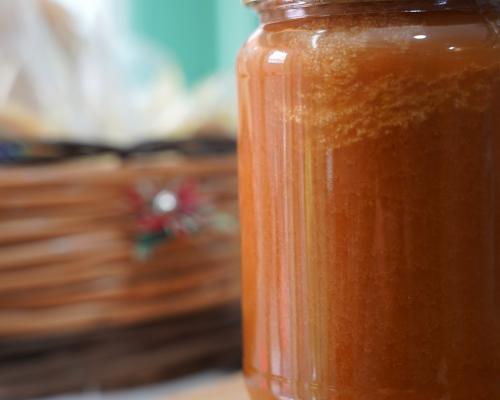
Samos Honey
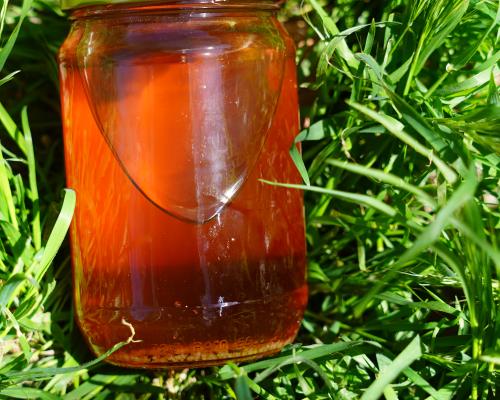
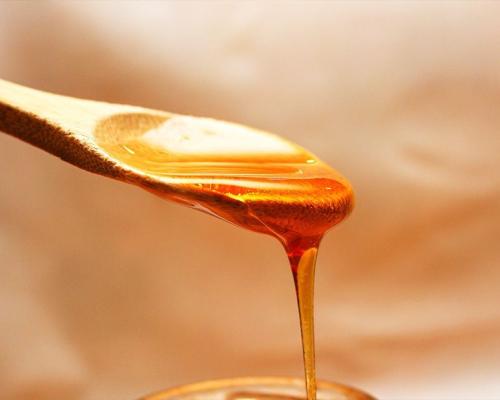
Honey is one of the most important traditional products of Samos, with beekeeping being traditionally practiced on the island and constituting a significant agricultural activity. The production of Samian honey is characterized by the island’s diverse flora, which combines elements of European and Asian flora due to its geographical location. Samos mainly produces pine honey and blossom honey from chaste tree, ivy, heather, and unique blends of pine-ivy and pine-“kissouri” honey (autumn heather), highlighting its unique botanical identity. The beekeeping capacity on the island is estimated at approximately 12,000 bee colonies, with annual production, due to climatic conditions, usually ranging between 8–10 kilos per hive.
The uniqueness of Samian honey, and especially pine honey, lies in its enriched composition with aromas and flavors from the region’s rich shrub and tree flora. Official studies by the Ministry of Rural Development and Food (MRDF) have examined the pine honey and the pine-“kissouri” honey of Samos, recording their distinctive microscopic profile (pollen analysis) and their physicochemical indicators, data that confirm their botanical and geographical origin.
Specifications and Characteristics (By Type)
Samian honey is marketed mainly as:
- Pine honey (Honeydew Honey):
- Origin: The honeydew comes mainly from the insect Marchalina hellenica (pine cottony scale), which feeds on the sap of the Turkish pine (Pinus brutia) and black pine (Pinus nigra), which cover a large part of the mountainous areas of Samos.
- Characteristics: It usually has a darker color than thyme honey, a low concentration of sugars (glucose), and consequently does not crystallize easily. It is considered a honey of high nutritional value, rich in trace elements.
- Ivy and Autumn heather blossom honey (“kissouri”):
- Origin: It comes from the nectar of ivy (Hedera helix) and the autumn shrubby heather (Erica manipuliflora), which abound in the island’s forest areas, resulting in a distinctive honey.
- Characteristics: It is characterized by its intense aroma and characteristic taste. Due to its higher glucose content, it microcrystallizes quickly into a fine-grained and compact consistency.
- Blossom–Pine Honey, which is a blend of the above.
The Brutia Pine (Pinus brutia), which is the main source of honeydew for pine honey, covers forested areas. At the same time, the rich variety of annual plants, mainly Gramineae and Leguminosae, as well as shrubs such as thyme, ensures different flowering periods throughout the beekeeping year. The intense flora and the terrain relief are decisive factors for the unique botanical identity of Samos honey.
The production of Samos honey follows the traditional practices of nomadic beekeeping, combined with modern techniques. Beekeepers take advantage of the seasonality of blossoms and honeydew, moving their hives to different parts of the island.
The production process is divided into the following main stages:
- Collection of Honey/Honeydew (Seasonality):
- Honey from ivy and heather blossoms and sometimes in a blend with pine honeydews: Nectar is collected mainly during the autumn months, when ivy and subsequently autumn heather are in full bloom, in forested areas of the island.
- Pine honey: The honeydew from the insect Marchalina hellenica is collected in two main periods: in spring (lighter-colored honey) and in autumn (darker honey). Beekeepers monitor the development of honeydew in the pine forests.
- Harvest: The extraction of honey from the combs is carried out using centrifugation, a method that preserves the natural characteristics of the honey unchanged. This is followed by straining (filtering) to remove any foreign particles and wax.
- Processing and Standardization: The honey is standardized in suitable facilities or by individual producers. It is not heated to high temperatures (cold processing), so that all its nutritional and bioactive components, such as enzymes and flavonoids, are preserved. The traditional practice of beekeepers and knowledge of the local microclimate are critical for ensuring the quality and authenticity of the product.
Beekeeping in Samos constitutes a stable complement to the rural economy, despite the dominance of viticulture. With approximately 12,000 beehives, the activity contributes to maintaining the rural population and to diversifying rural income. Its impact, however, is not only economic, as beekeeping is directly linked to environmental sustainability and the preservation of the island’s biodiversity. The presence of bees is of vital importance for the pollination of the rich flora, including forest areas and crops, ensuring the reproduction of plants. In addition, the production of honeys with recognized characteristics strengthens the island’s identity and promotes a quality standard in the field of local products.
Beekeeping in Samos, as in the wider Greek region, has deep roots dating back to antiquity. Historically, honey was a product of particular value, used not only as a sweetening substance, but also for its therapeutic properties, its religious use (offerings), and for food preservation. While viticulture remained the main activity, the art of beekeeping stayed alive, mainly as a family tradition. The traditional practices of beekeepers, combined with knowledge of the local flora and microclimate, shaped a representative honey for the area, as confirmed by modern scientific studies aimed at documenting the authenticity of Samian honey.
Honey has always been an integral part of the island’s local gastronomic customs and festive dishes and is traditionally used in sweets that accompany religious celebrations or social events (weddings, baptisms). The broader cultural value of honey in Greece, where the bee was considered sacred and associated with deities such as Demeter and Artemis, is also preserved in Samos through the uninterrupted practice of the beekeeping art.
The different nutritional composition of blossom honey (richer in certain flavonoids) and pine honey (richer in trace elements and lower in glucose) provides a complete spectrum of nutritional properties to Samos honey, offering invigoration, protection from infections and support of the immune system.
The different nutritional composition of blossom honey (richer in certain flavonoids) and pine honey (richer in trace elements and lower in glucose) provides a complete spectrum of nutritional properties to Samos honey, offering invigoration, protection from infections and support of the immune system.