Kapi Beans
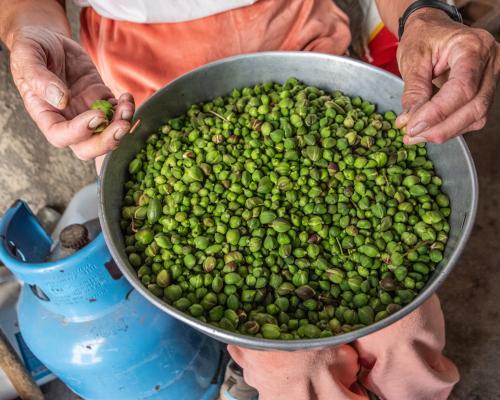
Kapi Beans are a local bean variety traditionally cultivated on the island of Lesvos, centered around the village of Kapi, from which they took their name. This product belongs to the category of pulses and is considered part of the cultural and dietary heritage of the North Aegean. Recognition of their value derives mainly from their distinctive taste characteristics and their connection with the traditional agricultural practices of the area. The promotion of Kapi Beans, together with other local products such as Lisvori chickpeas, is considered a strategic objective for strengthening the local economy and showcasing the island’s distinctive features.
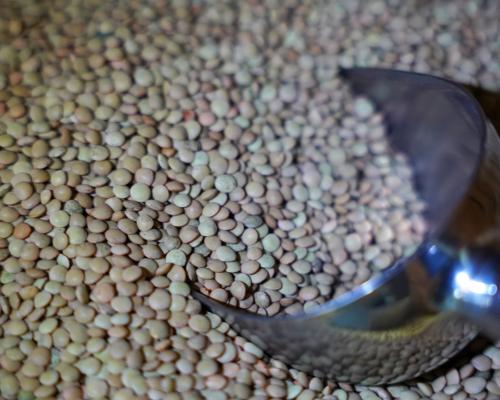
Kapi Beans (or “Lesvos beans,” with specific reference to the Kapi cultivation area) are a local variety of the common bean (Phaseolus vulgaris). They are consumed either fresh—known as melichlora, when the pods are still yellow in color—or as dried beans for soup (fasolada). The local name highlights their distinct flavor and quality, which are attributed to the area’s particular soil and climate conditions and to traditional cultivation methods.
The cultivation of Kapi Beans is focused mainly around the village of the same name, Kapi, which is located in the northern part of Lesvos. Lesvos is characterized by diversity in its terrain and microclimate. Although Kapi, according to local accounts, is not renowned for an abundance of water—unlike neighboring places such as Pelopi—bean cultivation became concentrated there due to the availability of fields.
In general, the bean plant thrives in a wide range of soils, preferring slightly acidic soils (pH 5.5–6.5) with good drainage, although the local variety has likely adapted to the specific soil and climatic conditions of Lesvos. The success of cultivation in this particular area, despite possible challenges with water availability, demonstrates the adaptability of the local variety.
The cultivation of Kapi Beans on Lesvos largely follows traditional practices for pulses.
Soil and Climatic Requirements and Techniques
The bean plant requires balanced fertilization, particularly with phosphorus and potassium, while as a legume, nitrogen is provided in smaller quantities, since the plant itself contributes to the fixation of atmospheric nitrogen. The soils must be well-drained to prevent root rot, with an ideal slightly acidic pH.
Sowing
The sowing of dry beans in Greece in general takes place in the spring period (April–May). To facilitate germination, the seeds are often soaked in water for 24 hours before sowing. Sowing is done either in parallel rows or in “hills” (small groups of seeds), with spacings that depend on whether the variety is dwarf or climbing.
Harvest
Harvesting of dry beans begins about two months after flowering, when the pods have turned yellow and begun to dry out. After harvesting, the pods are left for further drying and then threshing follows (by mechanical means today, traditionally by hand or with animals) to separate the seeds from the pods.
Processing and Standardization
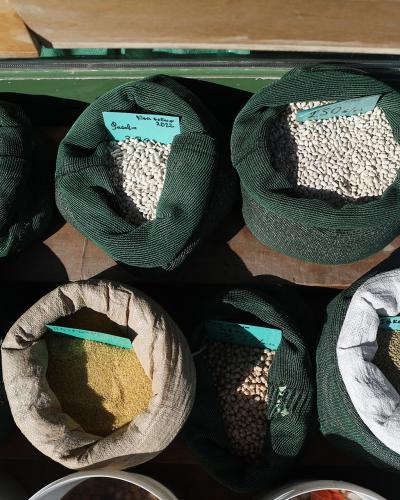
After threshing, the beans are cleaned to remove foreign matter and defective seeds. Standardization includes packaging in sacks or small bags for marketing. Local distribution of Kapi Beans is important, but their circulation outside the island also requires systematic promotion of their distinctive characteristics, emphasizing their origin from Lesvos.
The cultivation of Kapi Beans and other local pulses (such as Lisvori chickpeas) contributes significantly to the preservation of agricultural production and the biodiversity of Lesvos. The existence and promotion of local varieties are of vital importance for rural development, offering farmers the opportunity to improve their income through the production of differentiated products with a distinct identity.
The preservation of bean cultivation, even on a limited scale, is directly linked to the preservation of traditional agricultural knowledge and customs related to the sowing, harvesting, and use of pulses in Lesvian gastronomy. Furthermore, pulses, as legumes, enrich the soil with nitrogen, contributing to the sustainability of agricultural systems through crop rotation.
The cultivation of pulses, including beans, has a long history on the island of Lesvos, as in the whole of Greece. Kapi Beans represent a living part of this agricultural history, as they constitute a local variety that has survived and adapted to the conditions of the area. Their mention in studies on the local varieties of Lesvos highlights their cultural and agricultural value.
The cultivation of pulses on Lesvos, like the cultivation of cereals, is linked to the food self-sufficiency of communities prior to 1960. The tradition of bean cultivation in the Kapi area, despite possible difficulties (e.g. related to available water), indicates a determined effort to maintain production, most likely due to the particular quality or the adaptation of the variety to the available fields.
Pulses on Lesvos, as throughout Greece, are inextricably linked with traditional diet and religious fasting. Bean soup (fasolada) is considered the national dish and is a central course at festivities and especially on Clean Monday.
At the local level, the harvesting and processing of beans used to be, in the past, often a communal task (as was threshing). Kapi Beans in particular, as a local product, are an object of local custom and pride, with families exchanging and preserving the local seed from generation to generation. The fact that the variety is preserved and cultivated reveals the deep cultural connection of the inhabitants with the land and traditional crops.