Lafyri
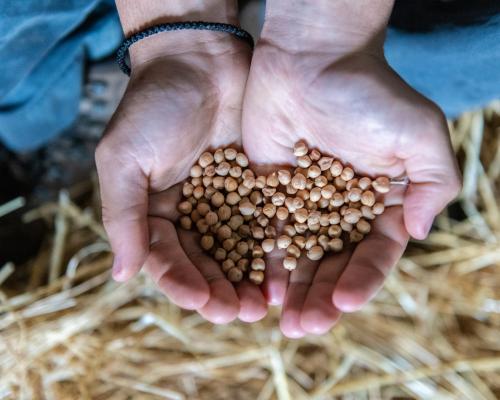
Lafyri, scientifically identified as Lathyrus sativus L. (edible Lathyrus), is one of the two main grass pea species, together with Afkos (Lathyrus ochrus), that have been traditionally cultivated on Lemnos for the preparation of the renowned Lemnian fava. It is a local legume variety, classified among the island’s dryland crops, which, despite being less well-known than Afkos, maintains a significant presence, especially for local producers. Lafyri, like Afkos, formed in the past the backbone of the inhabitants’ diet, as it is a low-input crop to cultivate, while offering high nutritional value.
The Lafyri of Lemnos, as a species (Lathyrus sativus L.), belongs to the broader category of grass peas. On Lemnos, two specific Lafyri varieties are cultivated, which are considered important plant genetic resources and are preserved thanks to the efforts of local producers and scientific institutions. No unique synonym or name variation is identified for this species on Lemnos, beyond the general designation “Lathouri Lemnou” (Lemnos grass pea) or “Fava Lemnou” (Lemnos fava), which refers to both Afkos and Lafyri.
The cultivation of Lafyri is inextricably linked to the unique soil and climatic environment of Lemnos, an island with a strong volcanic character and fertile soils. The mineral elements of the volcanic soil, combined with the dry climate of the Northeastern Aegean, where crops rely mainly on rainfall rather than irrigation, lend the legume distinct qualitative characteristics, such as its particularly sweet taste. The cultivation of grass peas in general has been recorded since the 16th century in various villages of the island, such as Varos, Roussopouli, Romanou, Karpasi, Plaka and Panagia.
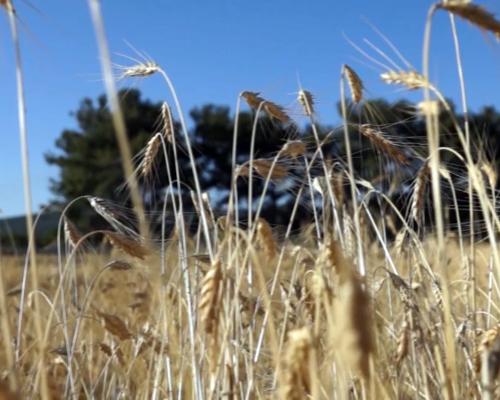
Lafyri of Lemnos is cultivated with traditional dryland methods, meaning that cultivation relies exclusively on rainfall, reducing dependence on irrigation and conserving water resources, a practice that is intertwined with the sustainability of the agricultural landscape.
- Sowing: In contrast to Afkos, which is sown in the autumn months, Lafyri, being more sensitive to frost, is sown later, specifically from February to mid-March.
- Cultivation: As a legume, it is a plant that improves soil structure and contributes to its natural fertilization through the fixation of atmospheric nitrogen.
- Harvesting: The harvest of Lafyri usually takes place one to one and a half months later than Afkos, that is, during July–August (in contrast to Afkos, which is collected in early June).
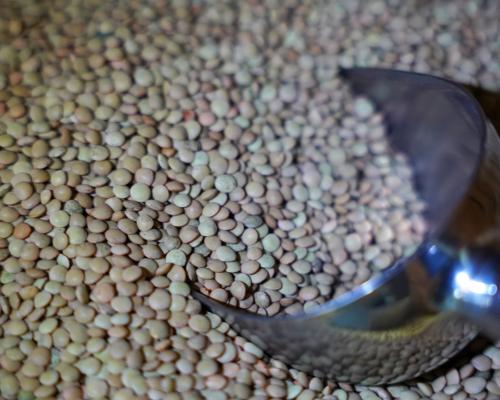
- Processing & Standardization: After harvesting, the seed of lafyri is cracked and dehulled for the preparation of the thick puree, fava, a process that also constitutes the main form of its standardization and commercialization. This traditional processing ensures that the final product will be the pulp (fava) with its characteristic velvety texture and sweet taste.
The cultivation of Lafyri and Afkos in Lemnos has a profound social, economic, and environmental impact. Although legume cultivation declined in the late 20th century, its recent revival, combined with its inclusion in initiatives to conserve local biodiversity, underscores its value. Specifically:
- Preservation of Agricultural Heritage: Lafyri contributes to safeguarding the cultural heritage and agricultural identity of Lemnos, adding value to local products.
- Economic Value: The recognition and demand for the product from gastronomy and consumers creates new prospects for local producers, strengthening the island’s rural economy.
- Environmental Sustainability: As a dryland crop and legume, it contributes to sustainable agriculture, soil improvement, and the conservation of water resources.
The cultivation of Lathouri in Lemnos has a centuries-old history, with references dating back to the 16th century. Fava, as the final product of Lathyri, has always been a basic, inexpensive and nutritious component of Lemnian nutrition, especially for the poorer social groups, and an integral part of the island’s gastronomic heritage. Its cultivation was systematic, especially during the 1940s, in many villages of Lemnos, underscoring its central role in the local economy and diet. The history of Lathyri is interwoven with the rural life of Lemnos and the preservation of local varieties, reinforcing local identity and quality amid a global agriculture that tends toward homogenization.
Its consumption is part of the island’s traditional diet, particularly during periods of fasting, when legumes constitute a main source of nourishment. Fava, as a purée made from Lathyri or Afkos, is a classic dish on the table, present at celebrations and in everyday moments, bearing witness to the dominance of the products of the land in Lemnian cuisine.
Lafyri (Lathyrus sativus L.) is considered a particularly nutritious food of high nutritional value, which served as a basic source of energy and protein for the inhabitants of Lemnos in times of limited resources.
- Macronutrients: It is rich in plant proteins (covering a significant proportion of the daily requirement for easily digestible plant protein), complex carbohydrates, and dietary fiber. Its content in fats, cholesterol, and calories is low, making it an excellent choice for a balanced diet.
- Micronutrients & Bioactive Compounds: It contains B-complex vitamins (beneficial for the neuromuscular system and memory), as well as important minerals such as magnesium, iron (essential for the formation of red blood cells), and zinc. Studies have highlighted the antioxidant and antithrombotic effects of the legumes of Lemnos, including Lafyri, indicating the presence of bioactive components. The antioxidant activity of Lafyri has been found to be higher compared to other samples, although this also depends significantly on cultivation and processing practices.
Lafyri (Lathyrus sativus L.) is considered a particularly nutritious food of high nutritional value, which served as a basic source of energy and protein for the inhabitants of Lemnos in times of limited resources.
- Macronutrients: It is rich in plant proteins (covering a significant proportion of the daily requirement for easily digestible plant protein), complex carbohydrates, and dietary fiber. Its content in fats, cholesterol, and calories is low, making it an excellent choice for a balanced diet.
- Micronutrients & Bioactive Compounds: It contains B-complex vitamins (beneficial for the neuromuscular system and memory), as well as important minerals such as magnesium, iron (essential for the formation of red blood cells), and zinc. Studies have highlighted the antioxidant and antithrombotic effects of the legumes of Lemnos, including Lafyri, indicating the presence of bioactive components. The antioxidant activity of Lafyri has been found to be higher compared to other samples, although this also depends significantly on cultivation and processing practices.