Lentil Ikaria
Lentils, as a staple legume of the Mediterranean diet, form a cornerstone of the longevity of the inhabitants of Ikaria, one of the world‑renowned Blue Zones. The Greek variety “Ikaria” stands out for its qualitative and gustatory characteristics, being the product of a breeding program specially adapted to the dry, hot conditions of the Aegean, while its consumption is inextricably linked with the traditional Ikarian diet, which is rich in plant-based foods and legumes.
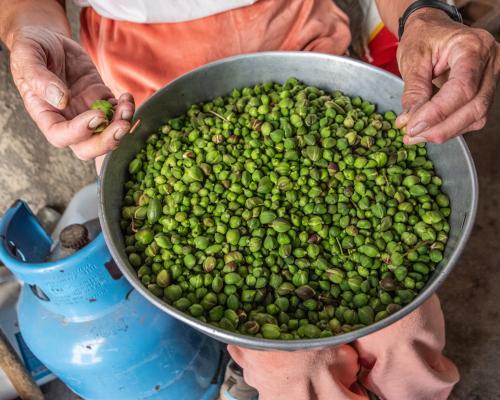
“Lentil Ikaria” refers specifically to the Greek lentil variety “Ikaria” (Lens culinaris Medik.), which is not a local population of the island but a newly developed variety from the Institute of Forage Crops & Pastures (IFC&P) of Larissa. It was created through a cross between the Greek variety “Thessalia” and a population introduced from France. This variety is also cultivated on the island of Ikaria, where it is integrated into the framework of the healthy diet of the Blue Zone. It does not have Protected Designation of Origin (PDO) or Protected Geographical Indication (PGI) status, as it is an improved variety and not a local population. It is classified as a broad‑seeded or large‑seeded variety, with particularly broad and large seeds, light green or yellowish in colour and without speckles. The weight of 1,000 seeds ranges between 75 and 85 grams, highlighting the large size of the seed. The variety is highly valued for its excellent boiling properties and exceptionally delicious flavour.
The soil and climatic conditions of the island, characterized by a Mediterranean climate with mild, rainy winters and dry, hot summers, combined with the mountainous and semi‑mountainous non‑irrigated fields, are ideal for the cultivation of lentils, which are a drought‑resistant plant.
Lentil is an annual autumn crop that is traditionally cultivated in the rainfed fields of Ikaria without irrigation, relying entirely on rainfall. The variety “Ikaria” is mid‑early with semi‑upright growth and shows tolerance to winter cold (down to −10∘C) and resistance to downy mildew (Peronospora lentis), making it suitable for Mediterranean conditions. The crop is often grown in rotation, mainly with wheat, a practice that improves soil fertility through nitrogen fixation by the nitrogen‑fixing bacteria in the root nodules, thereby reducing the need for nitrogen fertilization.
The cultivation process includes:
- Soil Preparation: One plowing is carried out early in the autumn.
- Sowing: To achieve the optimal plant density (about 150,000 plants per stremma), 11–12 kilograms of seed per stremma are required.
- Harvesting: Harvest usually takes place around June, when the plants are mature.
- Standardization: After threshing, the seeds are cleaned and dried. The average yield of the variety ranges from 140–180 kilograms per stremma in rainfed fields, a remarkable production for dry conditions. The variety is also recommended for organic farming.
The cultivation of lentils, even on a limited scale, contributes significantly to the agricultural self-sufficiency and food security of Ikaria. As a key component of the Blue Zone diet, lentils have enhanced the island’s visibility as a model of healthy living. The preservation of pulse cultivation, often through traditional and organic practices, safeguards the agricultural tradition and the distinctive dietary pattern of the Ikarians. At the same time, the “Ikaria” variety constitutes a national genetic resource adapted to Mediterranean conditions, which can be utilized to strengthen pulse cultivation in other rainfed areas of the country.
Ikarian lentils, prior to the creation of the “Ikaria” variety by the Institute of Cereals and Industrial & Fodder Crops of Larissa, came from local populations and were cultivated in a traditional, rainfed manner that was passed down from generation to generation.
In Ikaria, as in all of Greece, lentils are a quintessential fasting food, widely consumed during periods of religious fasting. The traditional Lentil Soup recipe (Fakes) is not just a dish, but part of the island’s everyday, frugal and healthy dietary philosophy. It is often cooked with plenty of olive oil (added at the end), vegetables and herbs, in keeping with the philosophy of holistic nutrition.