Kasseri Mytilinis PDO
Kasseri Mytilinis is one of the most important cheese products of Lesvos, forming part of the broader PDO Kasseri (Protected Designation of Origin), whose geographical production zone includes Macedonia, Thessaly, as well as the Prefectures of Lesvos and Xanthi. It is a semi-hard cheese made from heated curd, with a cohesive texture, whitish-yellow color, and a characteristic, pleasant flavor and rich aroma due to the quality of the goat and sheep milk of Lesvos. The island’s production contributes to the preservation of the traditional technique of “pasta filata” cheese (stretched curd), constituting a key pillar of the local livestock and processing economy.
Kasseri Mytilinis has been recognized as a Protected Designation of Origin (PDO) product since 1994, as part of the broader PDO “Kasseri.” Its official name is simply “Kasseri,” however the indication “Mytilinis” denotes that it is produced within the boundaries of the Prefecture of Lesvos, one of the four prefectures included in the PDO zone.
Basic PDO Specifications for Kasseri (according to official sources):
- Origin of Milk: Sheep’s milk or a mixture of sheep’s and goat’s milk, where the goat’s milk must not exceed 20% of the total. The milk must come exclusively from animals reared within the delimited geographical area (Macedonia, Thessaly, Prefectures of Lesvos and Xanthi).
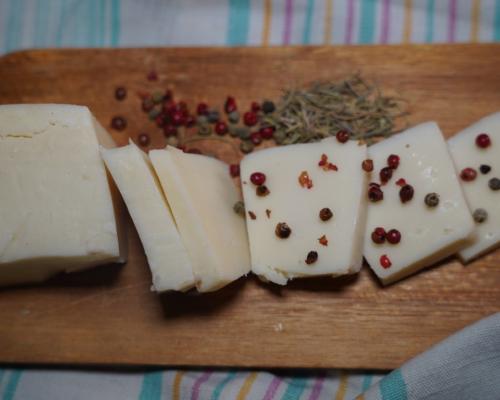
- Characteristics: Semi-hard cheese, with a cohesive texture, whitish-yellow color, and a pleasant, slightly piquant taste developed during maturation.
- Moisture: Maximum moisture 45%.
- Fat in Dry Matter: Minimum fat content in dry matter 40%.
- Maturation: It matures for at least three (3) months.
The geographical production area of Kasseri Mytilinis is strictly defined by the geographical boundaries of the island of Lesvos, in the Regional Unit of Lesvos, which is one of the four regions of Greece where the production of the PDO “Kasseri” is permitted. The uniqueness of the local milk stems from free-range livestock farming and the island’s flora, which is rich in endemic aromatic plants, herbs and grasses. The diet of the sheep and goats, based on the flora of the region, imparts particularly distinctive organoleptic characteristics to the milk, directly affecting the aroma and taste of the final cheese. The dairies that produce Kasseri PDO are located in various parts of Lesvos, such as Antissa and Mantamados, areas with a long tradition in sheep and goat farming.
The production of Kasseri Mytilinis follows the traditional “pasta filata” method (cheese made from heated and kneaded curd), a technique considered a precursor to the Italian Caciocavallo.
1. Milk Production and Coagulation
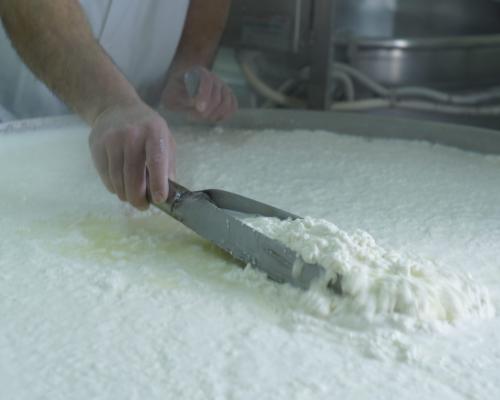
The milk used is sheep’s milk (at least 80%) and goat’s milk (maximum 20%) and must come from breeds traditionally raised in the area, whose diet is based on the flora of Lesvos. The milk may be used raw or pasteurized. Coagulation of the milk, whether pasteurized or raw, is carried out by adding traditional rennet (or other enzymes) and lactic starter culture (if the milk is pasteurized). The curd is then cut and gently heated.
2. Preparation of the Kneaded Curd (Pasta Filata)
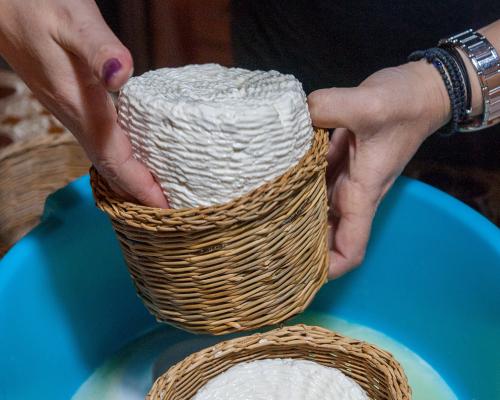
The most characteristic stage is the kneading (baski) of the curd which, after draining, is left for hours (usually 48 hours) at ambient temperature or under controlled conditions. Once the curd has melted and become homogeneous, it is kneaded thoroughly by hand or mechanically (the kneading phase is crucial for the cohesive texture). The kneaded curd is placed into molds to acquire its characteristic shape (cylindrical), after which salting takes place, usually by the dry method or in brine.
3. Maturation
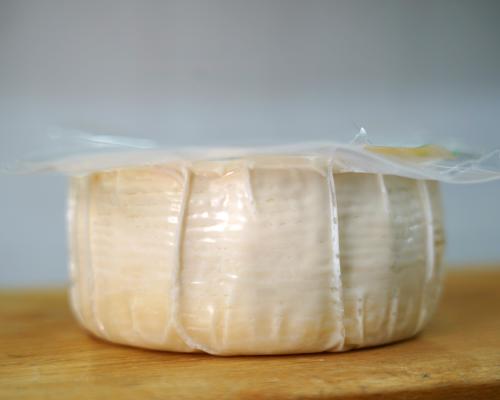
Kasseri Mytilinis is placed in special maturation rooms, where it remains for at least three (3) months. During maturation, the cheese develops its characteristic flavor, aromas and cohesive texture. This long maturation period is required, according to the PDO specifications, for the cheese to be considered ready for market.
Kasseri Mytilinis PDO has a multiplier impact on the economy and environment of Lesvos. The existence of the PDO status ensures that both the milk and the cheesemaking take place within the borders of the island, directly supporting the primary sector and especially the livestock farmers of Lesvos. The preservation of sheep and goat farming, which supplies the local dairies, is critical for:
- Economic Sustainability: It secures income for hundreds of livestock-farming families and workers in the cheesemaking units.
- Preservation of Local Breeds: The breeding of animals adapted to the flora of Lesvos is promoted, strengthening genetic biodiversity.
- Rural Landscape: Free-range grazing helps preserve the rural landscape and prevent wildfires, as the animals clear the low vegetation.
- Promotion: Together with Ladotyri Mytilinis PDO, Kasseri contributes to promoting Lesvos as an island with a rich and officially recognized gastronomic identity.
The history of Kasseri in Greece is linked to the Ottoman period and the influence of the Italian cheese Caciocavallo, which spread throughout the Balkans in the 19th century, initially under the name “kaskavali” (Turk. kaşar). The technique of heated and kneaded curd (pasta filata) was transferred to and adopted in Lesvos, a place with strong livestock-breeding traditions. Cheesemaking on the island, especially in the region of Mantamados, dates back to the Byzantine era, and the production of Kasseri was integrated into the rich cheesemaking tradition of the Aegean. Recognition as a PDO in 1994 confirmed the historic depth and uniqueness of the traditional method of making Kasseri cheese, including Lesvos as a place of exclusive production.
Kasseri is an integral part of everyday and festive cuisine and meals in Lesvos. Its uses are wide-ranging:
- Meze: It is a classic meze for the renowned Ouzo of Mytilene; it is eaten raw, in slices, accompanying seafood and appetizers.
- Cooking: It is used in traditional recipes, such as pies (e.g., cheese pies), as well as a basic ingredient in baked dishes thanks to its ability to melt evenly (due to the pasta filata technique).
- Traditional Treat: Along with Ladotyri, Mytilene Kasseri is offered as an example of local hospitality.