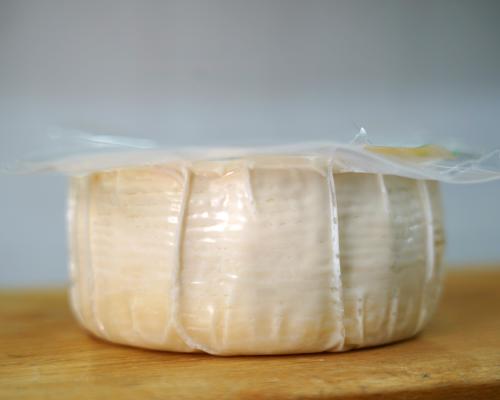
Kathoura
Kathoura of Ikaria is a traditional, white, soft brined cheese that forms an integral part of the island’s gastronomic identity and longevity diet. Its production is closely linked to local livestock farming, based on the milk of indigenous goats and sheep that are raised free-range, feeding on the island’s rich and unique vegetation.
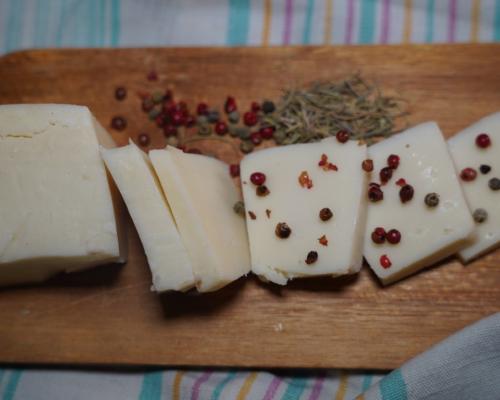
Kathoura (or Kathouritsa, when it is smaller in size) is the most widespread cheese of Ikaria, with a history that reaches back at least to the 17th century. It is a white cheese with a soft, cohesive to spreadable texture, which matures in brine. Its taste is pleasant, slightly spicy and salty, with the intensity increasing as maturation progresses. Its traditional form is usually unsalted, however, saltier and spicier varieties are also produced. Kathoura is not just a cheese, but a product that is not made anywhere else in Greece in the same way and with this characteristic quality.
The geographical area of Kathoura production is the island of Ikaria, in the Northeastern Aegean. The geography and ecosystem of the island play a decisive role in the quality of the cheese. Ikaria is characterized by rugged, mountainous terrain, rich in wild herbs and aromatic plants such as thyme, oregano, sage and heather. The free-range rearing of local goats (including the “Raskes”, the island’s wild goats) in this environment results in the production of milk with unique organoleptic characteristics, high nutritional value and a rich aroma, which is transferred intact to the final cheese.
The production of Kathoura is based on a traditional technique that has remained unchanged over the centuries, constituting a characteristic example of local cheesemaking tradition.
Traditional production includes the following stages:
- Raw Material: Kathoura is produced mainly from local goat’s milk (sometimes also from sheep’s milk or a mixture), which comes from free-range goats that feed on the distinctive flora of Ikaria. The quality of the milk, rich in aromas and nutrients due to the animals’ diet, is crucial.
- Coagulation: The milk is curdled with the addition of natural or industrial rennet.
- Curd Production: After coagulation, the curd is cut and stirred. Unlike other cheeses that are derived from whey (such as myzithra), Kathoura is made from the primary curd.
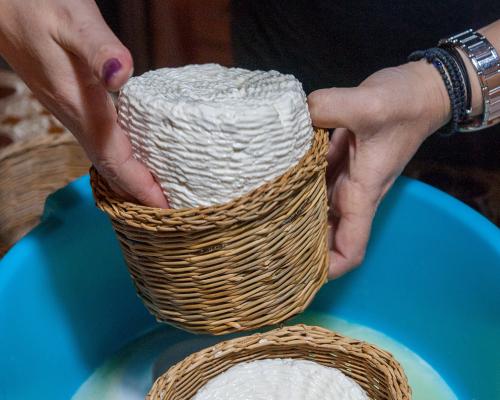
- Draining and Shaping: The curd is transferred into molds, often traditional little baskets (hence the synonym Kathouritsa for the smaller size), where it drains from the whey. This stage gives the cheese its characteristic shape and its initial compact texture.
- Maturation and Preservation: The cheese is traditionally matured and preserved in brine, a process that gives it its white appearance, soft, spreadable texture, and characteristic slightly tangy and salty taste. Maturation in brine extends its shelf life and intensifies its flavor profile. Certain variations of the cheese are unsalted (fresh), while others are kept in brine for a longer period, acquiring more pronounced characteristics.
Kathoura is an emblematic product with significant economic and social impact on Ikaria. Its production directly supports local livestock farming and traditional breeding practices, keeping native sheep and goat breeds alive. It functions as an economic pillar of primary production, strengthening small producers and preserving the rural character of the island. Kathoura, together with Ikarian honey and Pramnian Wine, is among the main flagship products promoting Ikaria as a Blue Zone area, linking gastronomy with the model of health and longevity, and thus enhancing gastronomic tourism. The cheese, which is produced and not exported on a mass scale outside the island (it is made locally), preserves its authentic character and its value as a unique local good.
The cheesemaking tradition in Ikaria has deep roots, with Kathoura or “Kathouritsa” already mentioned in the 17th century, a fact that underscores its centuries-long presence in the local diet. Cheesemaking, like livestock farming, in Ikaria developed under conditions of semi-self-sufficiency and isolation of the island, where the inhabitants were forced to exploit natural resources for their survival.
The island’s particular history, with its inhabitants moving inland to protect themselves from pirate raids during medieval times, led to the development of free-range livestock farming in the mountainous areas, which allowed for the preservation of the traditional cheesemaking technique of Kathoura.
Kathoura is directly integrated into the local customs and social events of Ikaria. It is a staple meze at the island’s festivals, where it traditionally accompanies Ikarian wine (Pramnian).
A historical and cultural element that highlights the importance of cheese in antiquity is the reference to Kykeon (Kykeon). According to Homer, Kykeon was an ancient “magical” cocktail or concoction that gave strength and was made from Pramnian wine, barley flour, and local cheese (which, based on current knowledge, was probably the ancestor of Kathoura). This reference shows the continuous use of cheese, as a key ingredient with nutritional and perhaps “therapeutic” value, since ancient times. Even today, Kathoura is considered the ideal appetizer for raki or wine, as its slightly spicy and salty taste balances well with the local spirits.
Kathoura, as a soft brined cheese made from free-range goat and sheep milk, offers high nutritional value, particularly in proteins and minerals, which are vital for tissue growth and repair, with goat’s milk proteins often considered more easily digestible than those of cow’s milk. Its fat content is at moderate levels, usually lower than that of hard yellow cheeses, while its quality is enhanced by the free-range rearing of the animals. Nutritionally, Kathoura is an excellent source of calcium and phosphorus, which are essential for bone health, and it also contains B-complex vitamins (mainly B2 and B12) and fat-soluble vitamins (A, D). The sodium (salt) content depends on the maturation method: typical brined varieties have higher salinity, while unsalted varieties have much lower levels.
Kathoura, as a soft brined cheese made from free-range goat and sheep milk, offers high nutritional value, particularly in proteins and minerals, which are vital for tissue growth and repair, with goat’s milk proteins often considered more easily digestible than those of cow’s milk. Its fat content is at moderate levels, usually lower than that of hard yellow cheeses, while its quality is enhanced by the free-range rearing of the animals. Nutritionally, Kathoura is an excellent source of calcium and phosphorus, which are essential for bone health, and it also contains B-complex vitamins (mainly B2 and B12) and fat-soluble vitamins (A, D). The sodium (salt) content depends on the maturation method: typical brined varieties have higher salinity, while unsalted varieties have much lower levels.