Koulourida Chios
Koulourida of Chios is a traditional pasta of the island, deeply rooted in the Chian gastronomic tradition. It is one of the oldest pastas of the region, which was traditionally prepared using handmade techniques, constituting a basic component of the Mediterranean diet of the inhabitants, especially in the villages of Chios. Today, Koulourida is produced both in a traditional way in small cottage industries and with more modern methods, while still preserving the distinctive character and recipe that made it known.
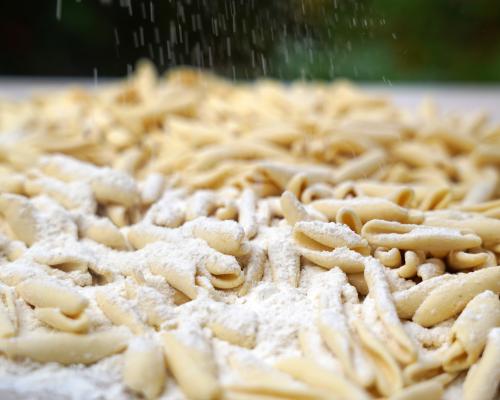
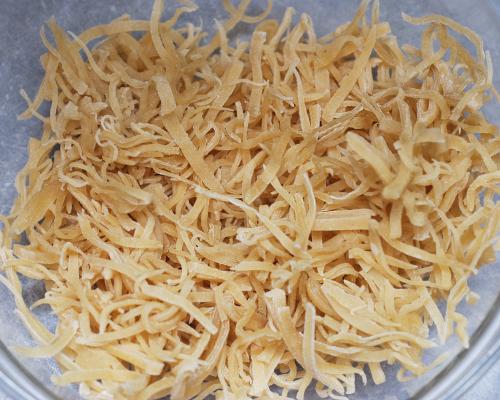
Koulourida of Chios is a wide and thin pasta, resembling Italian pappardelle, but with a distinct, more rustic texture due to its traditional method of preparation. Its name, “Koulourida,” comes from the cutting process: the dough was rolled out into a thin, wide sheet with a rolling pin, then the sheets were stacked one on top of the other, rolled into a “ring” (kouloura) and cut to the desired length, resulting in a final shape reminiscent of broad, long strips of pasta.
The product is referred to as Koulourida of Chios and by some producers as Traditional Koulourida Pappardelle of Chios.
Chios is the exclusive island of production for Koulourida, with the tradition being particularly strong in the villages, where housewives made the pasta for the family. Specifically, certain modern workshops that maintain traditional production are based in settlements such as Vessa of the former Municipality of Mastichochoria, areas that are closely connected with the island’s agricultural traditions. The region is characterized by its Mediterranean climate and its focus on local production, elements that reinforce the traditional character of the product.
The traditional production method of Koulourida of Chios follows a simple but labor-intensive process, based on pure ingredients and handmade technique, which today is often replicated in cottage industries.
Ingredients: The basic ingredients are durum wheat semolina or flour, water and, occasionally, salt, with some variations also including other local ingredients.
Kneading: The dough is prepared and kneaded until it acquires the appropriate elasticity and homogeneity. The critical stage is rolling out the dough. Using a rolling pin, the dough is rolled out into thin, wide sheets. Then these sheets are stacked one on top of the other and rolled into a log, forming the “kouloura.” Finally, the log is cut into wide strips, giving Koulourida its characteristic shape, which classifies it among pappardelle- or tagliatelle-type pasta.
Drying & Standardization: The cut pasta is spread out on special racks and left to dry naturally in a shaded, well-ventilated area. Natural drying, as opposed to rapid industrial drying, helps preserve the nutritional components and gives a more rustic, firm texture. After complete drying, the Koulourida is packaged.
The production of Koulourida of Chios, although limited compared to large industrial pasta, has a significant cultural and economic impact for Chios.
- Preservation of Tradition: It maintains the know-how of traditional pasta, preserving an ancient recipe and technique that was in danger of being lost, and strengthens the cultural identity of the island.
- Local Economy: It supports small cottage industries and pasta workshops, mainly in rural villages, providing employment and making use of local raw materials, such as semolina.
- Tourism Promotion: Along with other distinctive Chian products (e.g. mastic, mandarin), Koulourida serves as an ambassador of Chian gastronomy at food exhibitions and to the island’s visitors, showcasing the richness of Chios’ Mediterranean diet.
Koulourida of Chios is a typical example of the self-sufficiency and cottage industry of the rural areas of Chios. Historically, pasta production on the Greek islands usually took place after the grain harvest, during the summer months, in order to secure the family’s food for the winter. Koulourida, along with “makaronia tou spartou” (another pasta from Chios), formed part of the dietary heritage, where the technique was passed down from mother to daughter. Its name and the way it is cut reflect the frugality and ingenuity of the island’s people. Today, the existence of pasta workshops that produce Koulourida of Chios based on the traditional process keeps alive this cultural link with the dietary past of Chios.
The preparation of Koulourida, as with other pasta (trahanas, hylopites), was a collective task for the women of the family or the neighborhood, usually in the summer or autumn, after the grain harvest. This process was a social event, where knowledge and recipes were passed down from one generation to the next. Koulourida with chickpeas (the classic accompaniment) was often an easy, nutritious and economical meal that provided energy, especially on fasting days or in times of need.