Lambs, calves - Agios Efstratios
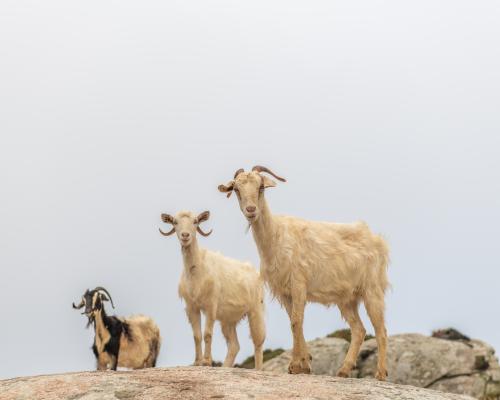
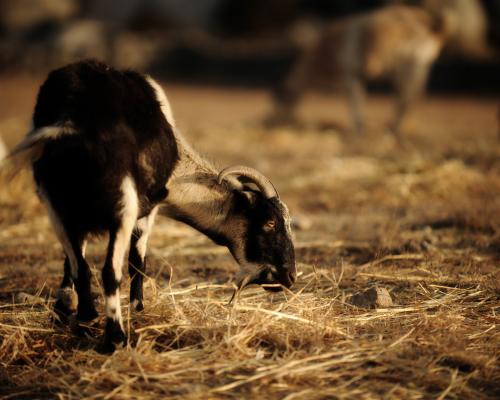
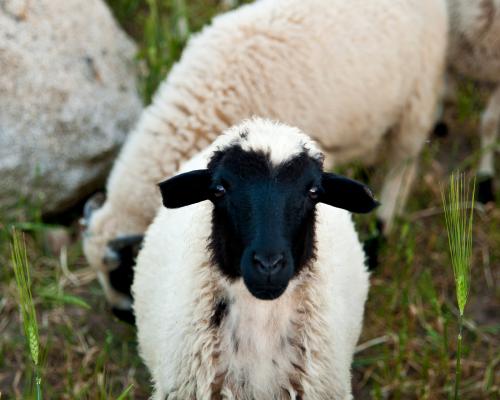
Livestock farming on Agios Efstratios, with an emphasis on lambs and calves, is one of the island’s main economic activities and is closely linked to the traditional management of the area’s natural environment. These products stand out for their unique taste, which is attributed primarily to organic farming and the animals’ exclusive free-range grazing, taking advantage of the native flora of the protected ecosystem.
The meat of sheep, goats and cattle from Agios Efstratios is distinguished by its natural and organic quality, the result of free-range grazing in an environment that is a protected Natura 2000 habitat. Specifically, the lamb meat of the island, together with that of neighboring Lemnos, bears the name “Arnaki Limnou” (“Lamb of Lemnos”), which has been registered as a Protected Geographical Indication (PGI). The geographical production area of “Arnaki Limnou” explicitly includes the islands of Lemnos and Agios Efstratios (Regional Unit of Lemnos), a fact that confirms the official recognition of the quality of the island’s sheep and goat products. There is also reference to the availability of “aged beef” (meaning meat that has been matured) as a distinctive local product.
Agios Efstratios (Ai Stratis) is a small island in the North Aegean, known for its distinctive ecosystem and its inclusion in the Natura 2000 Network as a Special Protection Area. The island is characterized by rich subsoil but generally sparse vegetation, with scattered small forested areas, mainly of holm oak. This vegetation, together with the typical Mediterranean flora of the hills and phrygana (low, shrubby vegetation), forms the basis of the animals’ diet, imparting to the meat the characteristics that make it unique. The island’s isolation and special environmental conditions, including the absence of intense mass tourism and industrial agriculture, contribute to the preservation of a pure and wild rearing environment.
Breeding Method
The rearing of sheep, goats, and cattle on Agios Efstratios is traditionally extensive and exclusively free-range. The animals feed almost exclusively on the island’s local vegetation, such as phrygana, wild plants, and oak trees. The limited addition of supplementary feed, when deemed necessary, consists of adaptation mixes of roughage (such as cereal and legume hay), but the primary diet is based on the island’s native flora.
- Traditional Practice (Lambs/Kids): The island’s lambs (and kids) are raised from breeds traditionally adapted to the island’s soil and climatic conditions. In the case of “Arnaki Limnou” PGI, the lambs are slaughtered at an age of 60 to 120 days and a weight of over 10 kilograms, with their diet based mainly on maternal milk and on grazing the native flora for a period of one to two months.
- Traditional Structures: Livestock farming was historically supported by agro-pastoral facilities in the countryside, known as “kalyvia” or “ntamia” (in the Northern Aegean), which were usually single-room buildings with a rectangular floor plan. These structures had distinctive architecture, with flat roofs (domes) constructed with layers of wooden beams, reeds, “astouvia” (a thorny shrub), “koumdia” (dried seaweed – Posidonia) and waterproof soil, providing excellent watertightness and thermal insulation. These buildings were used as secondary facilities supporting the family’s main occupation in the countryside.
Production
Meat production follows traditional procedures with an emphasis on quality. The beef of Agios Efstratios is specifically described as “fattened,” indicating a process of aging of the meat after slaughter, which enhances its tenderness and intensity of flavor. The island’s livestock products, including cheeses, are of high quality and in demand.
Livestock farming, together with fishing, is the main occupation of the few permanent residents of Agios Efstratios, whose population numbers around 250 people. The presence of approximately 10 livestock farmers on the island, including women livestock farmers, underscores the importance of the primary sector for the economic survival and the preservation of the population on this remote island of the North Aegean. Traditional extensive farming is fully harmonized with the protected Natura 2000 environment, as free-range grazing does not burden the ecosystem and maintains the biodiversity of the natural landscape.
Livestock farming on Agios Efstratios has deep historical roots, as it is mentioned as a key economic activity as early as the 16th century, alongside acorn gathering. The agrarian–pastoral life of the island up until the 1960s was characterized by a dual settlement model, in which families maintained their main residence in the village, but also a secondary establishment (hut) in the countryside, which simultaneously served as a sheepfold, where the main work with the animals took place. This model, with its distinctive stone sheepfolds (the “damia”), constitutes an important element of the island’s intangible and tangible cultural heritage.
Due to the island’s isolation, traditions surrounding livestock farming and diet remain strong. It is generally known that major holidays (such as Easter) and local festivals are closely linked to the consumption of lamb or goat, often cooked in a traditional way, such as stuffed lamb. The production of local cheeses (such as kalathaki or mizithra), derived from the milk of the same animals, is an integral part of rural life.
The nutritional value of the livestock products of Agios Efstratios is directly influenced by the free-range system and the animals’ diet based on the native flora, which, according to general studies, often results in meat richer in omega-3 fatty acids and antioxidants compared to animals fed mainly on grains.
Nutritional Analysis of Lamb (based on the “Arnaki Limnou” PGI specifications)
The “Lemnos Lamb” meat, which includes the lamb from Agios Efstratios, displays distinctive characteristics compared to other lamb meats of Greece, according to the official specifications of the Ministry of Rural Development and Food (ΥΠΑΑΤ):
- Proteins:
- Protein content: 17.6% to 23.4% in the edible tissues.
- Fat:
- Fat content: 10.0% to 15.0% in the edible tissues.
- Unique Characteristic: The high fat percentage, mainly distributed intramuscularly (marbled), is a key distinguishing feature. This value (10–15%) is significantly higher than the average value of lamb meat from other regions of Greece (which ranges from 1.5% to 3%), which partly explains the distinctive taste and tenderness of the meat.
The nutritional value of the livestock products of Agios Efstratios is directly influenced by the free-range system and the animals’ diet based on the native flora, which, according to general studies, often results in meat richer in omega-3 fatty acids and antioxidants compared to animals fed mainly on grains.
Nutritional Analysis of Lamb (based on the “Arnaki Limnou” PGI specifications)
The “Lemnos Lamb” meat, which includes the lamb from Agios Efstratios, displays distinctive characteristics compared to other lamb meats of Greece, according to the official specifications of the Ministry of Rural Development and Food (ΥΠΑΑΤ):
- Proteins:
- Protein content: 17.6% to 23.4% in the edible tissues.
- Fat:
- Fat content: 10.0% to 15.0% in the edible tissues.
- Unique Characteristic: The high fat percentage, mainly distributed intramuscularly (marbled), is a key distinguishing feature. This value (10–15%) is significantly higher than the average value of lamb meat from other regions of Greece (which ranges from 1.5% to 3%), which partly explains the distinctive taste and tenderness of the meat.