Arnaki Limnou
Arnaki Limnou (Lamb of Lemnos) is a select livestock product that was recognized as a Protected Geographical Indication (PGI) in 2022. This meat comes from carcasses of lambs that are born, raised and slaughtered exclusively within the islands of Lemnos and Agios Efstratios, thereby confirming its indissoluble bond with the distinctive island ecosystem and the local, traditional rearing practices. The product’s unique identity is due mainly to the semi-extensive rearing method and to the diet based on grazing the island’s native flora and on the mother’s milk, factors that give the meat particular tenderness, a juicy texture and a pleasant taste and aroma.
The uniqueness of Arnaki Limnou is founded on its differentiation from ordinary lamb carcasses in Greece, mainly due to its higher intramuscular fat content and its particular diet.
The product has been recognized as a Protected Geographical Indication (PGI), with official approval by the European Commission in October 2022. The main specifications of the product, as described in the official dossier, are:
- Identification: “Lamb from Lemnos / Arnaki Limnou”.
- Status: Protected Geographical Indication (PGI).
- Slaughter Age: 60 to 120 days. The lambs are born from late November to late February.
- Carcass Weight: Greater than 10 kg.
- Fat Content: The meat shows a high fat percentage in the edible tissues, ranging from 10.0% to 15.0%, a value significantly higher than the average (1.5% to 3%) of comparable carcasses from other regions of Greece. This fat is diffused intramuscularly (marbled), ensuring the characteristic tastiness.
The delimited geographical area of production, rearing, and slaughter of Lemnos Lamb is strictly the islands of Lemnos and Agios Efstratios, which constitute the Regional Unit of Lemnos. The island terroir of Lemnos, with its distinctive sandy clay soils and dry Mediterranean climate, plays a decisive role in the quality of the meat. The pastures of the islands are rich in native flora and aromatic herbs (legumes and cereals), the consumption of which by adult sheep and subsequently by the lambs (through grazing) transfers aromatic components to the fatty tissue. These particular environmental factors, combined with the breed adapted to the local populations, contribute to the production of meat with highly sought‑after organoleptic characteristics.
The title of the method is Method of Rearing & Production (Livestock products).
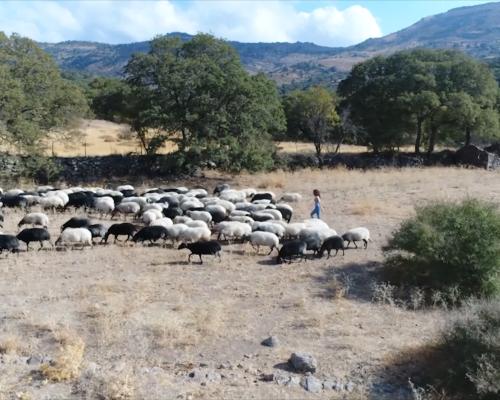
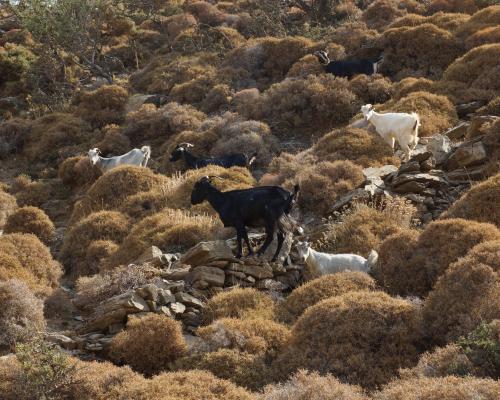
Sheep farming on Lemnos follows the semi‑extensive system, a traditional low‑input practice which relies mainly on natural grazing. Adult sheep graze freely throughout the year on the natural pastures around the sheepfolds (small stone pens), without moving outside the islands. The diet of the lambs is based primarily on late weaning, as they remain with their mothers and suckle for a period of about 60 days, a fact that contributes to adequate fat deposition. After weaning, the lambs have access for one to two months to the grazing of native plants, as well as to small quantities of supplementary mixes consisting mainly of local cereals (such as durum wheat) and legumes. The use of stone‑built sheepfolds (mandres) ensures that the pastures are in close proximity to the animals, reducing distances and enhancing the quality of the meat.
Lemnos Lamb is one of the pillars of the island’s agricultural economy. Its recognition as a PGI product enhances the commercial value and reputation of the product, providing financial support to the primary sector and maintaining agricultural employment in the island region. At the same time, the preservation of semi-extensive farming, which is adapted to the natural environment, contributes to the conservation of pasture biodiversity and of the traditional ecological link between livestock farming and agriculture.
Animal husbandry on Lemnos has a long and uninterrupted historical tradition, with the semi-extensive rearing system deeply rooted in the practices of the local “kechagiades” (stockbreeders). The enduring adaptation of sheep to the island environment, with minimal influence from external breeds (such as those of Mytilene or Chios), led to the formation of the Lemnos sheep and to the production of meat with a distinctive flavor, which contributed to the product’s reputation. The meat is closely associated with the local cuisine and the customs of the island.
Lamb and goat dominate the diet of Lemnos. In contrast to the traditional spit-roasting that is widespread in many regions of Greece, on Lemnos lamb is the centerpiece of the Easter table and is mainly roasted in the oven with various traditional recipes. The traditional use of stone-built sheepfolds (mandres) is also an integral part of the cultural heritage of the island’s livestock farming.
Lemnos Lamb is a meat of high nutritional value, rich in proteins and fatty acids, with its characteristic fat being a key carrier of flavour.
Lemnos Lamb is a meat of high nutritional value, rich in proteins and fatty acids, with its characteristic fat being a key carrier of flavour.