Katsikaki Lemnos
Lemnos Kid is a fresh meat, a product of goat kid carcasses registered as a PGI (Protected Geographical Indication) in the European Union. This recognition confirms the unique connection of the product with its geographical area and its method of production. It is a traditional, high-quality product that forms part of the local gastronomy and economy.
Lemnos Kid is exclusively the carcass of kids (young goats), not lambs, aged 60–90 days, with a carcass weight greater than 8 kg. Its fundamental distinctiveness lies in its tender, juicy texture, its pleasant aroma and taste, and above all its higher fat content (4.1% to 11.1% in the edible tissues) compared with the average of similar products from other areas of Greece (which is around 1.2%). This generous deposition of fat (subcutaneous and perirenal) is the result of late weaning (at about 60 days) and of a diet based on the rich, indigenous flora of the pastures of Lemnos, decisively contributing to its superior organoleptic characteristics. The color of the meat is predominantly red to slightly pale pink, with white fat.
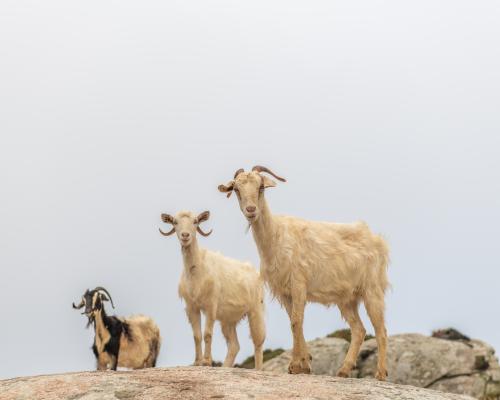
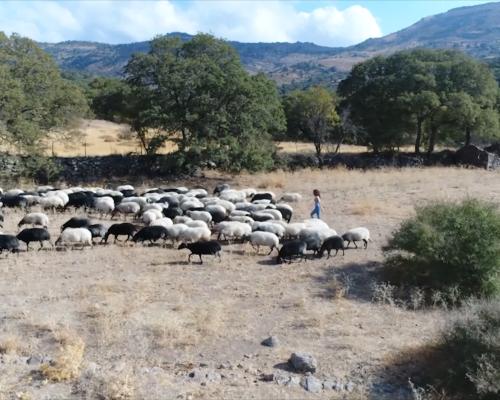
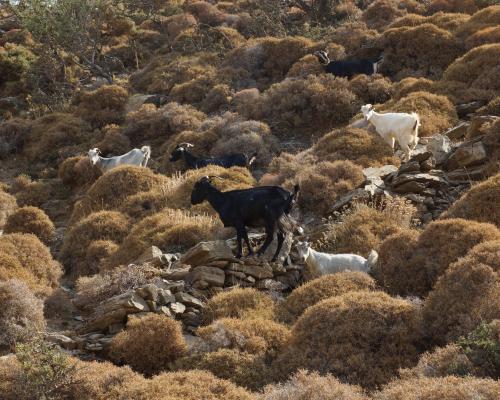
The delimited geographical production area of Lemnos Kid includes the islands of Lemnos and Agios Efstratios (Regional Unit of Lemnos). The goats from which the kids originate are traditionally reared and fully adapted to the particularly dry and warm insular climate and the poor pastures of the area. The rich, albeit xerophytic, flora of Lemnos, with its endemic aromatic plants, is the decisive factor in the animals’ diet, which is reflected in the distinctive taste characteristics of the meat.
The production of Lemnos Kid is based on a semi-extensive, traditional rearing system applied in the “mantras” (traditional sheepfolds/stables). The kids are born from late November to late February.
Traditional Practices:
- Late Weaning: The kids suckle for an extended period, approximately 45–60 days. This late weaning is critical, as it ensures adequate fat deposition in their bodies, which gives them tenderness and palatability.
- Nutrition: The diet of adult goats and kids, after weaning, is based primarily on the natural vegetation of the grazing lands of Lemnos. The proximity of the pastures to the folds ensures that the animals do not cover long distances. The local flora, rich in aromatic herbs and grasses, enriches the meat with aromas and flavors associated with the island’s terroir.
- Breed: The goats used belong to the broad breed type of the Native Goat (Lemnos/Agios Efstratios subtype). These are hardy, frugal animals, adapted to the difficult soil and climatic conditions, resulting in products of high nutritional value and intense flavor.
The production of Lemnos Kid Goat constitutes a strong pillar of primary production and the local economy on Lemnos and Agios Efstratios. The inclusion of the product among PGIs contributes to the protection and preservation of local, traditional breeding practices and of the adapted livestock populations. It strengthens the outward-looking orientation of local livestock farmers, adding value to their product and creating opportunities for sustainable development. The preservation of the stone sheepfolds and the semi-extensive rearing system is also linked to safeguarding the island landscape and the biodiversity of the grazing lands.
Animal husbandry, and especially goat farming, on Lemnos has a centuries-long history, as small ruminants have always been a fundamental element of the islanders’ diet and economy. The production of meat and dairy products (such as Kalathaki Lemnou PDO) constitutes an unbroken chain of knowledge and techniques passed down from generation to generation. The adaptation of the animals to the island’s dry and hot environment is the result of natural selection and traditional flock management by local livestock farmers. The name “Katsikaki Lemnou” reflects this historical and cultural identity, linking the product to its area of origin.
Kid goat holds a central place at the island table, especially during major feasts such as Easter. Traditional slaughter, preparation techniques and cooking of the goat form part of local customs. On Lemnos, roasting lamb or goat in the oven (instead of on the spit, which is common in mainland Greece) is a characteristic Easter tradition, with dishes such as Kaspakino. These customs highlight the importance of goat not only as food but also as a cultural symbol of island life.
“Katsikaki Lemnou” was recognized as a Protected Geographical Indication (PGI) in 2022 (Regulation (EU) 2022/2265). This inclusion in the European PDO/PGI Register constitutes the highest official distinction for an agricultural product, certifying its unique quality and its connection with the geographical area.
Goat meat in general is an excellent source of high biological value proteins and essential amino acids (such as lysine, threonine, tryptophan). Compared with other red meats, while “Katsikaki Lemnou” has a higher fat content than the national average, it maintains the overall benefits of goat meat, which tends to be rich in heme iron, vitamin B12, zinc, and potassium. The high fat content of the PGI product provides a more intense flavor and aroma during cooking.
Goat meat in general is an excellent source of high biological value proteins and essential amino acids (such as lysine, threonine, tryptophan). Compared with other red meats, while “Katsikaki Lemnou” has a higher fat content than the national average, it maintains the overall benefits of goat meat, which tends to be rich in heme iron, vitamin B12, zinc, and potassium. The high fat content of the PGI product provides a more intense flavor and aroma during cooking.