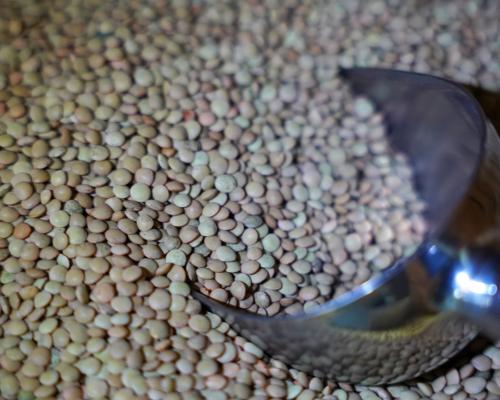
Lathouri
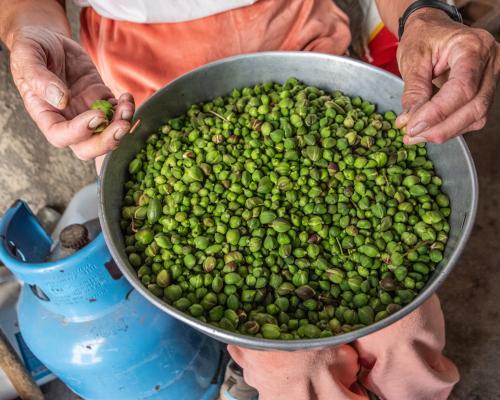
Lathouri (Lathyrus sativus), also known as pea in other regions, is one of the oldest cultivated pulses in Greece and the Mediterranean, highly valued for its resistance to dry conditions and its nutritional value. On Lesvos, the cultivation of lathouri is part of the agricultural tradition and crop rotation, especially in areas with less fertile or dry soils, where other, more demanding pulses struggle to thrive. Lathouri of Lesvos maintains its presence in small-scale farms and is incorporated into the local cuisine, particularly for the preparation of traditional fava (hence the synonym).
The uniqueness of Lathouri of Lesvos is related to its resilience under local soil and climatic conditions and its connection with the traditional production of fava.
- Identification, Synonyms, Variations: The product is the seed of Lathouri (Lathyrus sativus). Its main synonym in its processed form is Fava. The synonyms Edible Lathouri or Tame Lathouri are also often used.
- Basic Specifications: The quality of Lathouri is judged by the small to medium size of the seed, the high protein content, and its ability to break down easily after boiling, in order to yield a velvety texture when preparing fava. Cultivation, especially by small producers, follows dryland, organic practices.
The cultivation of Lathouri on Lesvos is concentrated mainly in lowland and semi-mountainous areas with poor, dry, or calcareous soils, which are not suitable for more demanding crops such as citrus.
Areas such as Kalloni and certain fields around Mytilene and Agiasos show Lathouri cultivation. The plant’s ability to thrive in hot, dry conditions with minimal irrigation makes it ideal for the island’s Mediterranean climate. Furthermore, Lathouri, as a legume, is incorporated into crop rotation and contributes to the natural rejuvenation of the island’s olive groves and wheat fields by fixing nitrogen.
The cultivation method of Lathouri on Lesvos is characterized by traditional dryland farming and the use of the plant as a natural soil improver.
- Soil and Climate Requirements: Grass pea has excellent resistance to drought and cold and does not require rich soils. Its cultivation on Lesvos is carried out mainly with autumn sowing (October – November).
- Cultivation & Crop Rotation: Grass pea is a key pulse for crop rotation. Like lupins, it has the ability to fix atmospheric nitrogen in its roots, enriching the soil and reducing the need for chemical fertilizers in subsequent crops (cereals or edible vegetables).
- Harvesting: Harvest takes place in summer (June – July) when the pods have dried. It is done either mechanically (for larger areas) or by hand on small farms.
- Standardization (Processing into Fava): For the production of fava, the seed undergoes dehulling and milling (splitting) to remove the seed coat and leave only the inner part of the seed (cotyledons). This process increases the speed of cooking and gives the characteristic texture required for the purée.
The cultivation of Lathouri in Lesvos contributes to the preservation of traditional agricultural practices and to the economic sustainability of farmers in areas with limited natural resources.
As a crop that requires minimal inputs (water, fertilizer), it supports environmentally friendly agriculture and the reduction of production costs. The existence of local Lathouri production ensures the continuity of the gastronomic identity of Lesvos, providing the raw material for traditional fava and other legume dishes.
The cultivation of Lathouri in Greece dates back to the Neolithic era. In the Aegean, Lathouri has always served as a food reserve in times of deprivation, due to its great resilience and high nutritional value.
In Lesvos, the cultivation of Lathouri, although smaller in scale than olive cultivation, has been vital for the self-sufficiency of rural families. The knowledge of selecting suitable seeds and the method of preparing fava (cleaning, dehulling) constitute intangible cultural heritage that is passed down from generation to generation.
Lathouri, processed into fava, is associated in Lesvos with seasonal customs and communal gatherings.
- Lenten Food: Fava, due to its high protein content, is a classic fasting dish that is widely consumed during Lent and other fasting periods. It is traditionally served with local oil (Lesvos olive oil), onion and capers (where available).
- Social Connection: At traditional events and festivals in the villages of Lesvos, fava often forms part of the communal table, symbolizing simplicity and nourishment.
Lesvos Lathouri, due to the small scale of its cultivation and the emphasis on the local market, has not received any significant international distinctions. However, its quality is recognized locally.