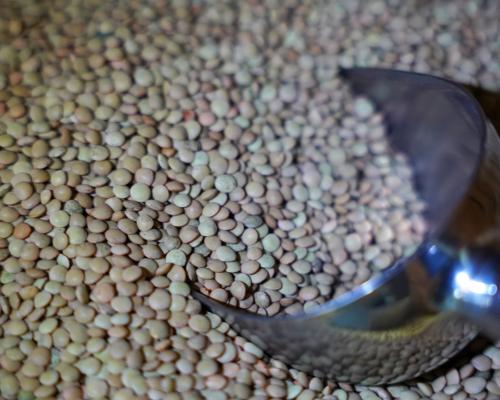
Lisvori Chickpeas
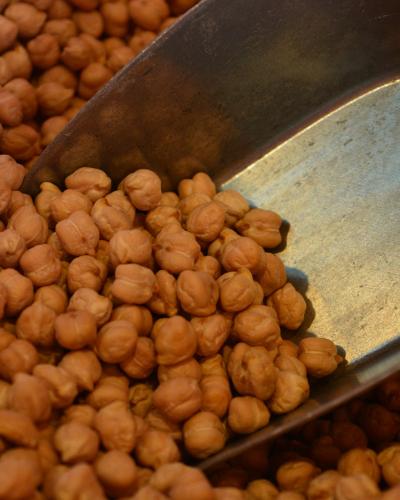
Lisvori Chickpeas are among the most renowned pulses of Greek production, their name inextricably linked with the area of Lisvori on Lesvos. They stand out for their particularly sweet taste and their excellent boiling quality, characteristics owed both to the local variety and to the area’s unique soil and climatic conditions. This is a product with deep roots in the agricultural tradition of Lesvos and forms part of its cultural and gastronomic identity, with its cultivation reflecting traditional rainfed techniques.
The product concerns Lisvori Chickpeas (Cicer arietinum), a local chickpea variety that has become identified with the village of Lisvori on Lesvos. The product is explicitly mentioned in texts of the Regional Development Fund of the North Aegean as a local variety of Lesvos with historical and cultural value, indicating its recognition at local level as traditional and distinctive. The uniqueness of these chickpeas lies in their reputation as “the sweetest chickpea in the world,” a quality directly related to the black soil of the Lisvori area.
Lisvori Chickpeas are cultivated exclusively in the wider area of Lisvori in southern Lesvos, a settlement located near the Gulf of Kalloni. The cultivation area extends mainly over the coastal lands of the gulf, at the boundaries of the village. This geographical location is decisive for the product’s uniqueness. The soil is characterized as the “special black soil” of Lisvori, which is believed to contribute to the sweet taste and ease of boiling. In terms of soil and climate, the chickpea plant is particularly resistant to dry and warm conditions, with Lisvori, like Lesvos in general, exhibiting a typical Mediterranean climate. The plant’s resistance to drought, combined with the quality of the soil in this specific area, are the key factors that determine the successful production and the qualitative characteristics of the crop.
The cultivation of Lisvori Chickpeas traditionally follows the dryland method, taking advantage of the plant’s natural resistance to drought, an advantage that makes the chickpea the most resilient pulse under hot and arid conditions in Greece. Despite the dryland nature of the crop, irrigation during the critical periods of flowering and pod filling can significantly increase yield, a practice often applied by producers.
Soil preparation is relatively simple, usually requiring a deep plowing and disc harrowing, with emphasis on good leveling and drainage of the field, as chickpeas are sensitive to excess soil moisture. Sowing is traditionally carried out in early spring, although the exact timing may vary.
Fertilization of chickpeas generally does not require nitrogen, as this is a legume that fixes atmospheric nitrogen through the rhizobia on its roots, a feature that is ideally utilized in crop rotation. However, the addition of phosphorus to the soil is beneficial. The crop requires constant attention for weed control, with one hoeing usually necessary during the April–May period.
The harvest of spring-sown chickpeas usually takes place about one month after the harvest of those sown in autumn, that is, around late June to early July in Lisvori. Harvesting is done by combine harvester, when the plants have completely dried out. A traditional practice (to avoid seed loss) is to harvest in the early morning hours, when the plants retain some moisture so that the pods do not break easily. Standardization includes cleaning and packaging of the grain, with producers placing particular emphasis on selling directly to consumers or to local points of sale, in order to ensure the authenticity of the Lisvori variety.
The cultivation of Lisvori Chickpeas has a significant economic and cultural impact on the region. Although total production in relation to the island’s overall agricultural output is not huge (estimates in the past put production at around 25–28 tons on 350 stremmas), it is an emblematic product that strengthens the local identity and the reputation of Lesvos in the field of pulses. The cultivation supports small and medium-sized producers and keeps traditional farming practices alive, particularly dryland farming.
The impact is also evident in the touristic promotion of the island, as Lisvori chickpeas, like other local products (e.g. Lisvori anise used in ouzo), contribute to showcasing local gastronomy and promoting the island as a destination with rich agricultural production and traditional diet. The promotion of authenticity, however, faces challenges, such as the need to protect the name from the illegal marketing of chickpeas of other origins as “Lisvori”.
The cultivation of chickpeas in Greece has ancient roots, with the plant having been grown in the country since antiquity. On Lesvos, and especially in Lisvori, cultivation has a centuries-long tradition, with the local variety having fully adapted to the soil and climatic conditions of the Gulf of Kalloni. The history of the product is linked to the philosophy of self-sufficiency and self-reliance of local communities, with the chickpea plant being a resilient and nutritious crop in difficult conditions. The mention of the product in frameworks for the development of local varieties, such as the Agrisles program, underscores its importance as an integral part of the local identity and the cultural heritage of Lesvos.
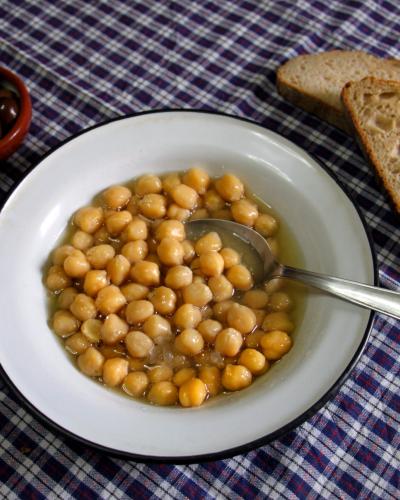
The cultivation and consumption of Lisvori chickpeas are connected with various customs and traditions of Lesvos, mainly revolving around rural life. Chickpeas, as a staple legume, were traditionally a fasting food, but also a basic dish on poor or farming households’ tables. The process of harvesting and reaping was traditionally a communal event, in which the entire family or even the community took part. In Lesvos, revithato is a traditional dish that is often served at festivals or large gatherings, highlighting the role of chickpeas as a food that unites the community.