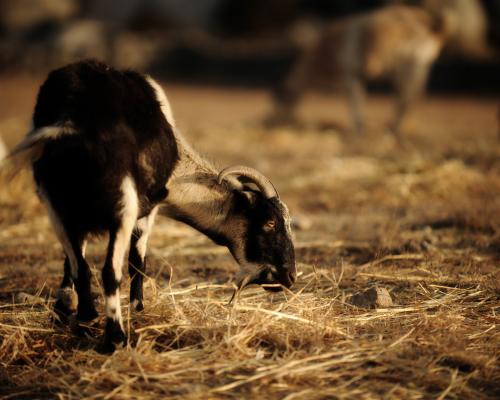
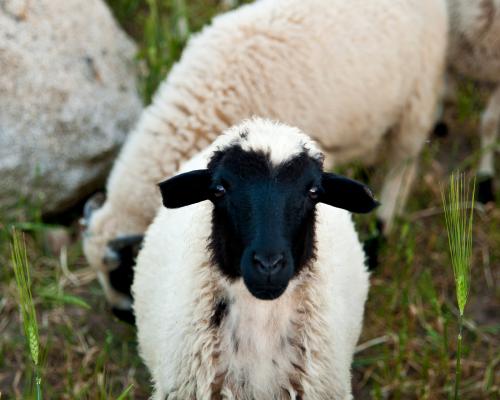
local kid goat
The local kid goat of Thymaina is a characteristic livestock product, inextricably linked with the small island community of Fournoi Korseon in the Eastern Aegean. Thymaina, with an area of just 10 sq. km, has limited agricultural activity, with the result that fishing and, to a lesser extent, animal husbandry constitute the main occupations of its approximately 130 inhabitants. The rearing of sheep and goats, and especially goats, is a traditional survival practice that makes use of the semi-mountainous and barren character of the island. This meat, due to the method of free-range farming, the local varieties of grasses, and the salty Aegean breeze, acquires special organoleptic characteristics that make it a local gastronomic delicacy.
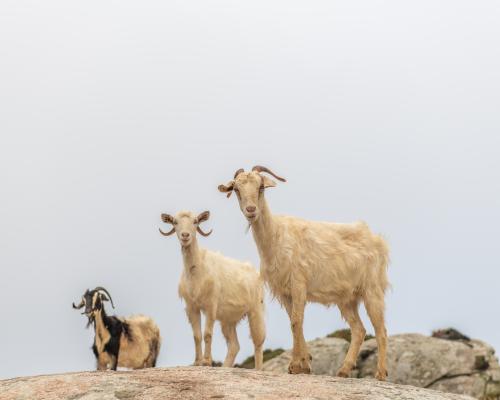
The uniqueness of the local Thymaina goat stems directly from the extensive, semi-wild method of rearing and the animals' diet in the island’s particular geographical conditions. Due to Thymaina’s mountainous and rocky terrain, the animals move constantly, which results in meat with a low fat content and a high dry matter content. Their diet, based on the halophilic flora (plants that tolerate salinity) and the aromatic vegetation (especially the abundant thyme) of the island, imparts to the meat a distinctive, strong, “wild” aroma and a spicy taste, setting it apart from meat from other regions.
Thymaina is a small island that belongs to the Fourni Korseon complex in the Eastern Aegean, located between Samos and Ikaria. Administratively, it falls under the Municipality of Fourni Korseon. The island covers an area of approximately 10.07 square kilometers and its highest point reaches 470 meters, characterized by rocky, barren and semi-mountainous landscapes, typical of the small islands of the Aegean. The soil and climate conditions include dry and warm summers and mild, wet winters, with this xerothermic nature favoring the growth of a variety of hardy, pungent and aromatic plants. The local flora, such as thyme, oregano and other maquis herbs, forms the basis of the diet of the free-ranging goats, imparting a distinctive taste and aroma to their meat. The Fourni complex, including Thymaina, is part of the Natura 2000 network as a Special Protection Area (SPA), which indicates the importance of the region for biodiversity and imposes restrictions, but also guarantees, for the preservation of traditional, low-intensity livestock-raising methods.
The rearing of the local goat on Thymaina follows the traditional practice of extensive, free-range grazing. The animals, probably belonging to the Aegean or to some local semi-feral breed, move freely across the island’s rocky and shrubby hills. This method of rearing ensures that the animals feed on the island’s spontaneous vegetation, which is rich in aromatic plants.
The goats’ diet is based almost exclusively on the local flora, something that positively affects the nutritional value and organoleptic characteristics of the meat, making it more compact and with less fat compared to animals from intensive farming. Production is small-scale and family-based, with livestock farmers preserving traditional knowledge and techniques for managing the herd in the island’s rough terrain. Slaughtering and distribution of the meat are, as a rule, local, serving the needs of the inhabitants and the few visitors, mainly during the summer months or major holidays such as Easter.
The rearing of the local goat, although a secondary activity compared to fishing, has a multifaceted impact on Thymaina. Economically, it provides supplementary income to a small population (around 130–137 permanent residents), contributing to the autonomy and food security of the isolated island. The maintenance of free-range livestock farming helps preserve the rural landscape and protects against fires through the grazing of low vegetation. Culturally, this practice is part of traditional island life and contributes to the preservation of the cultural heritage of the place, reinforcing the local gastronomic identity. Promoting the product as a local delicacy (as mentioned in gastronomic references) also strengthens the island’s mild tourism development.
The farming of sheep and goats on the small and barren islands of the Aegean, such as Thymaina, has deep roots in history. Unlike crops, small ruminants, and especially goats, can survive on rugged, hot and dry terrain, providing meat, milk, and hides. The presence of thyme on the island, which according to one version also gave the island its name (Thymaina < Thymari), indicates the close relationship of the place with the Mediterranean vegetation that feeds the animals. Livestock farming, together with fishing, was the main pillar of survival for the inhabitants for centuries, in an area characterized by isolation and harsh winters, where securing food was of primary importance.
The local kid goat of Thymaina is directly linked with traditional island customs and festivities. As in many other parts of Greece, goat (or lamb) is the central dish on the Easter table, traditionally prepared often in a casserole or baked in the oven with potatoes and local aromatics such as oregano and thyme, which are found in abundance on the island. The ritual slaughter and preparation of the meat for Easter, as well as for local festivals and family celebrations, constitute part of the island’s social life and cultural heritage, where meat from the local flock is always the first choice.