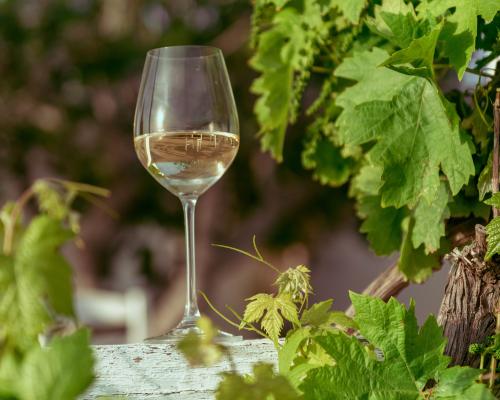
Local varietal table wines of Samos
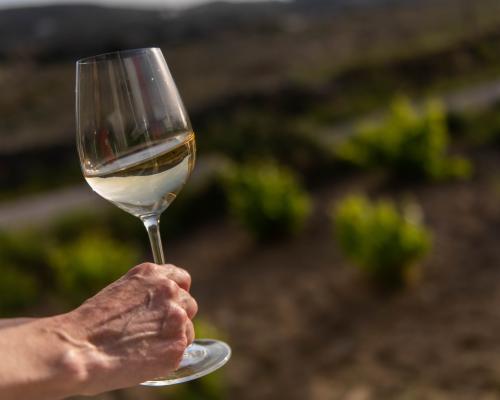
Samos, an island in the Northern Aegean, is world-renowned for the exceptional quality of its wines, with White Muscat as the dominant variety, covering approximately 95% of the Samian vineyard. Other cultivated varieties are Fokiano, Retino and Avgoustiatis. In addition to the PDO SAMOS wines, the island also produces other local, varietal and table wines. Specifically, a local wine PGI AEGEAN SEA and PGI PLAKIES AMPELOU is produced from the White Muscat variety, as well as white, rosé and red varietal wines, along with a multitude of white, rosé and red table wines. The wine production of Samos has deep roots in antiquity and constitutes one of the most important economic and cultural pillars of the island. Viticulture is particularly labor-intensive, as the vineyards are built on terraces (pezoules) with stone walls due to the steep slopes of the terrain, a traditional technique that preserves the soil and aids drainage. The wines of Samos have gained international fame, with the island’s wineries playing a decisive role in the collection, vinification and promotion of the product in more than 25 countries.
Specifications
Variety: White Muscat
Vineyard Form: Goblet or linear training systems with short pruning. The age of the vineyards must be greater than three (3) years.
Maximum Yield: Does not exceed 10,000 kg of fresh grapes per hectare (ha) or 80 HL of must per hectare.
Produced according to modern white winemaking technology, and the temperature during alcoholic fermentation does not exceed 20 °C.
The production zone of the PGI AEGEAN SEA wine coincides with that of PDO Samos. It covers almost the entire island, except for the areas of the Municipal Districts: Koumeika, Skouraiika, Neochori, Marathokampos, Kallithea, Drakaioi, Myloi, Pythagoreio, Palaiokastro. The vineyards extend from sea level up to 900 meters in altitude, mainly on the northern side of the mountain ranges Ampelos (Karvounis) and Kerketeas (or Kerkis).
The soil and climate environment of Samos is particularly distinctive. The climate is typically Mediterranean, with mild temperatures and no extreme fluctuations. In summer, the frequent north–northwesterly winds temper the high temperature, helping to maintain grape health. The soils are generally calcareous and dry, with a steep gradient. Terrace cultivation is vital for combating erosion and retaining the soil. These conditions, combined with the large differences in altitude, contribute to the production of grapes with pronounced aromatic characteristics.
Specifications
Variety: White Muscat.
Produced in accordance with modern white-winemaking technology, and the temperature during alcoholic fermentation does not exceed 20 °C.
The training and formation of the vines follows the usual cultivation practices of the area.
The maximum yield per hectare (ha) permitted for white varieties is twelve thousand (12,000) kilograms of fresh grapes.
The maximum yield per hectare (ha) amounts to 90 hL of final product.
The PGI Slopes of Ampelos zone, established in 1990, includes the vineyards located outside the PDO Samos zone, in the areas of Kallithea, Marathokampos, Neochori and Skoureika, Marathokampos, Pythagoreio, Drakaioi, and Palaiokastro.
These are wines which may indicate the name of the variety and the vintage year. They are produced as white, rosé, and red from various grape varieties cultivated on the island.
In addition to PDO, PGI and varietal wines, the seven (7) wineries operating on Samos also produce many table wines, white, rosé and red. With regard to sugar content, they are dry, semi-dry, semi-sweet, sweet.
Wines with a traditional designation
White wines with the addition of pine resin. These are the well-known “Retsina”.
Wine production on Samos is characterized by the harmonious coexistence of traditional practices and modern technological methods.
Cultivation Method
Cultivation practices follow traditional standards:
- Training: The vineyards are trained as low goblet vines, mainly supporting dry-farming.
- Pruning: Short pruning is applied to control yield and improve grape quality.
- Terraces: The use of terraces (pezoules) with built dry-stone walls is the most distinctive traditional technique. These constructions allow viticulture on steep slopes, maximize sun exposure and protect the scarce soil.
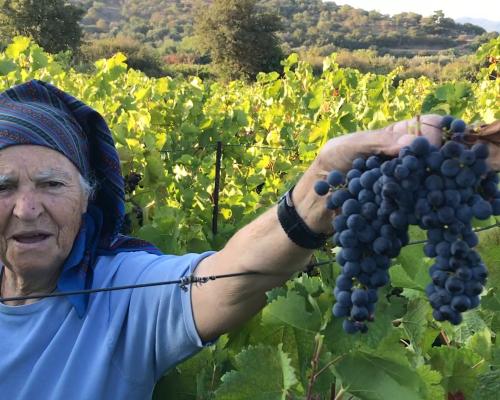
- Harvest: The grape harvest is carried out by hand due to the sloping terrain, in August and September, when the grapes have reached the desired level of ripeness.
Wine production in Samos is the main driving force of the island’s agricultural economy. EOS Samos, one of the largest and oldest cooperatives in Greece, together with the wineries founded after 2016 (lifting of compulsory membership), has undertaken the collection and vinification of the island’s vineyard production. This collective effort secures an income for the approximately 2,000 vine-growers of the island and protects the product from unfair competition.
The impact is also social and environmental. The preservation of viticulture and the thousands of kilometers of terraces not only maintains the unique rural landscape, but also protects the soil from erosion and forest fires. Moreover, Samian wine, with its hundreds of international distinctions, acts as a powerful ambassador for promoting Samos as a gastronomic and wine tourism destination.
The history of Samos wine is lost in the depths of the centuries, with viticulture having begun before the 1st millennium BC. Myth has it that the god Dionysus gifted Muscat to the Samians. On coins of the 5th century BC amphorae and bunches of grapes are depicted. The historian Hesychius refers to the “Samia staphylē” grape as “very sweet and aromatic.”
The great development of trade, mainly of sweet wine, began in the 16th century, with attestations of Muscat cultivation. The fragrant wine of Samos was one of the main trade goods from the mid-17th century, and commerce expanded to Russia, Europe and later, around 1820, to America. A decisive milestone in modern history was the founding of EOS Samos in 1934, which stabilized production and quality and served as a model of collective agricultural organization.
The wines produced in Samos have garnered hundreds of international distinctions in international competitions and exhibitions. The wines of Samos are considered among the most highly awarded Greek wines.
Indicative recent distinctions in top competitions:
- Decanter World Wine Awards (DWWA):
- In 2017, five (5) wines were distinguished: Samos Anthemis, Samos Nectar, Samos Vin Doux, Samos Grand Cru and Psiles Korfes.
- Femmes et Vins du Monde (Monaco):
- In 2025, the Samos Cooperative (EOS Samos) won Diamond Awards. Specifically, Psiles Korfes was honored with the Grand Gold (NOVA D' OR), while the semi-dry BABEL white wine also received a distinction.
Local, varietal, table wines have caloric value proportional to their alcohol and sugar content.
Indicatively, a dry wine at 13.5% vol has 79kcal/382kj.
A dry rosé wine at 12.5% vol contains 77kcal/328kj.
Local, varietal, table wines have caloric value proportional to their alcohol and sugar content.
Indicatively, a dry wine at 13.5% vol has 79kcal/382kj.
A dry rosé wine at 12.5% vol contains 77kcal/328kj.