Muscat of Alexandria
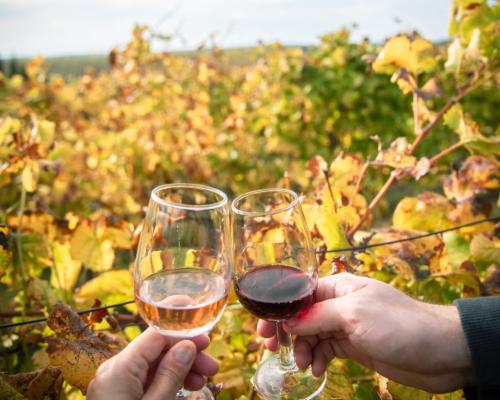
Muscat of Alexandria is the dominant white grape variety of Lemnos, covering more than 90% of the island’s vineyard area. In contrast to the indigenous Limnio, Muscat of Alexandria is an international variety with a probable origin in North Africa, which has found in Lemnos an ideal terroir to express its intense aromatic characteristics. The island has been established as one of its most important production zones, producing both the famous sweet wine (fortified and from sun‑dried grapes) and outstanding dry aromatic white wines. The variety’s flourishing in the volcanic, sandy soils and the particular microclimate of Lemnos imparts to the wines a unique aromatic profile with notes of flowers, citrus fruits and honey.
The uniqueness of Muscat of Alexandria in Lemnos lies in its official recognition as a Protected Designation of Origin (PDO) wine, as well as in its rare ability to yield both dry and sweet wines with a recognizable typicity.
- Identification, Synonyms, Variants: The official name is Muscat of Alexandria. In Lemnos and other regions, it is often referred to simply as Muscat or historically as “Engleziko” (“English”), a nickname reportedly used when it first appeared on the island in the early 20th century, possibly via Greeks from Egypt.
- PDO status: Muscat of Alexandria of Lemnos bears two Protected Designations of Origin:
- PDO Muscat of Limnos: Pertains exclusively to sweet wines (naturally sweet from sun‑dried grapes or sweet fortified wines – Vin Doux Naturel).
- Scheme: PDO (OPE – Controlled Appellation of Origin, according to previous national legislation).
- Year of Establishment (OPE): 1971.
- Basic Specifications: 100% Muscat of Alexandria variety. For naturally sweet wines, exclusively sun‑dried grapes are used. For fortified sweet wines, alcohol is added during fermentation.
- PDO Limnos: Pertains to dry and semi‑dry white wines.
- Scheme: PDO (OPAP – Appellation of Superior Quality, according to previous national legislation).
- Year of Establishment (PDO): 1982.
- Basic Specifications: 100% Muscat of Alexandria variety.
- PDO Muscat of Limnos: Pertains exclusively to sweet wines (naturally sweet from sun‑dried grapes or sweet fortified wines – Vin Doux Naturel).
The viticultural zone that includes the PDOs Muscat of Lemnos and Lemnos covers the entire island of Lemnos. However, the principal winegrowing areas, where Muscat of Alexandria particularly thrives, are located in the central and southern parts of the island, such as Agios Dimitrios Atsikis and Nea Koutali, where the exposure protects the vines from the fierce northern winds.
The soils of Lemnos are mainly volcanic, fine-textured and deep, rich in mineral elements, especially potassium. These soils, combined with high sunshine and low rainfall, create dry and warm conditions. The climate, although Mediterranean, is characterized by lower average annual temperatures compared to other Aegean islands, and heatwave conditions are rare. This allows Muscat of Alexandria to ripen slowly, preserving the necessary acidity and developing the characteristic rich aromatic potential of the variety, which stands out from Muscat of other regions.
The production of PDO Muscat of Alexandria wines on Lemnos is governed by strict specifications, combining tradition with modern technology, with particular emphasis on cultivation conditions.
- Cultivation Method: The overwhelming majority of vineyards are trained in the traditional goblet form (gobelet), a practice deemed essential for protecting the grapes from strong winds and excessive sunlight, while at the same time ensuring proper aeration and limiting diseases. Irrigation of the vineyards is prohibited (dry farming), which forces the plant to develop a deep root system, drawing minerals from the volcanic soils. Yields per hectare are strictly limited (up to 12,000 kg/ha for PDO wines, with even stricter specifications for wines from selected vineyards), ensuring concentration of sugars and aromatic compounds.
- Harvest and Sun-drying: Harvest is carried out by hand, usually from late August to mid-September. For the production of the Naturally Sweet Wine PDO Muscat of Lemnos, the grapes undergo sun-drying (desiccation) in the sun, so that sugars and aromas are further concentrated.
- Vinification (Dry Wine PDO Lemnos): Classic white winemaking is applied. The transformation of the grapes into must and of the must into wine is carried out exclusively in wineries within Lemnos. The use of continuous presses is prohibited. Alcoholic fermentation is controlled at low temperatures (below 20°C), a practice of vital importance for preserving the volatile, floral, and fruity aromas (rose, lemon blossom, apricot) that are characteristic of the variety.
- Vinification (Sweet Wine PDO Muscat of Lemnos):
- Naturally Sweet: Fermentation of sun-dried grapes. The high sugar content naturally stops fermentation, leaving a significant proportion of unfermented sugars.
- Sweet Fortified (Vin Doux Naturel): Interruption of alcoholic fermentation by the addition of alcohol of viticultural origin.
- Maturation: The specifications for sweet wines often require an aging period before bottling, which can take place in stainless steel tanks or oak barrels, adding complexity.
Muscat of Alexandria is the pillar of Lemnos’ agricultural economy. Its cultivation provides significant income for the inhabitants and supplies two recognized PDO zones, making the vineyard the monocultural hallmark of the island. The impact is multi‑layered:
- Economic: The production and export of PDO wines generate significant economic flow.
- Environmental: The large proportion of vineyards cultivated with certified organic farming methods (about 25–30% of the total area), a result of the dry‑hot conditions that limit diseases, makes Lemnos a pioneer in sustainable viticulture.
- Social/Touristic: Muscat of Alexandria has strengthened the island’s wine tourism, attracting visitors who seek the authentic taste and history of Lemnian wine.
Muscat of Alexandria, although not endemic like Limnio, has been integrated into Lemnos’ cultural heritage since the early 20th century. Its introduction is said to have occurred either through the Egyptians (Greeks of Egypt) or the Asia Minor refugees who settled in Lemnos after the Asia Minor Catastrophe. The refugees, seeking new commercial opportunities, systematically cultivated Muscat of Alexandria due to the commercial interest in sweet wines at the time.
This resulted in the rapid increase of its cultivation. Characteristically, while in 1947 Limnio was the dominant variety (7,000 stremmas versus 5,000 stremmas of Muscat), today Muscat of Alexandria covers the overwhelming majority of the vineyard, now constituting the island’s main winemaking identity.
The tradition of producing sweet wine from sun-dried grapes is deeply rooted in Lemnos, thanks to Muscat of Alexandria.
- The Sun-Drying: The process of sun-drying the grape bunches, where the grapes are spread out in the sun on special nets or mats, is a traditional custom carried out during the harvest period. This process is not only technical but also cultural, as it requires special care and is passed down from generation to generation.
- By-products: Beyond wine, Muscat of Alexandria is traditionally used for the production of tsipouro (souma) and petimezi (concentrated must), which are integral elements of Lemnian cuisine and diet.
The wines from Muscat of Alexandria of Lemnos, especially the sweet ones, have repeatedly received international distinctions, confirming their unique quality.
- Indicative Distinctions (Recent and Historical):
- Competition: Decanter World Wine Awards (DWWA)
- Year/Category: Multiple vintages, mainly in the Sweet Wine category (for PDO Muscat of Lemnos).
- Level: Silver/Gold (depending on the bottling and the year).
- Competition: Concours Mondial de Bruxelles
- Year/Category: Multiple vintages, for both dry and sweet wines.
- Level: Gold/Silver Medal.
- National Competitions: Wines from Muscat of Alexandria of Lemnos regularly receive top distinctions at the Thessaloniki International Wine and Spirits Competition.
- Competition: Decanter World Wine Awards (DWWA)
The nutritional value of Muscat of Alexandria wine varies significantly depending on its type (dry or sweet).
- Nutritional Analysis (Indicative per 100 ml):
- Dry White (PDO Lemnos):
- Energy: ≈ 85–90 kcal.
- Sugars: ≈ 4 g/L (Upper limit for dry).
- Alcohol: ≈ 12–13% vol.
- Sweet Wine (PDO Muscat of Lemnos):
- Energy: ≈ 120–150 kcal (due to high sugars).
- Residual Sugars: Can reach up to 300 g/L in naturally sweet wines from sun‑dried grapes.
- Alcohol: ≈ 15–22% vol (in the fortified types).
- Dry White (PDO Lemnos):
- Bioactive Compounds: Muscat of Alexandria is particularly rich in terpenes, which are volatile aromatic compounds responsible for the characteristic “muscat” character (e.g., linalool, geraniol). These components, although they do not have direct nutritional value in the sense of macronutrients, determine the quality and typicity of the wine. Sweet wines, especially those made from sun‑dried grapes, retain higher concentrations of phenolic compounds and antioxidants due to the dehydration and concentration of the must.
The nutritional value of Muscat of Alexandria wine varies significantly depending on its type (dry or sweet).
- Nutritional Analysis (Indicative per 100 ml):
- Dry White (PDO Lemnos):
- Energy: ≈ 85–90 kcal.
- Sugars: ≈ 4 g/L (Upper limit for dry).
- Alcohol: ≈ 12–13% vol.
- Sweet Wine (PDO Muscat of Lemnos):
- Energy: ≈ 120–150 kcal (due to high sugars).
- Residual Sugars: Can reach up to 300 g/L in naturally sweet wines from sun‑dried grapes.
- Alcohol: ≈ 15–22% vol (in the fortified types).
- Dry White (PDO Lemnos):
- Bioactive Compounds: Muscat of Alexandria is particularly rich in terpenes, which are volatile aromatic compounds responsible for the characteristic “muscat” character (e.g., linalool, geraniol). These components, although they do not have direct nutritional value in the sense of macronutrients, determine the quality and typicity of the wine. Sweet wines, especially those made from sun‑dried grapes, retain higher concentrations of phenolic compounds and antioxidants due to the dehydration and concentration of the must.