Moschato Lemnou
Moschato Lemnou, as a wine, is a product with deep roots in the island’s winemaking tradition, even though its grape variety, Muscat of Alexandria, is a relatively recent addition to the local vineyard compared to the native Limnio (Kalampaki). Its establishment is due to its excellent adaptation to the island’s distinctive volcanic soil and dry, warm climate, yielding wines with intense aromatic characteristics, balanced acidity and a characteristic sweetness. Its reputation, especially in its sweet version, has crossed the borders of Greece, making it a highly sought-after dessert wine.
PDO Status and Basic Specifications
Moschato Lemnou has been recognized as a Protected Designation of Origin (PDO). The PDO Moschato Lemnou viticultural zone covers the entire island of Lemnos. The PDO Moschato Lemnou appellation pertains to the production of sweet wines, either as Naturally Sweet Wines (from sun-dried grapes) or as Sweet Fortified Wines (Vins de Liqueur).
The basic specification for its production is the exclusive use of the Muscat of Alexandria variety, which is also locally known by the synonym Engleziko (“English”). The maximum permitted yield per hectare (ha) for fresh grapes of the Muscat of Alexandria variety must not exceed 12,000 kilograms. For Naturally Sweet Wine, the sugars and alcohol of the final product must derive exclusively from the grapes that were vinified, without any addition of must, concentrated must or alcohol. This production method, using sun-dried grapes, intensifies the concentration of sugars and aromatic compounds, endowing the wine with its characteristic aromas of rose, honey and dried fruits.
The geographical production area of the PDO Muscat of Lemnos is the island of Lemnos in the northeastern Aegean. The climate is Mediterranean, with long, dry and hot summers that favor full ripening and sugar accumulation in the grapes, especially the sun-dried ones. However, the area is characterized by strong northern winds, which act protectively, keeping the foliage healthy and preventing the development of fungal diseases. The vineyards extend from sea level up to about 300 meters in altitude, with a higher concentration in the central and southern part of the island, in locations that provide some natural protection from the winds.
The soils of Lemnos are mainly of volcanic origin with a particular composition, which contributes to low yield per hectare and to the production of high-quality grapes. Relatively poor, well-drained soils are preferred, which are not suitable for other, more water-demanding crops. These soil and climate conditions, in combination with traditional cultivation practices, play a decisive role in shaping the distinctive aromatic and taste profile of the wine.
Cultivation Method
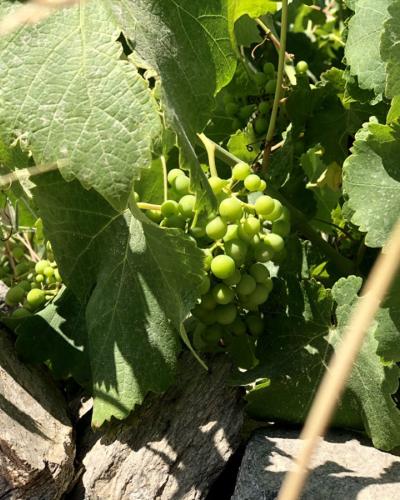
The cultivation of the Muscat of Alexandria variety on Lemnos follows traditional techniques that have been adapted to the island’s dry and hot conditions. The vines are trained in a low goblet (cup-shaped) form, a practice that serves a dual purpose: it protects the plants from the strong northern winds and at the same time allows the foliage to shade the berries, regulating temperature and ripening. Short pruning is applied, aiming at low yield per hectare (up to 12,000 kg/ha), a prerequisite for the concentration of varietal characteristics. Irrigation of the vineyard is prohibited for PDO production, which forces the plant to develop a deep root system, drawing nutrients and moisture from the lower soil layers. Planting density is kept low (about 350–400 vines per stremma) to improve resilience under dry conditions.
Vinification Method
The vinification of Muscat of Lemnos varies depending on the type of wine:
- Naturally Sweet Wine (Vin Naturellement Doux – NSW):
- Harvest: The grapes are harvested overripe.
- Sun-drying: This is followed by the method of sun-dried grapes, where the berries are spread out in the sun or sometimes under shade (in special shelters) for partial dehydration. Sun-drying concentrates the sugars, acidity and aromatic compounds, giving the wine a rich flavor of dried fruits and honey.
- Fermentation: The must derived from the sun-dried grapes has a very high sugar content. Fermentation is natural and is stopped when the wine reaches the desired alcoholic strength and residual sugars. The interruption can be achieved through cooling and/or filtration, ensuring that the final sweetness comes exclusively from the grape.
- Sweet Fortified Wine (Vin Doux Naturel - VDN):
- Production: For this category, the alcoholic fermentation of the must is halted by the addition of wine alcohol of viticultural origin (fortification). This practice preserves a significant amount of unfermented sugars in the final product.
The dry white wines from Muscat of Alexandria of Lemnos are vinified using modern techniques, usually with a short pre-fermentation maceration and fermentation at low temperatures in stainless steel tanks, in order to preserve the intense primary aromatic character of the variety (white flowers, rose, citrus).
Muscat of Lemnos is one of the main pillars of the local economy and agricultural development of Lemnos. The cultivation of the Muscat of Alexandria variety and the production of the PDO wine support a significant proportion of the rural population and constitute a source of income for vine-growers. The existence of the recognized PDO zone strengthens the island’s outward orientation, attracting investment in wine tourism and in the further upgrading of production facilities. Through the Union of Agricultural Cooperatives of Lemnos and the private wineries, the product showcases the identity and the unique terroir of Lemnos, contributing to the preservation of the traditional vineyard and cultivation practices, such as the goblet training system and dry farming.
Lemnos has an unbroken winemaking history that disappears into the depths of the centuries. Homer, in the Iliad, mentions the renowned wine of Lemnos (probably Limnio/Kalampaki), which the Achaeans traded for goods during the Trojan War.
Muscat of Alexandria (the variety of Lemnos Muscat) arrived in Lemnos much later. It was introduced in the early 20th century, probably by Lemnian migrants returning from Egypt (hence the name “of Alexandria”). Its systematic cultivation was strengthened after the Asia Minor Catastrophe (1922) by the Asia Minor refugees who settled on the island. These refugees, appreciating the commercial value of sweet wines, began to cultivate Muscat of Alexandria on the land that had been allocated to them, with the result that it gradually replaced Limnio (Kalampaki) and became established as the main variety for the production of the renowned sweet wine. This development reflects a cultural and economic adaptation that led to the creation of an internationally recognized product.
Although Muscat of Alexandria is a more recent variety, winemaking and the grape harvest in Lemnos are linked to traditional customs concerning the gathering and initial processing of the grape.
- The Harvest: The harvest, usually carried out from late August to September, was and remains a social event in Lemnos. Relatives and friends took part in the picking, which was always followed by local festivities.
- Sun-Drying: The practice of sun-drying, essential for Naturally Sweet Wine, is in itself a traditional technique. The grapes were spread out on special straw mats or nets in the sun for 8–15 days, a process that required constant supervision and attention to weather conditions.
- Christian Customs: Wine in general, and probably Lemnos Muscat as well over the course of its history, is incorporated into religious ceremonies and festive tables. Its presence at celebratory meals (e.g., Christmas, Easter) and at important family moments (weddings, baptisms) as a sweet treat and accompaniment is a given, highlighting its role as a product of cultural value.
Lemnos Muscat, and in particular its sweet version, has received numerous awards and distinctions in international wine competitions, confirming its status as a top Greek dessert wine.
Indicative distinctions (search in official sources or references from commercial websites that refer to competitions):
- Decanter World Wine Awards (DWWA): Many labels of Muscat of Lemnos have received medals (Gold, Silver, Bronze) in various vintages.
- Example (General Reference): Labels such as the Muscat of Lemnos of the Union of Cooperatives of Lemnos or of private wineries are frequently mentioned among the winners, mainly in the Sweet Wines category.
- Concours International du Vin (Thessaloniki): It has been systematically awarded, as it is a competition with an emphasis on Greek wines.
- International Wine and Spirit Competition (IWSC): It has often received distinctions, highlighting the international recognition of its aromatic and sweet character.
Since Muscat of Lemnos is primarily known as a sweet wine (Naturally Sweet or Fortified), its nutritional analysis focuses on its content of residual sugars and alcohol, as well as the bioactive compounds derived from the grape.
The sweet wine Muscat of Lemnos is particularly rich in sugars (mainly fructose and glucose) due to the dehydration of the grapes during sun-drying, making it a source of energy. As for the bioactive compounds, as with all wines, it contains polyphenols (especially flavonoids), which are known for their antioxidant action, protecting cells from oxidative stress. However, consumption should be moderate due to the high alcohol and sugar content.
Since Muscat of Lemnos is primarily known as a sweet wine (Naturally Sweet or Fortified), its nutritional analysis focuses on its content of residual sugars and alcohol, as well as the bioactive compounds derived from the grape.
The sweet wine Muscat of Lemnos is particularly rich in sugars (mainly fructose and glucose) due to the dehydration of the grapes during sun-drying, making it a source of energy. As for the bioactive compounds, as with all wines, it contains polyphenols (especially flavonoids), which are known for their antioxidant action, protecting cells from oxidative stress. However, consumption should be moderate due to the high alcohol and sugar content.