Mastelo & Keremezi
Dairy production on the Northeastern Aegean islands, and in particular in the wider region of Chios, to which Oinousses belongs administratively and geographically, is characterized by the production of traditional soft cheeses with distinctive characteristics. Mastelo is the most recognizable dairy product of Chios, with its production being concentrated mainly on the island of Chios, although its presence on the gastronomic map of neighboring islands, such as Oinousses, is indisputable, due to the close cultural and commercial relationship. Mastelo is a soft, white cheese with a mild, milky flavor that has become especially popular throughout Greece for its unique property of being grilled without melting, acquiring a pleasant, chewy texture.
At the same time, the term Keremezi appears to refer to a traditional preparation of a dairy cream or spread, which combines fresh cheese or whey with yogurt or buttermilk, constituting a characteristic example of the less commercial, homemade preparations that have their roots in the livestock-farming tradition of the islands. In Oinousses, due to the limited livestock production, cheesemaking often focuses on small-scale preparations for personal consumption, where such products are key components of the diet.
Mastelo
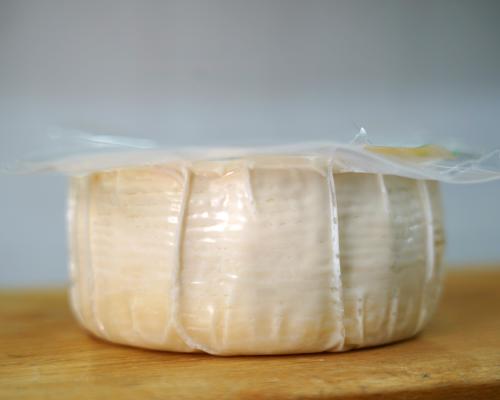
Mastelo cheese (or Mastelo) is a soft cheese produced mainly from cow’s milk, although it is also marketed as Katsikaki Mastelo from goat’s milk. The name “Mastelo” is a trademark and not a Protected Designation of Origin (PDO) or a Protected Geographical Indication (PGI), while its reputation is inextricably linked to Chios.
The uniqueness of Mastelo lies in its high resistance to heat, a property that allows it to be grilled or cooked in a non-stick pan. During cooking, the cheese does not melt, but softens on the inside and acquires a characteristic chewy texture and a slightly caramelized outer crust, highlighting its subtle milky flavor. The basic specifications of the cheese (cow’s milk) define a maximum moisture content of about 45% and a minimum fat in dry matter of 45%.
Keremezi
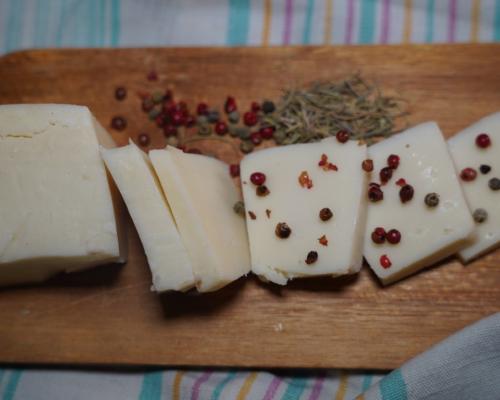
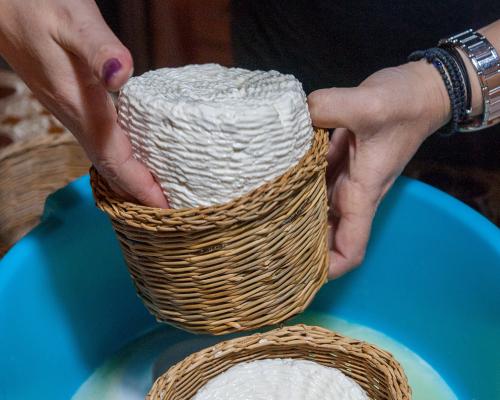
Kermesi (or Geremezi) is a soft cheese log, made mainly from sheep’s or goat’s pasteurized milk. Its uniqueness lies in its texture, which is soft and creamy, and in its relatively low fat content, making it attractive for a healthier nutritional profile compared to many other Greek cheeses. It is often flavored with various ingredients such as peppers, herbs or edible ash.
Oinousses is a small island complex in the Eastern Aegean, located northeast of Chios. The area is characterized by limited agricultural and livestock activity compared to neighboring Chios, due to its small size, rocky terrain and the traditional occupation of the inhabitants with shipping.
The climate of Oinousses is Mediterranean, with mild, wet winters and dry, warm summers. The island’s flora is poorer, with limited grazing land. Therefore, local livestock production is based on a small number of sheep and goats and/or cattle raised in semi-wild or stall-fed systems. The production of Mastelo and Keremezi in Oinousses is the processing (cheesemaking) of small quantities of local milk. Traditional cheesemaking is influenced by the unique diet of the animals, which, even on a small scale, transfers to the milk the aromatic elements of the islands’ local flora (shrubs, aromatic plants).
Mastelo
The production of Mastelo follows the general process for making a soft, fresh cheese, adapted to achieve its characteristic behavior when grilled.
- Raw Material: Pasteurized whole milk is used (mainly cow’s, although goat’s milk is also used).
- Coagulation: The milk is curdled by adding rennet at a relatively low temperature (e.g., 30–32°C). The use of a lower temperature and the specific protein-to-fat ratio are decisive for the cheese’s subsequent thermal behavior.
- Cutting and Reheating: The curd is cut into small cubes, followed by gentle stirring and possibly light reheating, so that part of the whey is expelled.
- Molding and Draining: The curd is transferred into molds (usually cylindrical or square) to drain. Draining is relatively brief, as Mastelo is a fresh and soft cheese with high moisture content (about 45%).
- Salting and Maturation: Dry salting follows and the cheese is almost immediately ready for consumption, without any substantial maturation. Minimal or non‑existent maturation is the key to its property of not melting, allowing it to retain its shape during cooking.
Keremezi (Cheese with Yogurt)
The preparation of Keremezi is simpler and usually does not require the use of rennet. It is a dairy cream or spread.
- Raw Material: Whey from another cheesemaking process is usually used, or fresh anthotyro/myzithra mixed with yogurt (strained or sheep’s/goat’s) or sour milk.
- Mixing: The ingredients are mixed mechanically or by hand. In the traditional version, the curd or myzithra is mixed with yogurt and salt.
- Addition of Ingredients: Small quantities of olive oil can be added for flavor and preservation.
- Storage: The final product is stored in ceramic or glass containers and consumed fresh or kept in the refrigerator. This process is more a conversion of ready dairy products into a cheese spread or pâté, rather than primary cheesemaking.
The impact of cheese-making on Oinousses is limited in terms of commercial production, since the island does not have large livestock units or cheese dairies. Local livestock farming, although present, is small, serving mainly the needs of residents for fresh milk, meat, and homemade dairy preparations such as Keremezi.
However, the gastronomic connection with Chios Mastelo is important for the island’s tourism. The presence of Mastelo on restaurant and taverna menus constitutes an outward-looking bridge with the broader cultural and gastronomic identity of Chios. This connection helps highlight the local cuisine and support local food-service businesses.
The history of Mastelo cheese is inextricably linked to the modern cheesemaking of Chios, as it is a more recent commercial creation based on traditional soft-cheese techniques of the Aegean, having acquired its present form and name over the last few decades. The word “mastelo” in Venetian means “bucket” or “wooden barrel” and is likely related to the method of curdling or storing older cheeses, highlighting the enduring influence of sea routes and commercial contacts on the gastronomy of the islands.
Keremezi, on the other hand, belongs to the category of ancient, folk cheesemaking techniques that were developed to make full use of milk, whey and yogurt by-products. On arid islands such as Oinousses, where livestock farming was a difficult and valuable activity, such preparations were vital for ensuring food supply.
Mastelo is an excellent source of high biological value proteins, essential for the building and rebuilding of tissues. It also contains calcium and phosphorus due to its origin from milk. Its salt content (about 1.66 g/100 g) is typical for cheese, although it should be consumed in moderation by people with high cholesterol, since, like all cheeses, it is high in fat.
Keremezi, as a product of mixing cheese (or mizithra) and yogurt, is usually richer in probiotics due to the yogurt and, if made with goat’s milk, may be lighter in fat than classic Mastelo. It is also a source of B-complex vitamins and protein.
Mastelo is an excellent source of high biological value proteins, essential for the building and rebuilding of tissues. It also contains calcium and phosphorus due to its origin from milk. Its salt content (about 1.66 g/100 g) is typical for cheese, although it should be consumed in moderation by people with high cholesterol, since, like all cheeses, it is high in fat.
Keremezi, as a product of mixing cheese (or mizithra) and yogurt, is usually richer in probiotics due to the yogurt and, if made with goat’s milk, may be lighter in fat than classic Mastelo. It is also a source of B-complex vitamins and protein.