Melichloro, feta or a basket, goat cheese, butter, dry mizithra
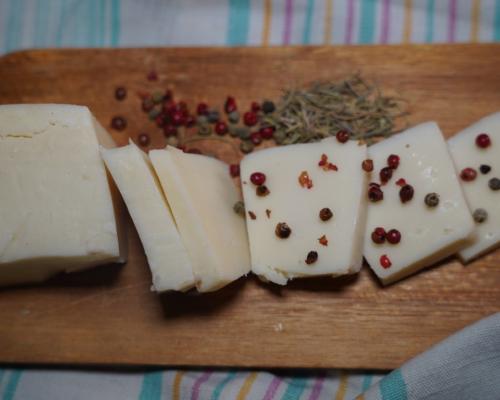
Cheesemaking on Agios Efstratios, as in many small islands of the Aegean, is an integral part of primary production and of the local dietary tradition, directly linked to sheep and goat farming, which thrives in the island’s dry and rocky environment. The dairy products traditionally produced are usually white brined cheeses (feta-type), fresh cheeses (such as mizithra) and goat’s cheese (or gidotyri), making primary use of milk from indigenous breeds of goats and sheep. Although the commercial names “Melichloro” and “Kalathaki” belong to Lemnos, local, non-standardized variants of white cheeses produced in a similar manner are also made on Ai-Stratis to meet the needs of the inhabitants, reflecting the habits of the wider island complex of the North Aegean.
The uniqueness of the dairy products of Agios Efstratios lies primarily in the pure raw material, namely the milk from animals raised extensively and grazing on the island’s distinctive flora. This diet, rich in endemic herbs and wild greens, imparts to the milk – and by extension to the cheeses – a unique flavor profile and distinctive aromas that are characteristic of the local agro-ecosystem. Goat’s cheese (or gidotyri) and mizithra are the most representative products of this production.
Agios Efstratios is a small, remote island in the North Aegean, known for its semi-arid, rocky terrain and dry, warm climate. These conditions, combined with the absence of extensive agriculture, have preserved the local flora unchanged, consisting mainly of phrygana, shrubs and aromatic plants (such as thyme, oregano, sage), which form the basis of the diet of the farmed animals. The proximity to the sea and the low industrial pollution shape an agro-ecosystem considered excellent for extensive livestock farming. The milk, coming from free-range animals, incorporates the aromatic elements of these plants, something that is directly reflected in the distinctive taste of the local cheeses, which are spicier and fuller-bodied compared to corresponding products of intensive production.
The production of traditional cheeses on Agios Efstratios follows ancient, handmade techniques that have been preserved due to the small scale of local animal husbandry. Production is focused mainly during the peak season of milk yield.
Production Method for Goat’s Cheese/Feta in Brine
Traditional preparation begins with the collection of fresh, unpasteurized sheep and goat milk (with a high percentage of goat’s milk on Ai-Stratis).
- Coagulation: The milk is coagulated by adding natural rennet (from the stomach of a lamb or kid) at a temperature of about 30−35°C.
- Cutting and Formation of the Curd: After coagulation, the curd is cut into small pieces (“cutting”), which are then stirred and gently heated to expel the whey.
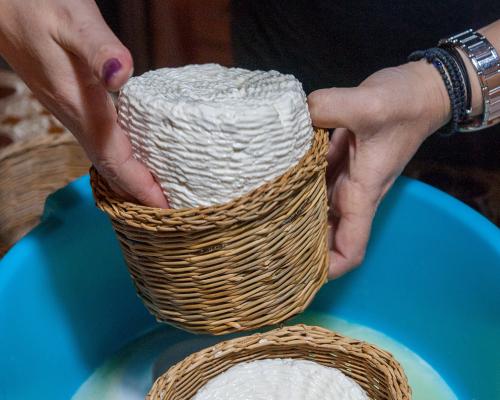
- Draining & Shaping: The curd is transferred to molds for draining (traditionally wicker baskets or cloths used for tulum cheese). This stage determines the texture and shape of the cheese.
- Salting: Dry salting of the cheese surface follows.
- Maturation: The cheeses are placed in brine (concentrated saltwater) in wooden barrels or metal containers. Traditionally, maturation lasts at least two (2) months in a cool environment. Aegean goat’s cheese tends to be harder and more piquant due to extended maturation.
Production Method for Dry Myzithra
Myzithra is produced by reheating the whey left over from the production of the main cheese, often with the addition of a small quantity of fresh milk.
- Heating the Whey: The whey is heated to a high temperature (80−90°C) until the proteins (albumins and globulins) rise to the surface.
- Collection and Draining: The fresh, creamy cheese (fresh myzithra) is collected with a slotted spoon and placed in cheesecloth bags or molds to drain.
- Drying/Maturation: For the production of dry myzithra, the fresh cheese is salted and left to mature and dry in a well‑ventilated space, acquiring a very hard texture. It is used mainly as a grating cheese.
The production of traditional dairy products on Agios Efstratios has a critical, multidimensional impact on the sustainability of the small island. It contributes to the economic self‑sufficiency of livestock‑farming families, ensuring a basic income and minimizing dependence on imported food. In addition, the existence of primary production acts as an incentive for the small population to remain, reinforcing the preservation of traditional activities. Environmentally, extensive grazing helps control vegetation and provides fire protection, preserving the cultural landscape. Finally, the cheeses highlight the gastronomic identity of Ai‑Stratis, strengthening its image as an authentic tourist destination.
Cheesemaking on Agios Efstratios is inextricably linked to the island’s livestock‑raising history. Due to the poor agricultural land, the island’s economy traditionally relied on fishing and animal husbandry (sheep and goats). Cheese production was a household necessity, providing protein and fats to meet the family’s needs throughout the year. The production method, passed down from generation to generation, preserved the know-how of curdling and ripening, adapted to the local soil and climatic conditions. The traditional use of baskets for draining and the technique of preserving in brine form part of the intangible cultural heritage of the North Aegean, where cheese often also functioned as a means of exchange (as was the case on neighboring Lemnos with Melichloro).
On Agios Efstratios, as on other livestock‑rearing islands, cheese production was linked to the annual cycle of milk production.
- The Cheese Festival (Spring): The peak of milk production in spring marked the beginning of the major cheesemaking season, when livestock farmers produced the largest quantity of cheese that would need to be preserved. This period was accompanied by the making of the first fresh mizithras and salted cheeses.
- The Herdsman’s Treat: Traditional hospitality always included offering fresh, homemade cheese to the visitor, a symbol of the family’s prosperity and abundance.
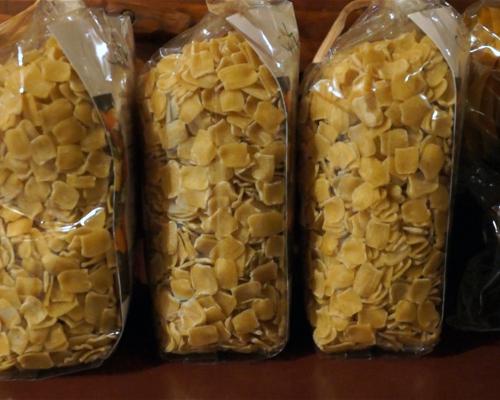
- Use of by-products: The traditional utilization of butter and mizithra was not only dietary but also social. Fresh butter was used in sweets and breads during festivals, while dried mizithra, grated, was an essential ingredient in the local pasta cuisine.