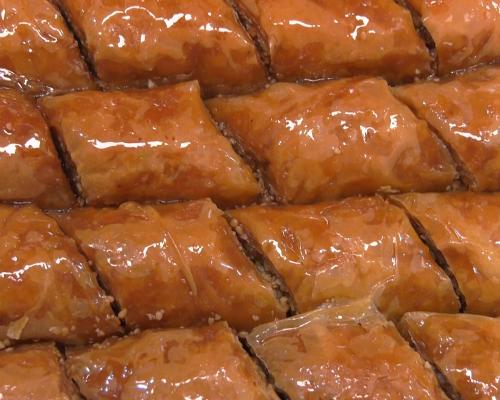
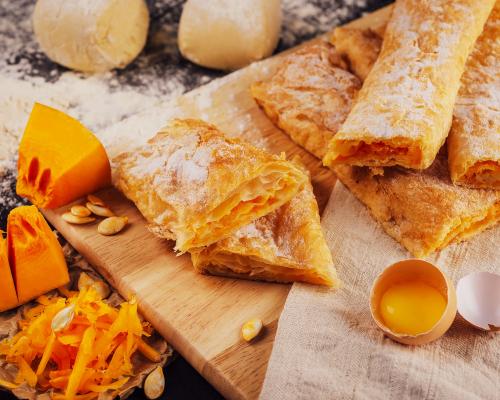
Pan-baked syrup
Pan-baked syrup desserts in Chios form a distinct category of sweets that is inextricably linked with the island’s two Protected Designations of Origin/Geographical Indications: Chios Mastiha (PDO) and Chios Mandarin (PGI). Although the island’s traditional sweets are mainly famed for their spoon sweets (citrus, bitter orange, lemon blossom) and the mastiha “submarine” treat, the syrup-soaked tray desserts have claimed their own place, making use of Chios’s unique aromatic ingredients. Galaktoboureko with mastiha and other syrupy pies with cream and citrus aromas represent this category, offering a rich and fragrant experience that highlights the local gastronomic wealth.
The syrup-soaked pan desserts of Chios constitute a collection of confections distinguished by the use of original local raw materials as a primary or secondary ingredient. The category mainly includes variations of well-known Greek sweets, such as Galaktoboureko with Mastiha or syrupy Mandarin Pie (when made with mandarins from Chios), as well as the traditional Chios Halvadopita (which, although often individual in size, is also produced in large slabs/trays). Their common hallmark is the use of Chios Mastiha and/or citrus fruits from Kambos.
The geographical area where the key ingredients that define the flavor of these pan-baked sweets are produced is crucial to their identity. Mastiha, the natural resin of the mastic tree, is produced exclusively in the Mastihohoria of Southern Chios and is a product unique worldwide. The citrus fruits (mandarins, oranges, lemons, bitter oranges) that impart aroma and flavor to the syrups and creams are cultivated mainly in the fertile Kambos of Chios, a region renowned for its fragrant orchards, from which derives the epithet of Chios as “Myrovolos” (fragrant). It is the combination of these two areas, North (Kambos) and South (Mastihohoria), that feeds the island’s confectionery tradition.
The production of the traditional pan-baked sweets of Chios follows the general principles of Greek syrup-based confectionery, with the difference that it is enriched with local raw materials and aromatic techniques that bring out the island’s distinctive character.
The traditional method of producing Galaktoboureko with Mastiha includes the following basic stages:
- Preparation of Mastic: The cold Chios mastic crystals (because they have been placed in the freezer for a short time) are ground in a mortar or blender together with a little sugar, until they become a fine powder, so that they dissolve evenly and release their aroma.
- Preparation of the Custard: The whole cow’s milk, essential for a rich texture, is heated with sugar, cornflour or semolina, and above all the mastic powder and zest from lemon or nerántzi from Kambos, so that it acquires its characteristic aroma. At the end, lightly beaten egg yolks are added, to bind the cream and give it a velvety texture.
- Assembly: The phyllo sheets (or yellow Beirut phyllo, depending on the variation) are brushed one by one with fresh cow’s butter or clarified butter, using some of the sheets as a base in the baking pan and the rest to cover the cream.
- Baking & Syruping: The dessert is scored before baking. After baking until golden, the hot dessert is drenched with cold syrup. The syrup is made with sugar, water and often lemon or mandarin peels and lemon juice, which balance the sweetness and enhance the aroma.
The pan sweets of Chios, as well as the island’s confectionery more broadly, have a significant economic and cultural impact, as they function as a “vehicle” for promoting the PDO/PGI products of Chios, namely mastiha and mandarin. Demand for these sweets strengthens the local value chain, from mastiha producers and citrus growers to local pastry shops (such as that of the Korakis family since 1937 and Moniodis) and sweet-making workshops. The use of these local raw materials adds value to the final product, differentiating the sweets of Chios from similar tourist products of other regions.
The confectionery history of Chios is closely linked to shipping and the aristocracy of Kambos, resulting in the adoption and adaptation of recipes from Constantinople and Asia Minor (such as syrup-soaked pan sweets) and from the wealth of the Eastern Mediterranean. The use of mastiha and citrus in pan sweets, such as galaktoboureko, reflects a sophisticated gastronomic tradition that seeks to showcase the island’s unique local aromas in classic recipes, making these sweets part of the island’s cultural heritage.
Sweets in Chios, more generally, are associated with hospitality and with religious and social ceremonies. Pan sweets, although less common than spoon sweets, were traditionally offered at name days, weddings, and baptisms. Today, pan sweets with mastiha and citrus are served on all formal occasions and form an integral part of the Christmas and Easter table of the people of Chios, preserving the tradition of using unique local ingredients in festive delicacies.