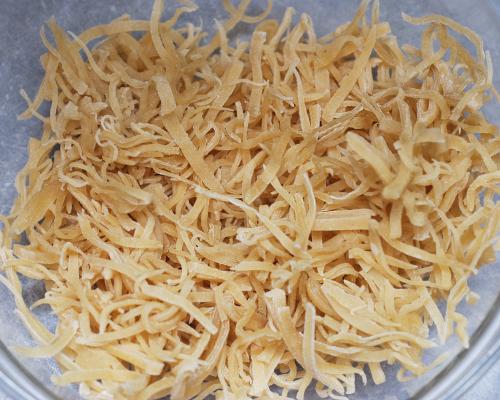
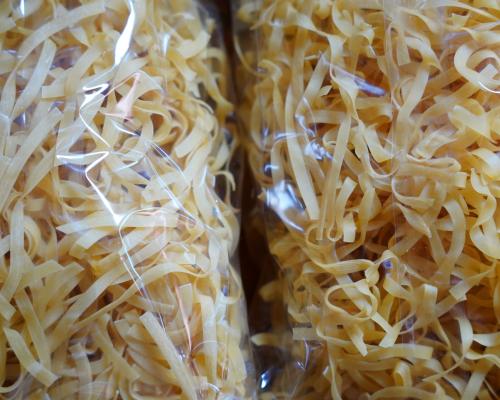
Pasta: barley, shell noodles, yofkades, cherisia
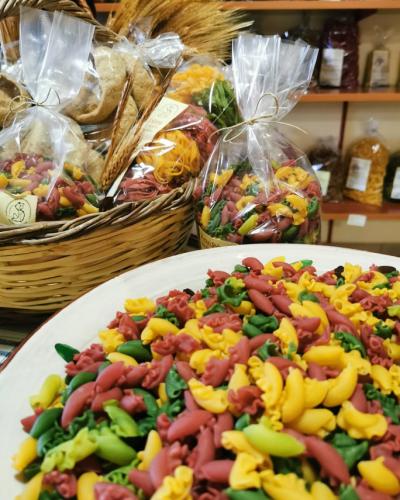
The traditional pasta types of Lesvos — such as kritharaki (or manestra), kochylaki, hylopites (also known as giofkades or gioufades) and cherisia — form an important pillar of the island’s agricultural and gastronomic heritage. These pastas, in contrast to industrial ones that are made mainly with semolina and water, stand out for the richness of their ingredients, since in their traditional preparation, in addition to flour or durum wheat semolina, fresh milk (usually goat’s or sheep’s) and fresh eggs from local farms are used. This addition significantly enhances their nutritional value, imparts a richer taste, and gives them a characteristic golden color and a more compact texture, bringing them closer to the “homemade” pastas of Greek cuisine.
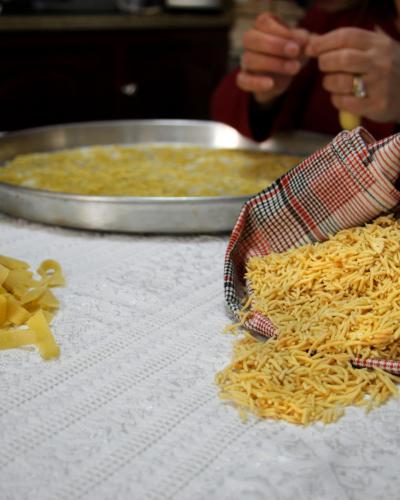
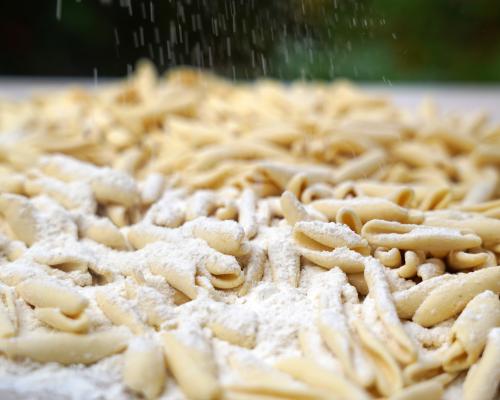
The pastas of Lesvos, under the names kritharaki, kochylaki, hylopites/giofkades and cherisia, are not just pasta but embody the tradition of home preparation that has passed into small-scale local production, often through the island’s Women’s Agritourism Cooperatives. Hylopites are the most widespread form, and their synonym giofkades (gioufades) is a term often used locally. Cherisia are a subcategory referring to the method of preparation, indicating that they are shaped or cut by hand, ensuring a unique, rustic and non-uniform texture. The key distinction that defines their uniqueness is the use of rich local raw materials, such as fresh eggs and milk, which make them “enriched” compared to ordinary pasta.
The production of traditional pasta extends across the entire island of Lesvos, one of the largest islands of the North Aegean, with a strong agricultural tradition. The island is characterized by varied terrain and soil-climate conditions that favor the cultivation of cereals, livestock farming (mainly sheep and goats), and olive growing. Specifically, the raw materials for the pasta come from local agricultural production, with durum wheat being cultivated in various parts of the island. Livestock farming is particularly developed, providing fresh milk (sheep’s or goat’s) and eggs, key ingredients that distinguish the pasta of Lesvos. The tradition of making them is especially strong in the Women’s Agritourism Cooperatives, which have kept the old methods alive, often in villages such as Mesotopos.
The production method of traditional pasta of Lesvos follows the steps of homemade preparation, even in modern, small-scale standardization.
The process includes the following stages:
- Dough Preparation: Semolina or durum wheat flour is kneaded with fresh eggs and fresh milk (sheep’s or goat’s) and a little salt. The proportion of eggs and milk is generally high in order to achieve a rich, dense dough.
- Shaping & Cutting:
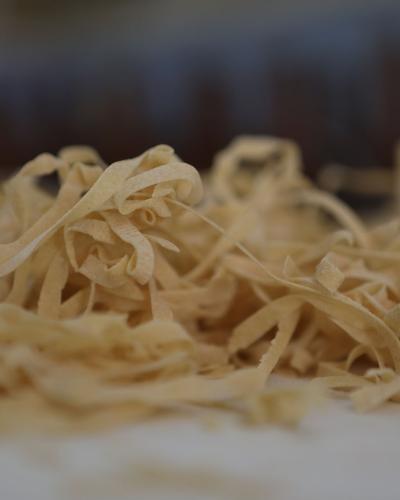
- Hilopites/Giofkades: The dough is rolled out into thin sheets, either with a rolling pin (by hand) or by machine. The sheets are then left to dry slightly and cut into thin, long strips (chyles).
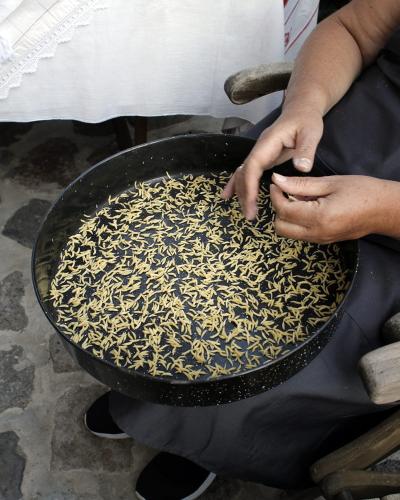
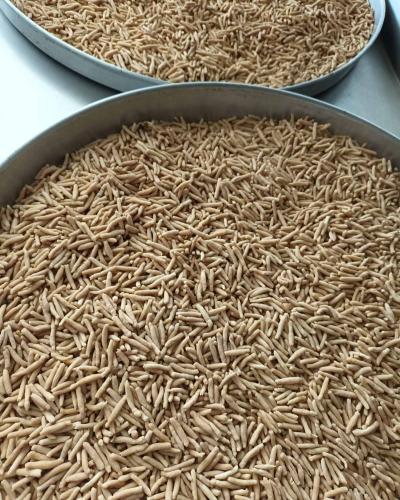
- Kritharaki/Kochylaki: For these smaller shapes, the dough is pushed under pressure through special dies, which give it the ovoid shape (kritharaki/manestra) or the rounded/hollow shape (kochylaki).
- Drying: This is a critical stage. The pasta is spread out on clean surfaces and left to dry naturally, usually in the Aegean sun and in well-ventilated spaces, for several days. Slow and natural drying preserves the nutrients, such as the vitamins in the eggs, and enhances their flavor and resistance during cooking.
- Storage & Standardization: Once completely dried, they are packaged in bags or boxes, ready for distribution. Natural drying ensures their long shelf life.
Traditional pasta has a significant socioeconomic and cultural impact on Lesvos. Their production sustains the island’s rural economy, as it creates demand for basic local raw materials such as wheat, milk and eggs. This value chain mainly supports small producers and Women’s Cooperatives, which play a decisive role in preserving rural tradition and employment in the countryside. In addition, this pasta, as a standardized local product, contributes to the gastronomic identity of Lesvos, attracting visitors’ interest and strengthening the island’s gastrotourism. The preservation of the traditional method of preparation (especially for cherisia and giofkades) ensures the continuity of cultural heritage and dietary customs.
The tradition of making hilopites and trachanas (a related product) in Greece, and of course in Lesvos, is ancient, as it dates back long before the appearance of industrial pasta. Ancient texts mention the word “laganon,” a wide dough made from flour and water that was cut into strips. In Greek cuisine, the makaries (hence the word macaroni), a wheat-based food that symbolized rebirth, already formed part of the diet. In Lesvos, as in the rest of Greece, homemade pasta such as hilopites and trachanas were, up until the first half of the 19th century, the only known forms of pasta. Their preparation was a collective ritual carried out by the women in mid-summer, after the harvest and the gathering of the new wheat, during which they secured food for the winter. The use of eggs and milk (instead of water) in the pasta and the prolonged drying in the sun were practices aimed at greater nutritional value and long-term preservation, fundamental needs of rural life.
In Lesvos, as in many rural areas, pasta making was not merely a cooking process, but an important family custom and social event, which took place mainly at the end of summer. This period, which coincided with the abundance of new wheat (for flour) and the high production of milk and eggs, was ideal for producing the household’s winter “store.” Women would gather in homes, knead large quantities of dough, roll out the sheets and cut the hilopites, or shape the kritharaki and the hachles (trachanas). Drying took place in the yard or on rooftops, under the strong sun. This shared work functioned as a nucleus of social solidarity, recipe exchange and the preservation of know-how from one generation to the next, ensuring that the tradition of handmade pasta would continue.
Seek out the island’s local producers and women’s cooperatives, which produce these types of pasta and have at times received quality certifications and local distinctions at the national level, often highlighted on their websites, mainly in exhibitions of local products.
The traditional pasta of Lesvos, due to the addition of eggs and milk, has a higher nutritional value compared to simple pasta made with semolina and water.
- Complex carbohydrates: They are a rich source of complex carbohydrates (from semolina), which constitute the body’s main source of energy.
- Proteins: The addition of eggs and milk increases their protein content (of high biological value), which is essential for the building and repair of tissues. Eggs also contribute significant amounts of iron, phosphorus, selenium and vitamins (mainly from the B complex, such as B1, B2, B3, B6, B12, and folic acid), as well as vitamins D, A and E and monounsaturated fatty acids, especially if olive oil is also used in the dough or in the final processing.
- Fats: They contain slightly higher fat than plain pasta due to the egg yolks and milk, including cholesterol (from the eggs) and sodium (from the salt), but they still remain a balanced food, ideal as a foundation of the Mediterranean Diet.
- Dietary fiber: The fiber content depends on the type of flour. If wholemeal flour is used, the fiber increases, benefiting the health of the digestive system.
The traditional pasta of Lesvos, due to the addition of eggs and milk, has a higher nutritional value compared to simple pasta made with semolina and water.
- Complex carbohydrates: They are a rich source of complex carbohydrates (from semolina), which constitute the body’s main source of energy.
- Proteins: The addition of eggs and milk increases their protein content (of high biological value), which is essential for the building and repair of tissues. Eggs also contribute significant amounts of iron, phosphorus, selenium and vitamins (mainly from the B complex, such as B1, B2, B3, B6, B12, and folic acid), as well as vitamins D, A and E and monounsaturated fatty acids, especially if olive oil is also used in the dough or in the final processing.
- Fats: They contain slightly higher fat than plain pasta due to the egg yolks and milk, including cholesterol (from the eggs) and sodium (from the salt), but they still remain a balanced food, ideal as a foundation of the Mediterranean Diet.
- Dietary fiber: The fiber content depends on the type of flour. If wholemeal flour is used, the fiber increases, benefiting the health of the digestive system.